

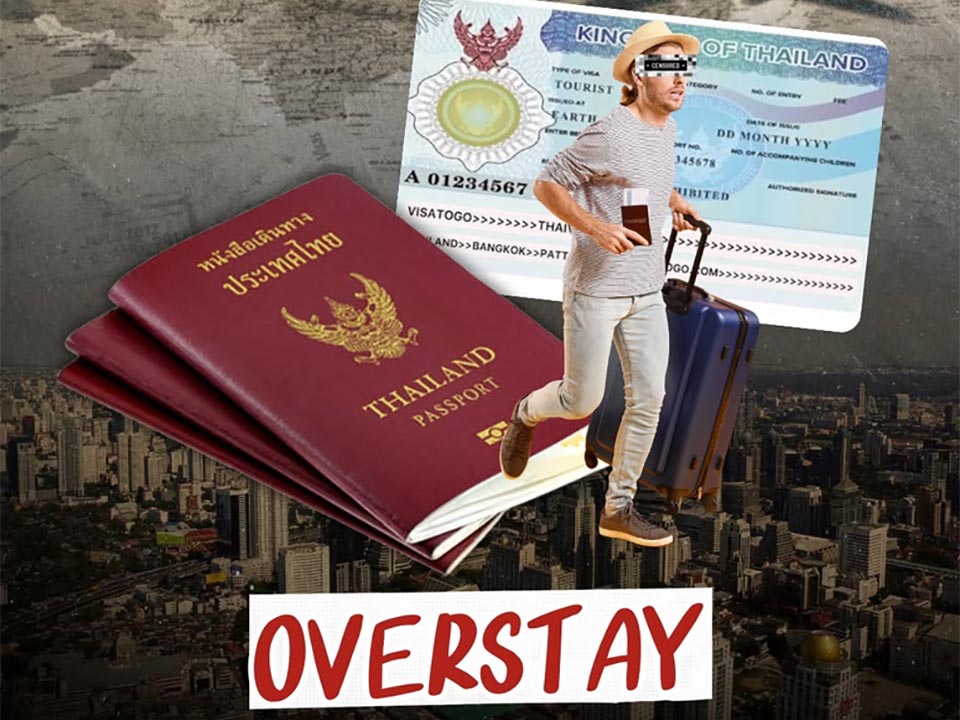
PATTAYA, Thailand – Foreigners staying in Thailand beyond their permitted period face more than a daily fine. Depending on the length of the overstay and how the case is handled, they could also face deportation, imprisonment and a ban on re-entering the country.
Under Section 81 of the Immigration Act B.E. 2522 (1979), a foreigner staying in Thailand without permission, or after permission has expired or been revoked, faces a maximum penalty of two years’ imprisonment, a fine of up to 20,000 baht, or both.
In cases where a foreigner voluntarily reports the overstay before leaving Thailand, the administrative fine is 500 baht per day, up to a maximum of 20,000 baht. The maximum is reached after 40 days.
Examples of the fines include:
- One day: 500 baht
- Seven days: 3,500 baht
- 30 days: 15,000 baht
- 40 days or more: 20,000 baht
Re-entry bans depend on how the case is handled
Foreigners who voluntarily surrender and leave Thailand face re-entry bans if their overstay exceeds 90 days. The published schedule is:
- More than 90 days: one-year ban
- More than one year: three-year ban
- More than three years: five-year ban
- More than five years: 10-year ban
The consequences are more severe when a foreigner is arrested and prosecuted for overstaying. An overstay of less than one year carries a five-year re-entry ban, while an overstay of more than one year carries a 10-year ban. These bans begin on the date the person leaves Thailand.
How to avoid overstay
Immigration authorities advise foreign residents and visitors to take the following precautions:
- Check the last date of permitted stay stamped in the passport or shown on the latest immigration permission. This is not necessarily the same as the visa’s expiry date.
- If more time in Thailand is needed, apply for an extension at an Immigration Office before the permitted stay expires. Approval depends on the visa or permission category and applicable conditions.
- If an overstay has already occurred, contact Immigration promptly for advice rather than ignoring the situation or avoiding officials.
The key message for foreign residents and visitors is simple: check the permitted-stay date carefully and make arrangements before it expires. Even a short overstay is a breach of immigration rules, while a prolonged overstay can affect the ability to return to Thailand.
(Info, Photo: Chonburi Immigration official Facebook page)
Editorial note: The fine and re-entry-ban details above follow the published government guidance. The one-day example refers to the daily fine in a voluntary surrender case; it does not mean a one-day overstay automatically results in a re-entry ban.