

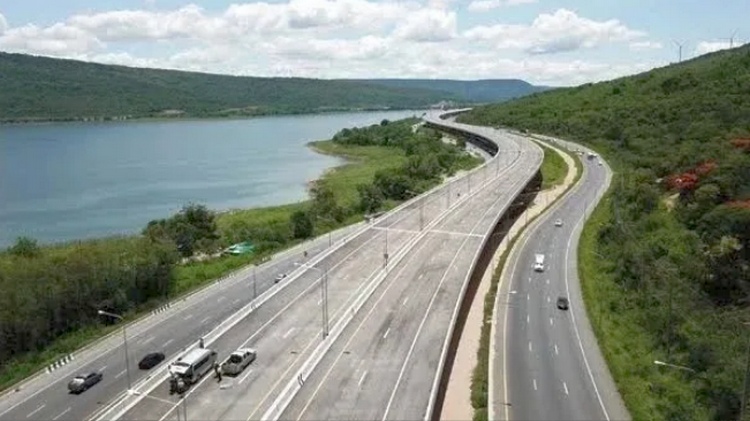
BANGKOK, Thailand – Thailand is accelerating major motorway, railway, port and airport projects to ease traffic congestion, reduce logistics costs and improve the country’s connections with China, Malaysia, Singapore and other international markets.
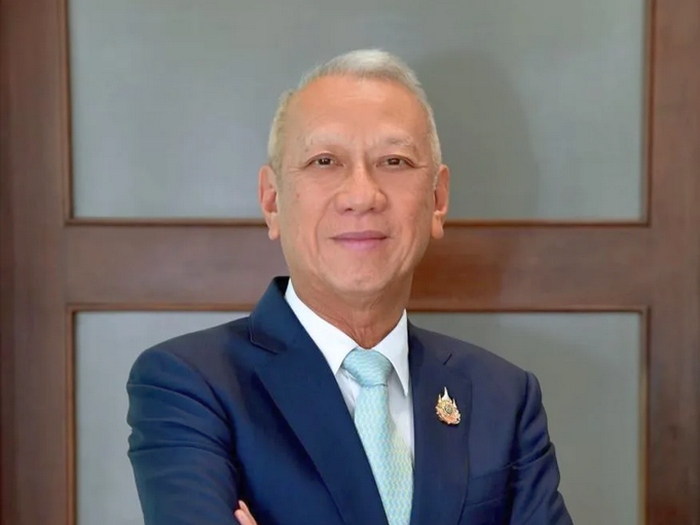
Deputy Prime Minister and Transport Minister Phiphat Ratchakitprakarn said the M6 Bang Pa-in–Nakhon Ratchasima motorway, stretching 196 kilometres, is scheduled to open along its entire route 24 hours a day, every day, from December 25, 2026. The motorway currently operates on a trial basis with free travel limited to weekends, from noon on Friday until midnight on Sunday.
The government is also advancing plans to improve road access to southern Thailand, where congestion remains a major problem during busy travel periods.
M8 motorway planned to ease southern traffic
In 2027, the Transport Ministry plans to push ahead with the M8 motorway project linking Nakhon Pathom, Pak Tho and Cha-am. Funding is expected to come partly from the Motorway Fund, with the ministry also discussing the possibility of raising investment through the Thailand Future Fund with the Ministry of Finance. The project is intended to reduce traffic pressure on Rama II Road, a major route connecting Bangkok with southern Thailand.
Further south, authorities are discussing plans to widen Phetkasem Road between Pran Buri and Chumphon from four lanes to eight. The proposal would convert the central four lanes into a motorway for long-distance traffic, allowing vehicles to travel without stopping at traffic lights. The remaining side lanes would continue serving local communities, districts and provincial centres.
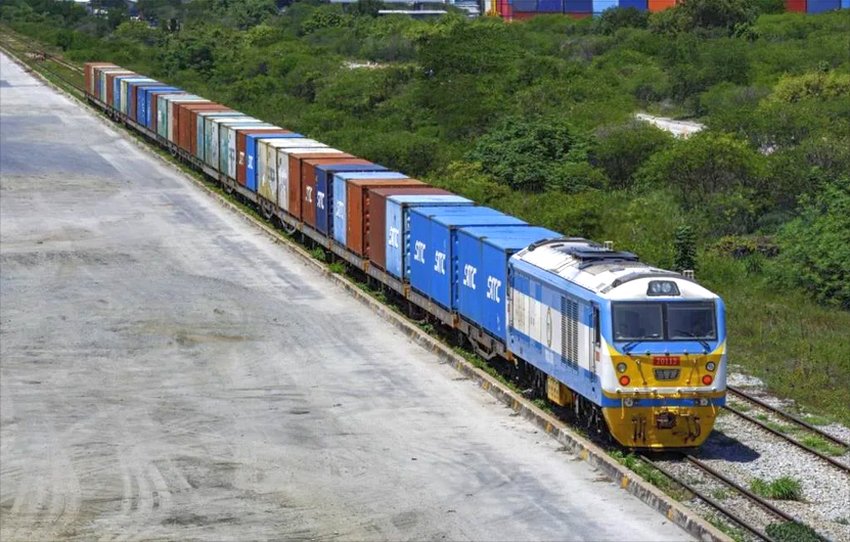
Double-track railways to reach 2,800 kilometres
Thailand is also expanding its railway network to make freight transport more efficient and strengthen regional connections. The country currently has approximately 1,111 kilometres of completed double-track railway, with more than 900 kilometres under construction and over 500 kilometres in preparation for bidding. The combined network is expected to reach approximately 2,800 kilometres in the near future.
In the North, the Den Chai–Chiang Rai–Chiang Khong railway is expected to be completed in 2028, providing a connection towards southern China. The second-phase double-track project between Khon Kaen and Nong Khai, which links with Laos, is expected to be completed in 2031. The Chira Junction–Ubon Ratchathani route has a target completion date of 2034.
In southern Thailand, the Cabinet has approved double-track railway projects covering Chumphon–Surat Thani, Surat Thani–Hat Yai and Hat Yai–Padang Besar. The Hat Yai–Pattani–Su-ngai Kolok route remains under study and design, with work expected to be completed in 2027. These routes are intended to improve railway connections with both western and eastern Malaysia.
Once the network is developed, long-distance freight trucks are expected to take on more of a feeder role, transporting goods over distances of up to 150 kilometres from factories and production areas to railway stations. Railways would then carry the freight over longer distances, helping reduce heavy truck traffic, ease road congestion and improve transport efficiency.
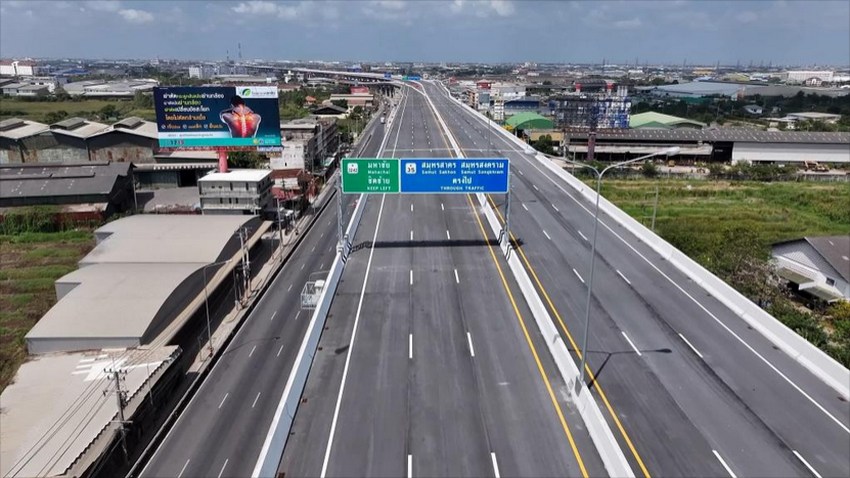
Thailand is also investing in maritime and air transport to support international trade.
Laem Chabang and Suvarnabhumi expand freight capacity
Laem Chabang Port currently handles approximately 10 million twenty-foot equivalent units (TEUs) of container cargo annually. Its Phase 3 expansion is underway and is expected to begin providing additional capacity in about four years, adding approximately seven million TEUs. Air freight accounts for less than 1% of Thailand’s total export volume but represents around 33% of export value, equivalent to approximately 3.5 trillion baht annually, Phiphat said.
Suvarnabhumi Airport currently handles approximately 1.7 million tonnes of air cargo each year. The opening of its third cargo facility in 2029 is expected to add capacity of 600,000–700,000 tonnes annually, raising total handling capacity to approximately 2.3–2.4 million tonnes. The value of goods transported by air is projected to reach around 5.5 trillion baht.
The government’s broader strategy is to use railways as the backbone of domestic freight transport, trucks to feed goods into the rail network, seaports for heavy cargo and air transport for high-value products. Through these investments, Thailand aims to become a regional transport and logistics hub linking China, India, ASEAN, the Middle East, Europe and the United States.