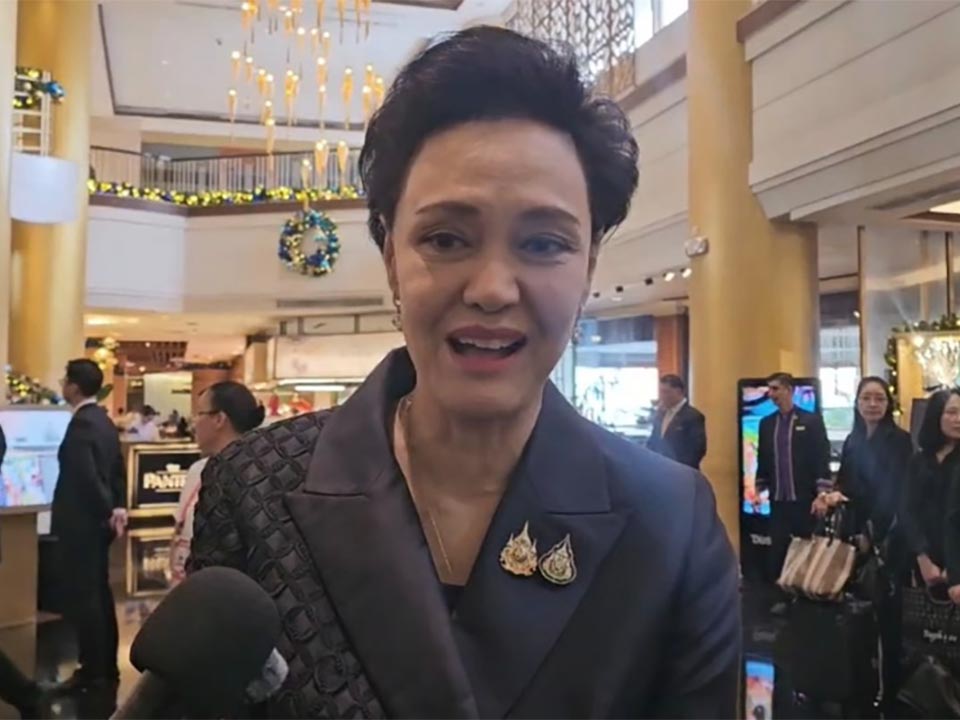
BANGKOK, Thailand – Thailand has not agreed to open its entire market to American imports, Deputy Prime Minister and Commerce Minister Suphajee Suthumpun said on Wednesday, seeking to ease concerns following US President Donald Trump’s remarks that Thailand would eliminate tariffs on all US goods.
Suphajee said Trump was referring to commitments negotiated under the previous government of former Prime Minister Paetongtarn Shinawatra. Those discussions formed part of the framework aimed at reducing the US reciprocal tariff on Thai exports from a threatened 36% to 19%, in exchange for greater access to Thailand’s market.
She stressed, however, that the arrangement did not mean every US product would enter Thailand without restrictions. Sensitive agricultural products would remain subject to import quotas and other safeguards to protect domestic farmers and businesses.
The clarification follows the signing of a joint statement by Prime Minister Anutin Charnvirakul and Trump in Manila on November 17, confirming that negotiations on the Thailand-US Agreement on Reciprocal Trade (ART) had reached substantial conclusion. Both countries must still complete their respective internal procedures before the full agreement can be signed and take effect.
Suphajee said Thailand had already opened its markets extensively to several trading partners, including ASEAN countries, Australia and New Zealand, under long-standing free trade agreements. The arrangement with the United States, she said, should not be interpreted as unrestricted access to every product category.
She argued that allowing more US products to compete in Thailand could benefit consumers and businesses by increasing the choice of goods, raw materials and production inputs.
As an example, she cited meat imports. Thailand already allows beef imports from Australia and would also permit US beef imports under specified quotas, giving consumers more options rather than automatically replacing locally available products or existing imports.
For sensitive agricultural goods, import controls and quotas would remain in place. She also cited animal-feed maize, for which Thailand requires domestic purchases before imports are permitted. Under the measure she described, maize with 30% moisture content is subject to a purchase price of 7.50 baht, helping support local farmers.
Suphajee said the terms being discussed had already been disclosed in July 2025 and that Trump’s latest remarks did not represent new concessions by Thailand. She suggested the US president was highlighting the benefits for American farmers and the public to present the trade outcome positively to his domestic audience.
She added that the joint statement did not immediately remove existing tariffs or open the Thai market. The full agreement still requires detailed legal review, followed by the necessary domestic procedures. Market-opening commitments would be implemented gradually under the agreed conditions.
The minister said closer trade relations could make business and investment between the two countries more convenient, while helping Thailand retain access to its largest export market.
Thailand exported more than 2.37 trillion baht worth of goods to the United States in 2025, supporting approximately 1.25 million Thai workers, according to figures cited by Suphajee.
She said protecting those export earnings and the jobs connected to them remained a central objective of the negotiations, adding that the government did not intend to damage Thai businesses or the domestic economy. (Story & Photo by Prachachat Business)