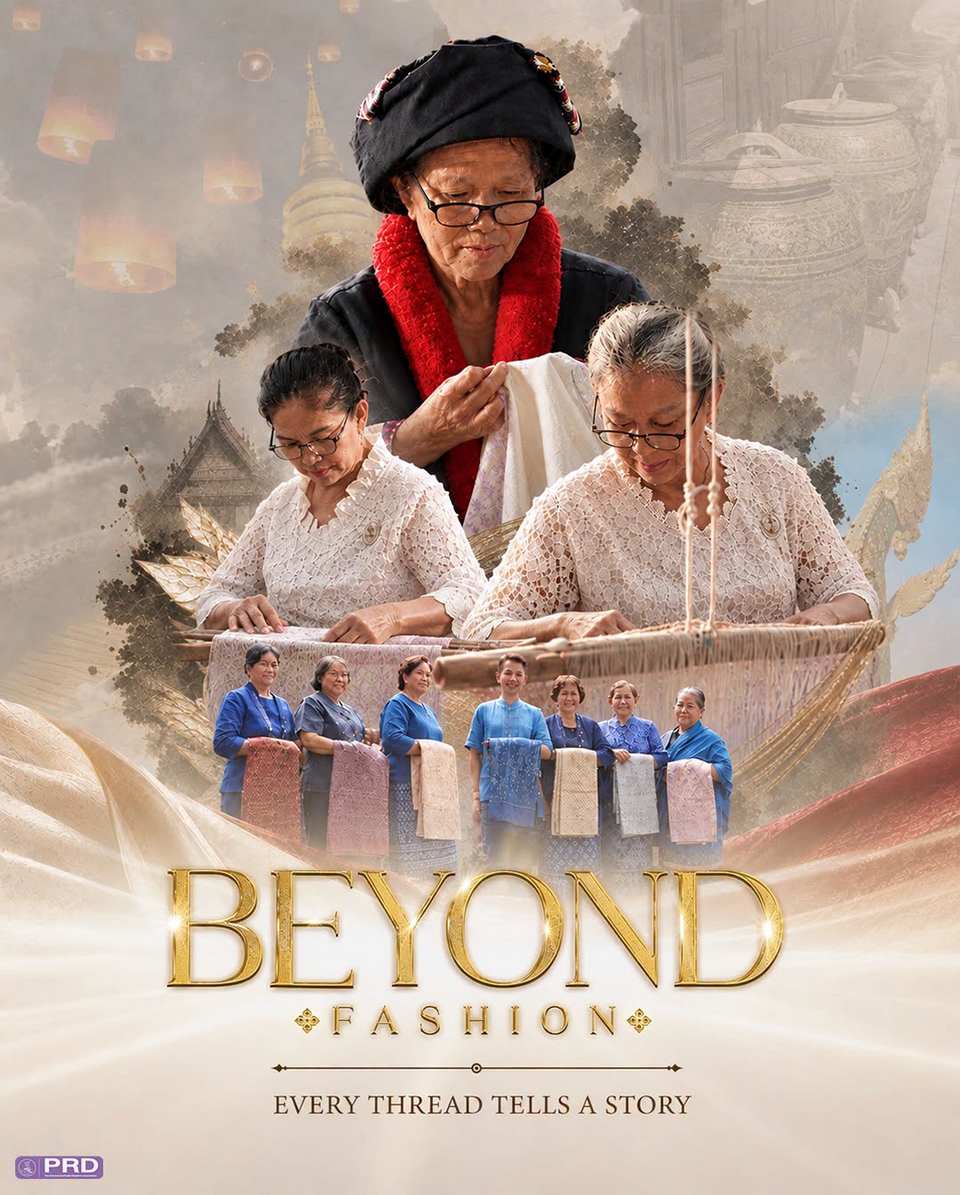
BANGKOK, Thailand – Thai silk weaving is deeply rooted in village life, from mulberry cultivation, silkworm rearing, and silk reeling to natural dyeing using local resources, such as bark, lac, and mud. Far beyond fashion, each thread reflects not only local wisdom passed down through generations, but also local beliefs and diverse cultural identities across Thailand.
For instance, residents in the northeastern region and ethnic groups of the Mekong River basin believe that the mythical Naga serpent is the god of water and the bearer of fertility. Naga or great serpent patterns are, therefore, woven into Mudmee tie-dye silk or Khit (continuous supplementary weft) fabrics as a charm to protect the community and invite rain in the planting season.
Silk fabric with the Khom Wiang motif in northern Thailand is inspired by the floating lanterns used in the Lanna people’s Yi Peng festival. The Khom Wiang pattern is a symbol of hope and prosperity. It is often used in Pha Sin (traditional wrap-around skirts) or shawls worn for religious ceremonies and festivals.
In the South, Phum Riang silk from Surat Thani Province features rich brocade woven with silver and gold metallic threads. Phum Riang Subdistrict in Chaiya District is a community with Buddhist and Muslim Thais living together harmoniously. Phum Riang silk reflects the vibrant traditions of the local Muslim community, as well.
Thai silk in the central region is known for its simplicity and gracefulness, often sharing techniques and blending styles from the North and Northeast, such as silk fabrics of Ratchaburi and Suphan Buri provinces. For example, Ratchaburi’s “Dragon Jar with Paired Birds” pattern highlights the province’s rich heritage of dragon jars, an iconic local symbol. Suphan Buri’s “Ebony Flower” (Dok Makluea) pattern represents happiness and protection from illness. The ebony flower is also recognized as the flower of this province. (PRD)