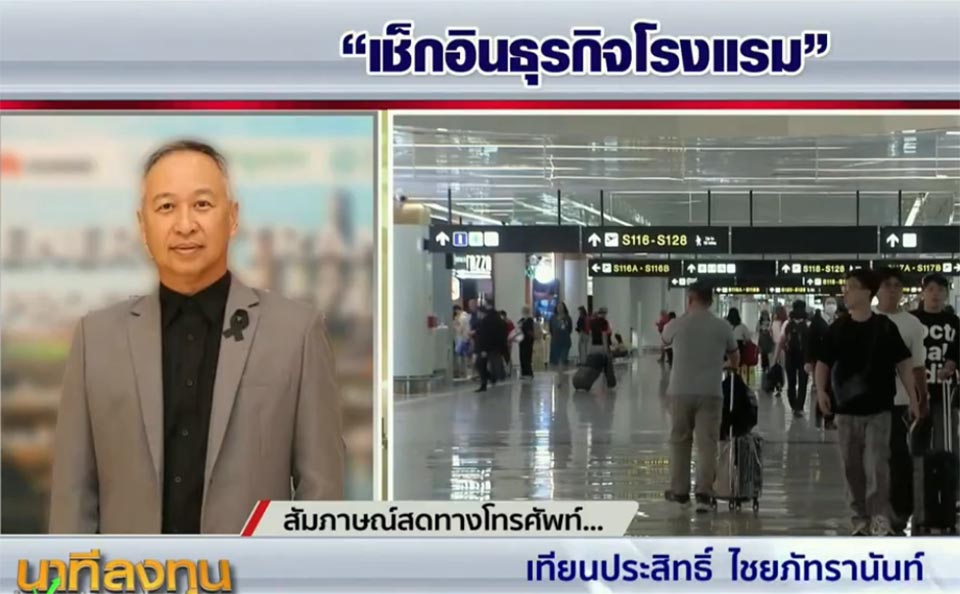
BANGKOK, Thailand – Thailand’s hotel industry is warning of a challenging third quarter as soaring global oil prices threaten to increase travel costs and slow tourism, while calling on the government to improve airport immigration services and provide financial support for smaller hotels. Thai Hotels Association President Thienprasit Chaiyapatranun said the recent surge in Brent crude oil prices above US$100 per barrel, driven by renewed tensions in the Middle East, is raising concerns across the tourism sector.
Higher fuel prices are expected to push up airfares as aviation fuel costs increase, making travel more expensive for international visitors. Tour operators and travel agencies are also facing mounting operational costs, which could ultimately affect hotel occupancy, particularly at three-star hotels and smaller properties with limited financial reserves. The association has urged the government to introduce financial assistance or low-interest funding to help smaller hotel operators improve their properties and maintain service standards during the downturn. Despite the concerns, Thienprasit said the Chinese tourism market is showing encouraging signs of recovery, with around 17,000 to 18,000 Chinese visitors arriving in Thailand each day, well above last year’s levels.
The Indian market, however, has underperformed over the past two months due to uncertainty surrounding Thailand’s visa policy. Although the government has since confirmed a 30-day visa-free entry scheme, he said it will take time for confidence and travel demand to fully recover.
The association also called for urgent improvements at Thailand’s immigration checkpoints, where international visitors are reportedly waiting two to three hours to clear passport control.
“First impressions matter,” Thienprasit said, noting that lengthy queues at immigration can damage Thailand’s reputation as a tourist-friendly destination.
On domestic tourism, the association questioned the government’s plan to launch the Thai Tiew Thai Plus 2026 campaign during the fourth quarter, traditionally Thailand’s peak tourism season.
Thienprasit argued that incentives are unnecessary during the high season, when hotels already experience strong demand and naturally higher room rates. Launching subsidies at that time, he warned, could create the false impression that hotels are unfairly raising prices to take advantage of government support. Instead, the association recommended using the budget during the low season next year—or bringing the campaign forward to the third quarter—to provide greater economic benefits when the industry needs support most.
According to government figures, Thailand welcomed 17.36 million foreign visitors between January 1 and July 18, 2026, generating more than 830 billion baht in tourism revenue. China remained the largest source market with 2.86 million arrivals, followed by Malaysia (2.25 million), India (1.31 million), Russia (1.06 million), and South Korea (631,777). The Ministry of Tourism and Sports is seeking approval for a 1.75-billion-baht budget for the Thai Tiew Thai Plus 2026 campaign, which would offer discounts on accommodation, flights, tour packages, spas, and digital vouchers. The ministry estimates the program could generate more than 32 billion baht in economic activity and approximately 1.6 billion baht in tax revenue. (TNA)