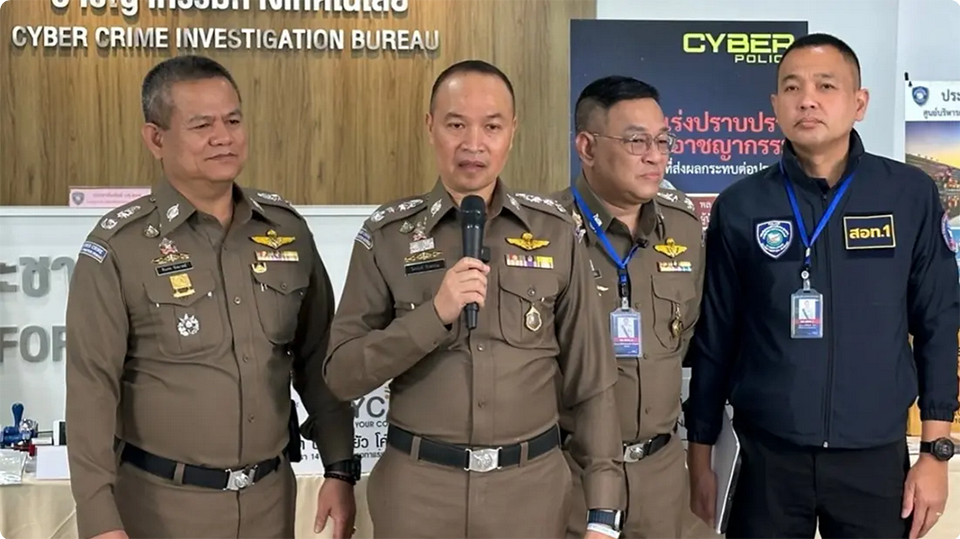
BANGKOK, Thailand – Thai cyber police are working to ease the burden on citizens affected by bank account freezes as criminal networks adapt their money laundering strategies. Fraud syndicates are increasingly turning to “mule accounts” and small shops to disguise illicit funds, complicating efforts to trace money and return it to scam victims.
Cyber Crime Investigation Bureau (CCIB) Commissioner Pol Lt Gen Trirong Piwpan said scammers now avoid sending stolen money directly into syndicate accounts. Instead, funds are scattered across multiple mule accounts. Some account holders knowingly rent out their accounts, while others are unaware of the misuse. Criminal groups also route money through shops using fake transactions, later withdrawing it as cash or goods to obscure the trail.
These tactics have left ordinary citizens and small business owners exposed. Many find their accounts frozen after unknowingly handling fraudulent transfers, leaving them cut off from their money while investigations unfold. Police say such cases often occur when scam victims file complaints only after the funds have already been moved.
Investigators have also seen scammers shift away from cryptocurrency and digital assets. Instead, they use stolen money to purchase goods, which are then delivered to designated locations and resold for cash. This approach has begun spreading to smaller retail outlets, adding new challenges for authorities trying to block the illicit flow.
The CCIB is now working with banks to update freezing and unfreezing procedures to limit disruptions for law-abiding account holders. It has also expanded its Account Freeze Complaint Center, with hotline 1441 available for general complaints and two direct numbers—095-425-7478 and 061-032-2914—for account verification and unfreezing requests. (NNT)