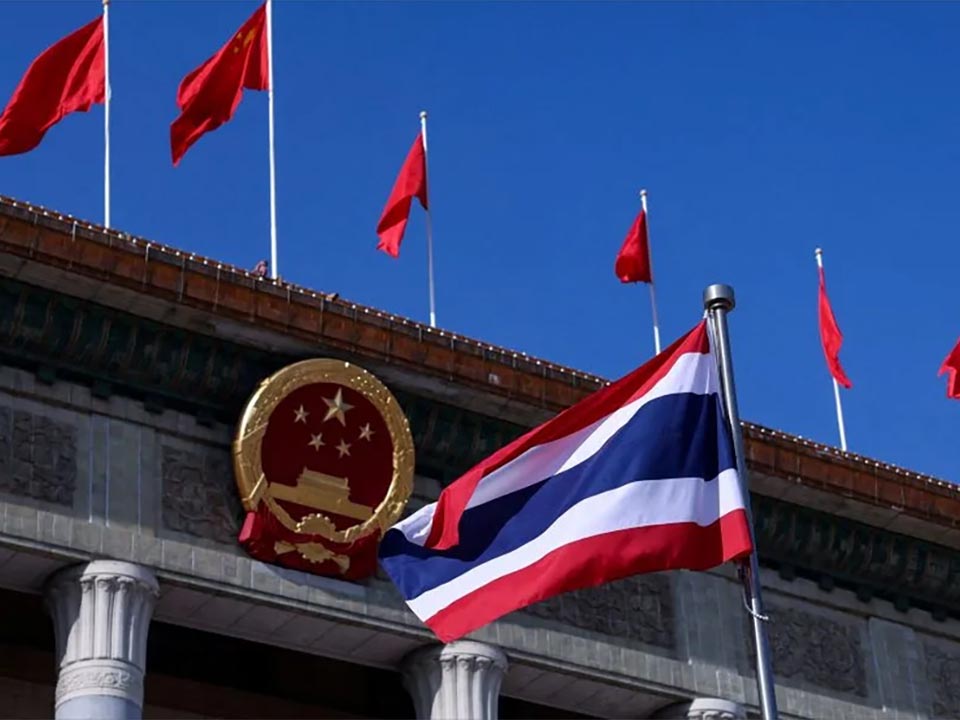
BANGKOK, Thailand – A new report by Reporters Without Borders (RSF) has raised concerns about growing Chinese influence over Thailand’s media landscape, warning that diplomatic pressure, media partnerships and financial incentives may be encouraging Thai newsrooms to censor themselves and avoid reporting stories critical of Beijing.
The report, based on interviews with several Thai journalists who requested anonymity for fear of retaliation, describes an expanding network of Chinese influence involving strategic partnerships with local media organizations, content-sharing agreements, sponsored trips for journalists and direct pressure from Chinese diplomatic officials. RSF warns that these practices threaten editorial independence and could gradually reshape how sensitive international issues are reported in Thailand.
China has steadily strengthened its relationship with Thailand, becoming one of Bangkok’s most influential international partners alongside the United States. However, some Thai journalists have expressed concern that Beijing’s growing influence could push the country towards becoming what one described as a “Chinese satellite state”.
RSF considers the level of Chinese propaganda entering Thailand’s media environment particularly worrying, arguing that it undermines independent journalism and limits public access to information that does not reflect Beijing’s preferred narrative.
One of the most significant examples cited in the report concerns Thai PBS and an interview broadcast on November 3, 2023, with Taiwan’s then Foreign Minister Joseph Wu. Following the interview, the Chinese Embassy in Bangkok issued a statement accusing the broadcaster of providing a platform for “Taiwan independence separatists” and claiming the program had hurt the feelings of the Chinese people.
According to an unnamed source familiar with the matter, the embassy subsequently met with Thai PBS executives, resulting in an agreement to remove the full interview from the broadcaster’s online platforms approximately one week after publication. No public explanation was issued by Thai PBS. Neither the embassy nor the broadcaster had responded to RSF’s request for comment at the time of the report.
The report also recalls an incident in 2022 when several Chinese Embassy officials confronted a Thai journalist at a diplomatic reception over his reporting on the persecution of Uyghur minorities in China. One official reportedly warned that the journalist’s media organization would no longer be allowed to interview the Chinese ambassador.
More recently, in August 2025, Chinese diplomatic officials intervened in an art exhibition at the Bangkok Art and Culture Centre, reportedly pressuring organizers to remove works relating to Hong Kong, Tibet and East Turkestan, as well as censoring explanatory texts.
Although Reuters reported on the incident, relatively few Thai media outlets followed the story. When Khaosod English published an opinion article by journalist Pravit Rojanaphruk criticizing the censorship, a Chinese Embassy media adviser reportedly visited the newspaper’s office. Pravit said the official told him Beijing’s One China policy was not open to challenge.
Speaking to RSF, Pravit warned that such pressure could encourage self-censorship within Thai newsrooms, particularly when journalists see their editors regularly travelling to China. He said this could make reporters increasingly cautious about covering subjects considered sensitive by Beijing.
Chinese state-controlled media organizations, including Xinhua News Agency, China Radio International and China Global Television Network (CGTN), have also significantly expanded their Thai-language content. Several have established content-sharing agreements with Thai media organizations, including public broadcasters and mainstream news outlets.
By the end of 2019, at least 12 Thai-language media organizations had signed content-sharing agreements with Xinhua. Thailand’s Public Relations Department has also maintained various cooperation agreements with Xinhua and China Media Group, a major state-controlled media organization.
Financial pressures facing Thailand’s media industry have added another dimension to the issue. Citing Radio Free Asia, the RSF report notes that more than 300 Thai news organizations reportedly laid off staff in 2024, prompting the Thai Journalists Association to describe the year as a particularly difficult period for the industry.
The deteriorating financial position of newsrooms has raised concerns about their ability to maintain editorial independence. One Thai journalist told RSF that several reporters from major Thai television networks had since moved to work for Chinese media organizations.
Joshua Kurlantzick, a former American journalist and senior fellow for Southeast Asia and South Asia at the Council on Foreign Relations, told RSF that without an improvement in the financial health of Thailand’s media industry, news organizations could become increasingly dependent on content supplied by Chinese state-controlled outlets. He warned that this could further reduce the space available for independent and critical reporting on China.
RSF says the developments should serve as a warning to the Thai government and media organizations, calling for stronger safeguards to protect press freedom, newsroom independence and journalists’ ability to report without intimidation or political interference. (Story, Photo: MGR Online)