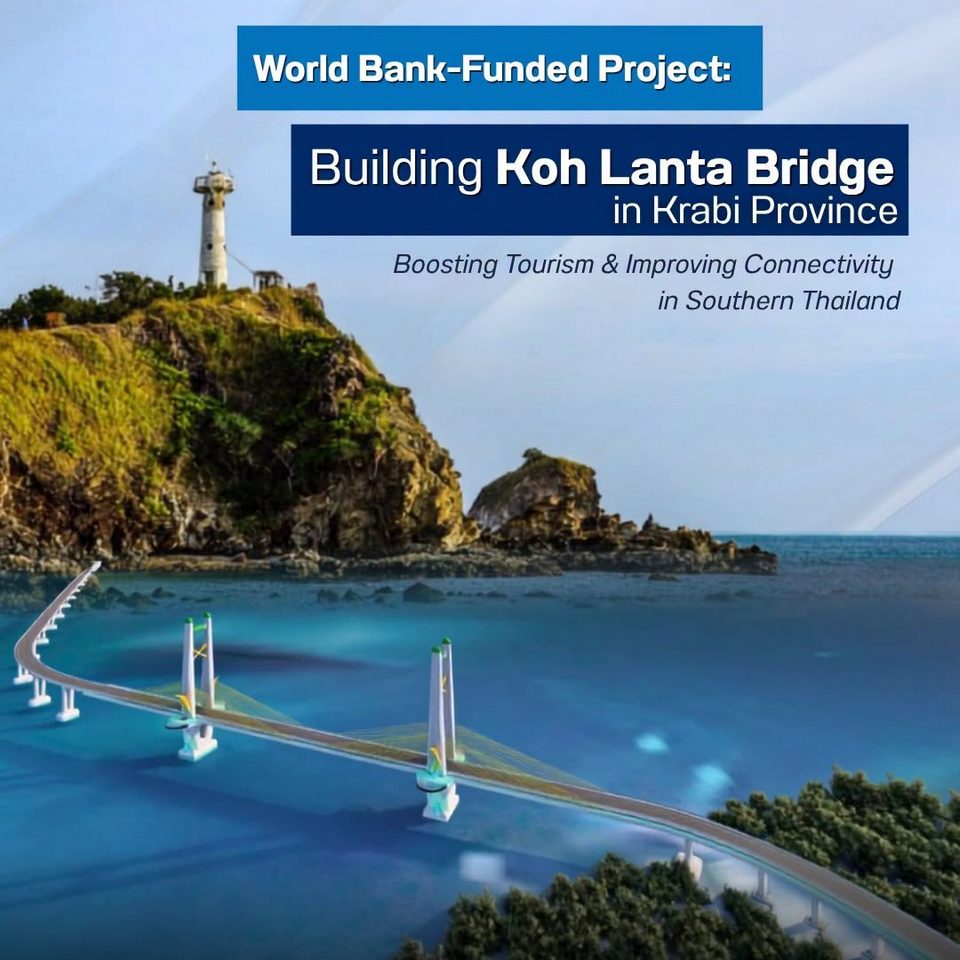
BANGKOK, Thailand – More than 70 years ago, the World Bank Group supported Thailand’s early development by providing financial and technical expertise for some of the country’s first paved roads and major highways. Today, that longstanding partnership continues with the Koh Lanta Bridge project—a bridge around two kilometers long that will connect the island to mainland Krabi, boosting the island’s tourism competitiveness, improving connectivity, and creating new opportunities in southern Thailand.
What will the bridge bring?
– Faster travel: The bridge will replace long waits for car ferries, reducing the crossing time from hours to just a few minutes—particularly important in emergencies;
– International standards: The construction is focusing on high-quality engineering, cost-effectiveness, and transparency;
– Green infrastructure: The project is developed under the World Bank Group’s Environmental and Social Framework (ESF), with measures to minimize impacts on mangroves and coral reefs, while creating a potential new landmark for visitors;
– More opportunities for local communities: Improved connectivity is expected to boost tourism, support local businesses, and help fishermen and farmers transport fresh products more efficiently, reducing logistics costs.
The next milestone in the partnership between Thailand and the World Bank Group will come on 12-18 October 2026, when Thailand hosts the 2026 IMF-World Bank Group Annual Meetings—35 years after the meetings were last held in Thailand, highlighting the country’s longstanding partnership with the global financial community and its commitment to a more sustainable future. (PRD)