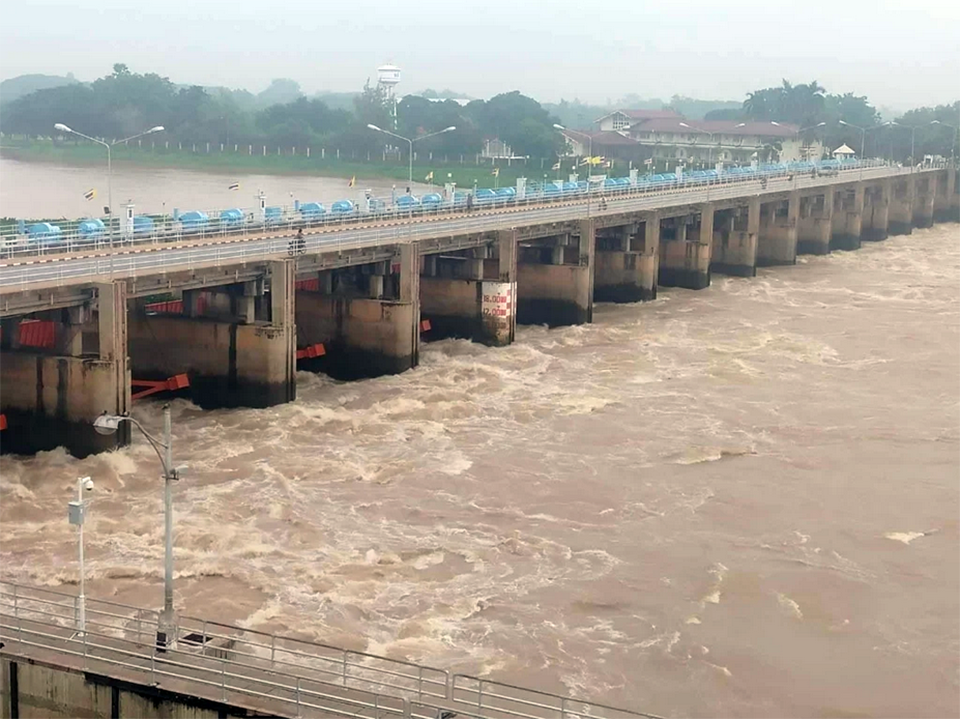
BANGKOK, Thailand – The Royal Irrigation Department has stepped up water discharges from the Chao Phraya Dam in Chai Nat and the Pasak Jolasid Dam in Lopburi to cope with northern runoff and prepare for additional rain from the active monsoon trough.
The Smart Water Operations Center reported that outflow from the Chao Phraya Dam was raised from 2,100 to 2,200 cubic meters per second, despite efforts to hold water upstream and divert it into irrigation systems. The dam remains the fastest channel to drain floodwaters into the sea, ensuring readiness for incoming rains.
At Pasak Jolasid Dam, rising inflows from upstream rainfall in Phetchabun prompted an increase in discharge to over 300 cubic meters per second, with plans to raise it to 350 tomorrow. Authorities stressed that water levels in the Pasak River downstream remain within safe banks.
Low-lying areas along the lower Chao Phraya River are urged to remain on high alert due to three simultaneous risks:
- Increased northern runoff passing through major dams.
- Seawater intrusion from high tides until Sept 22, which will slow drainage into the Gulf of Thailand.
- Persistent heavy rains from the monsoon trough, expected to continue into early October.
The National Water Command Center (ONWR) has ordered all agencies to synchronize flood management with tidal conditions and prepare for further rain from a possible tropical storm developing in the South China Sea later this month.
Reservoirs across Thailand are reporting high storage levels: Bhumibol at 78% capacity, Sirikit at 88%, Khwae Noi at 83%, Pasak Jolasid at 69%, and Ubol Ratana at 72%. Some retention areas, including Bung Boraphet, have exceeded 100% capacity.
Authorities are considering stepwise water releases from large dams to create buffer space for new inflows, while ensuring downstream communities are alerted in advance. Irrigation officials are also preparing all 10 designated flood-retention fields in the Chao Phraya basin to absorb excess runoff. (TNA)