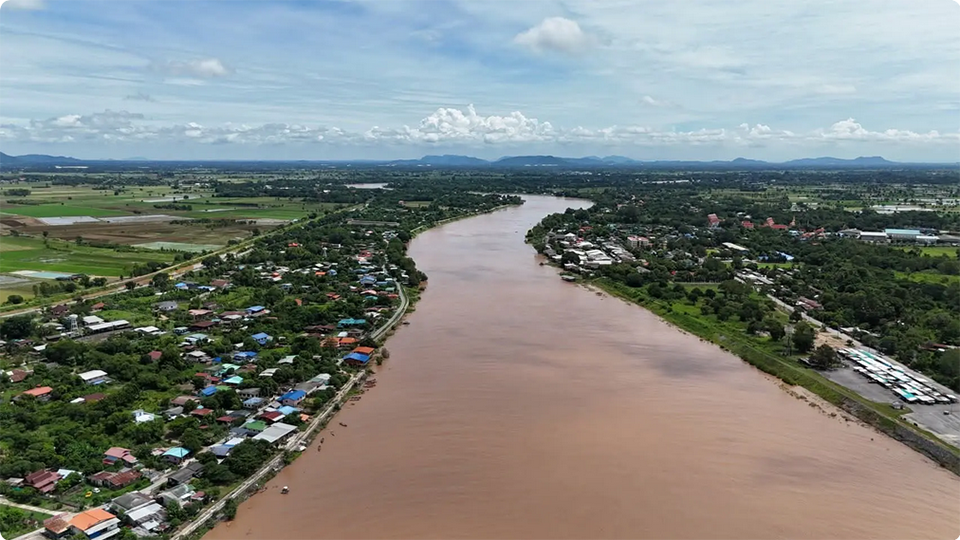
BANGKOK, Thailand – The Office of the National Water Resources (ONWR) and the Royal Irrigation Department (RID) have intensified efforts to divert water into eastern and western waterways to maintain a discharge of 2,000 cubic meters per second (m³/s) at Chao Phraya Dam.
On the eastern side, discharge has been raised by 15 m³/s through the Lop Buri River Barrage and the Bang Kaeo Canal Barrage. On the western side, diversion has increased by 55 m³/s through a local canal, the Tha Chin River, and the Noi River. These adjustments help ease the overall flow through the dam.
As of September 14, Chao Phraya Dam’s discharge remains at 2,000 m³/s, unchanged from the previous day. The upstream level has risen to 17.31 meters above mean sea level, up 12 centimeters in 24 hours. The RID has been tasked with continuing water distribution and accelerating the flow toward the sea.
The Chai Nat Provincial Incident Command Center reported flooding in low-lying areas both upstream and downstream of the dam, affecting communities along the Chao Phraya River and Makham Thao Canal. The flooding has reached 4 districts, 16 subdistricts, 40 villages, and 1 community, with 247 households and 608 people impacted.
Hydrological readings show that flow at C.2 Station in Nakhon Sawan province reached 2,259 m³/s on September 14, up 26 m³/s from the previous day. At C.13 Station, discharge at the dam remains steady at 2,000 m³/s. Downstream water stands at 14.38 meters above mean sea level, or 1.66 meters below the riverbank.
Forecasts indicate upstream levels will continue rising, while downstream levels are expected to stay steady. Authorities are maintaining a close watch to limit further impact on nearby communities. (NNT)