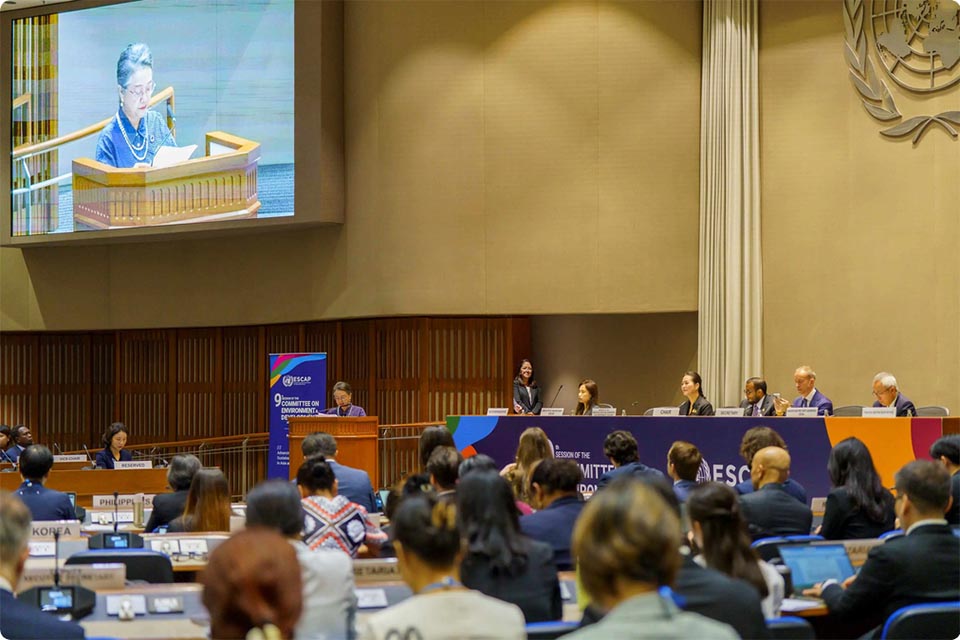
BANGKOK, Thailand – Governments across Asia and the Pacific have adopted a new regional roadmap to address climate change, biodiversity loss, and pollution through closer cooperation. During a meeting convened by the United Nations Economic and Social Commission for Asia and the Pacific (ESCAP), ministers endorsed the Ministerial Declaration on Environment and Development in Asia and the Pacific 2026 and the Regional Program of Action on Advancing Synergies for Sustainable Development in Asia and the Pacific, 2026–2030. ESCAP stressed that the region continues to face growing environmental pressures. At the current pace, 88 percent of measurable environment-related Sustainable Development Goal targets are projected to be missed by 2030, while 90 percent of the population is exposed to unsafe levels of air pollution. Climate change, biodiversity loss, and water insecurity are also placing increasing pressure on livelihoods, economies, and ecosystems.
The declaration calls for better alignment of policies, financing, and institutions so that action in one area can generate wider environmental and development benefits. ESCAP also noted that predictable, adequate, and grant-based financing remains essential for countries that are highly vulnerable to climate change. The meeting also reviewed regional progress, with 39 ESCAP member states adopting carbon neutrality or net-zero targets, 46 countries incorporating nature-based solutions into national climate or development policies, and 25 of the 27 coastal countries including ocean-based measures in their updated national climate plans. (NNT)