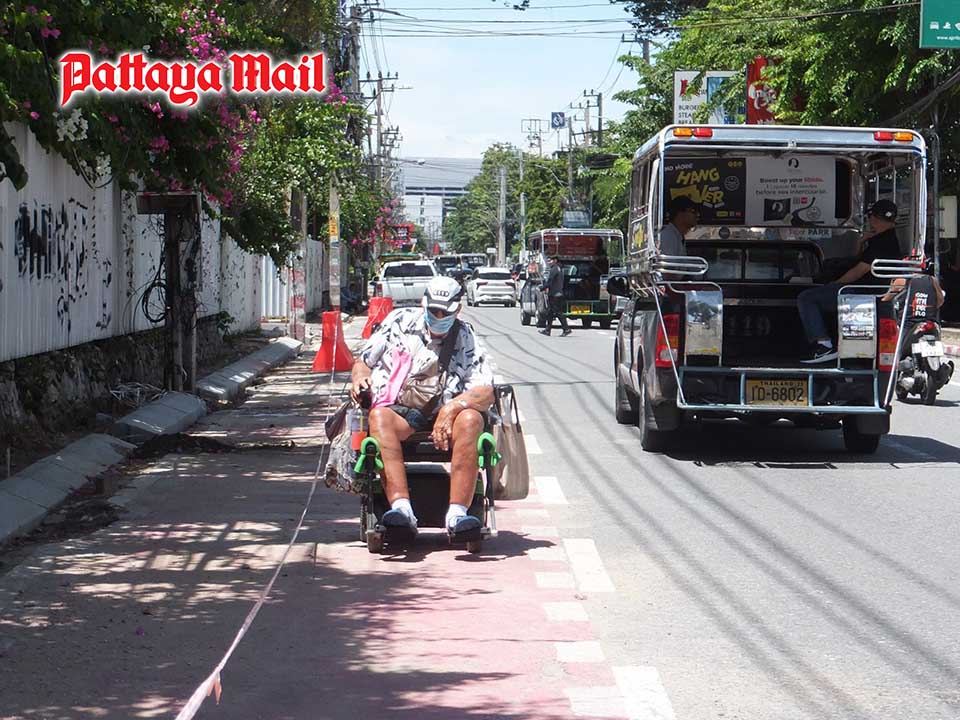
PATTAYA, Thailand – For many long-term visitors and foreigners living in Pattaya, navigating the city on foot has become an exercise in frustration, endurance, and, increasingly, disappointment. Sidewalks, once a simple convenience, have become a vanishing commodity, blocked, broken, or entirely absent in many parts of the city.
Walking along Pattaya’s main streets is now a precarious affair. Vendors spill over onto pedestrian paths, construction projects leave gaps and debris, and motorbikes and scooters often claim the pavement as their own. For foreigners unfamiliar with local traffic norms, this can feel less like an inconvenience and more like a hazard. Forget about those in wheelchairs—they have little to no chance of navigating these chaotic sidewalks safely. Add to that the unfinished and long-promised sidewalks that never seem to materialize, and the picture of pedestrian neglect becomes even grimmer.
Worse still, some sidewalks appear to be gone for good. On streets like Soi Bua Khao and Second Road, pedestrians are forced onto the road itself, competing with vehicles in a risky dance that should have been avoided decades ago. Local authorities have made intermittent promises of improvement, but little has materialized beyond temporary fixes or patchwork repairs.
The situation reflects a broader tension in Pattaya’s urban planning: the city prioritizes tourism, nightlife, and vehicle traffic over safe and accessible walking spaces. For long-term residents and pedestrians, the message is clear: the city is not designed for those who move slowly, on foot, or require safe walkways.
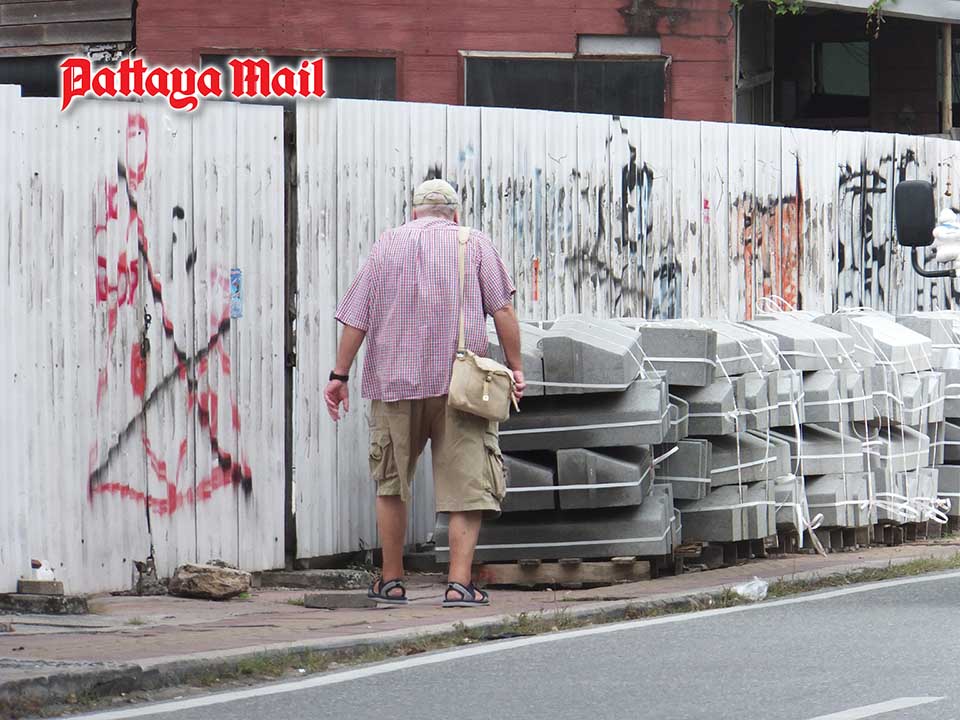
It’s not just a matter of convenience; it’s a matter of safety and dignity. Sidewalks are a fundamental element of any modern city, yet in Pattaya, they have become an afterthought—if they exist at all. Foreign visitors who once enjoyed strolling the city or walking to local shops now find themselves detoured, obstructed, or forced into dangerous proximity with traffic.
Pattaya’s authorities must recognize that the sidewalks of yesterday cannot disappear without consequence. Urban planning should include pedestrian rights as a central component, not a secondary consideration. Without serious investment and enforcement, Pattaya risks creating a city where walking is not just inconvenient—it’s unsafe.
For a city that brands itself as a tourist-friendly destination, the lack of reliable pedestrian infrastructure is a glaring blind spot, one that sends a subtle but unmistakable message: in Pattaya, pedestrians—especially foreign ones—come last.