

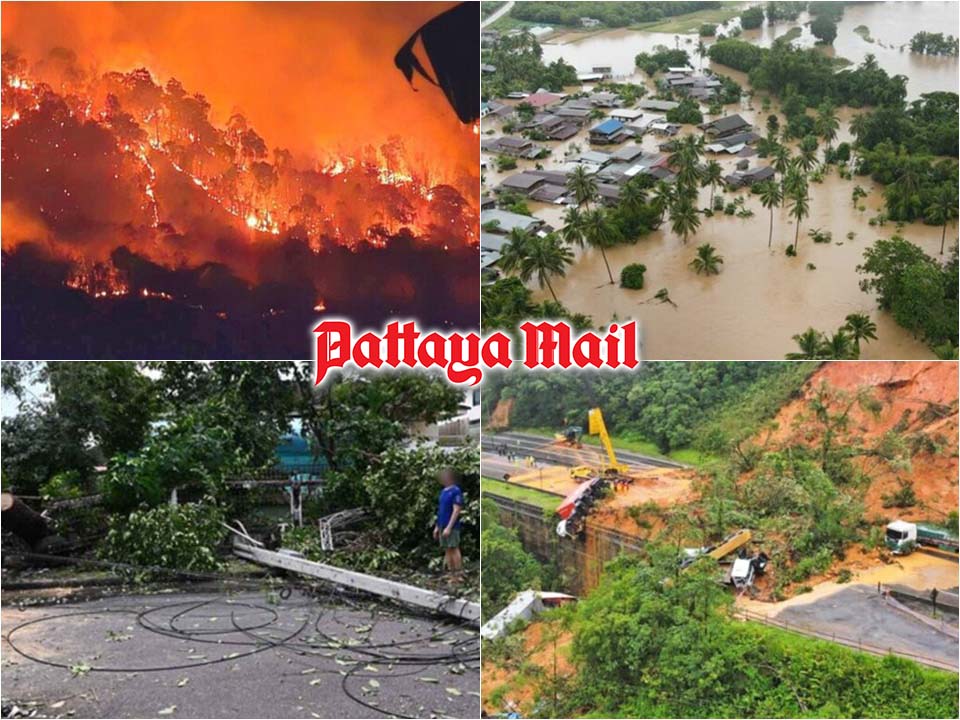
BANGKOK, Thailand – Extreme weather and natural disasters are making emergency preparedness increasingly important, with households urged to plan ahead rather than wait for help after a crisis strikes. From widespread wildfires and severe flooding to powerful storms and sudden landslides, disasters can force people from their homes, destroy communities and leave residents with little time to react. Government and private-sector assistance may also take time to reach affected areas, making individual and family preparedness essential. The guidance highlights four major emergencies and practical steps people can take before and during each incident.
Fire
Homes should be equipped with smoke detectors and fire extinguishers, while residents should know their escape routes and regularly check electrical wiring and appliances. If a fire breaks out, remain calm and call the fire service on 199. Stay low to avoid smoke, which rises, and cover the nose and mouth with a damp cloth if available. Check a door handle for heat before opening it. If escape is impossible, close the door to keep smoke out and signal for help from a safe window or balcony.
Flooding
Residents should check whether their homes are in flood-prone areas, keep important documents in waterproof bags and prepare enough food for at least seven days where possible. Valuables and essential belongings should be moved to higher ground. Families should agree on an evacuation plan and meeting point. If flooding threatens, watch for electrical hazards and disconnect power before water reaches dangerous levels, if it is safe to do so. Follow weather updates and official evacuation instructions without delay.
Severe storms and strong winds
Thailand’s tropical climate can produce thunderstorms throughout the year, sometimes bringing violent gusts, lightning, heavy rain and hail. Residents should inspect roofs, doors and windows, and secure objects that could be blown away. During a storm, stay inside a sturdy building, close doors and windows, and keep away from glass. Avoid large trees, power poles and advertising signs. During lightning, stay out of open areas and away from bodies of water.
Landslides and flash floods
People living near mountains, steep slopes or streams should monitor rainfall levels and official warnings, and have an evacuation plan ready. Prolonged heavy rain, rapidly rising water, muddy streams, unusual sounds or the sound of breaking trees and shifting rocks can signal danger. Anyone noticing these signs should leave the area immediately, avoiding hillsides, streams and waterways. Do not return until authorities confirm it is safe.
The guidance stresses that staying informed is one of the most important parts of disaster preparedness. Regular planning and simple precautions can reduce risks, protect families and limit losses when emergencies occur. Source: Thailand Meteorological Department (TMD), via Khaosod.