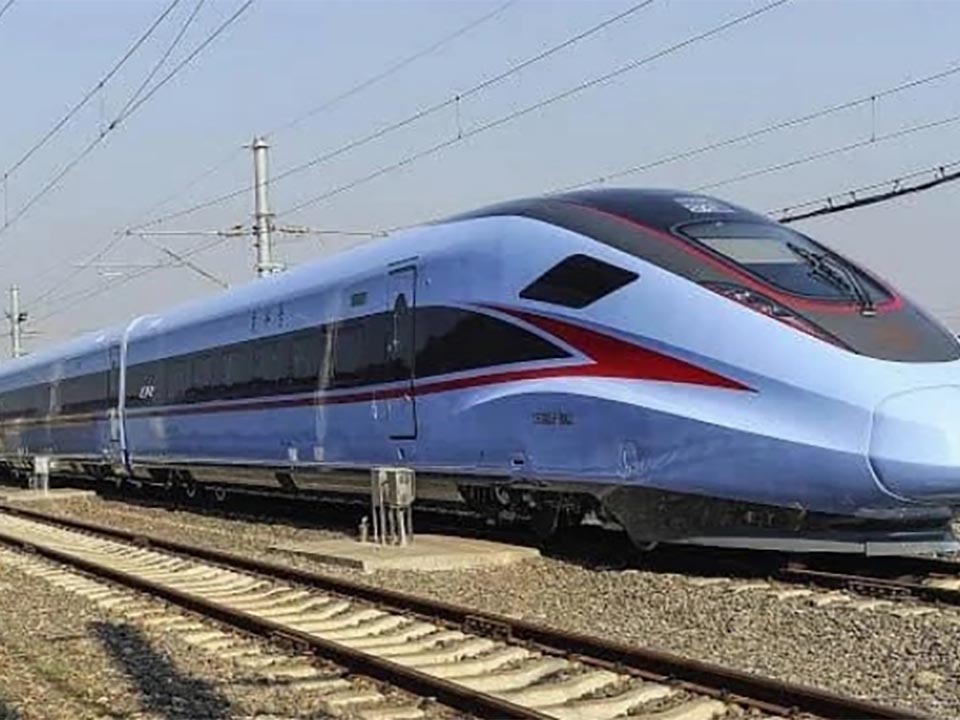
BANGKOK, Thailand – Thailand’s long-delayed Thai-Chinese high-speed rail project is facing further timetable changes, with the State Railway of Thailand (SRT) extending one major construction contract by 655 days and preparing to take over another section to resolve overlapping infrastructure works.
SRT Governor Anan Phonimdaeng said the SRT board on August 11 approved a 655-day extension for Contract 3-3, covering the 21.6-kilometre Ban Dai Ma–Lam Takhong section of the Bangkok–Nakhon Ratchasima phase. The contract deadline will move from September 3, 2026, to June 19, 2028.
The extension was caused mainly by delays in handing over construction areas linked to adjustments to the existing railway alignment under the parallel Map Kabao–Chira Road Junction double-track railway project. Contract 3-3, worth 9.84 billion baht and awarded to Thai Engineer and Industry Co., Ltd., was about 60% complete as of July 2026 but remained around 38% behind schedule.
SRT prepares to build overlapping section
For Contract 4-1, covering the 15.21-kilometre Bang Sue–Don Mueang section, the SRT plans to proceed with construction itself because the route overlaps with the high-speed rail link connecting three airports. The estimated construction cost is about 22 billion baht. Around 4.34 billion baht for the upper track structure is already included in the Thai-Chinese high-speed rail project, while approximately 18 billion baht for foundations, pillars and related structures is currently included under the investment framework of the three-airport high-speed rail project. The SRT plans to seek Cabinet approval to transfer the relevant budget framework between the two projects.
A preliminary design for Contract 4-1 has already been prepared and is being reviewed, with a new cost estimate under preparation. The contract is expected to be tendered under a Design & Build model, with the contractor responsible for both design and construction.
The SRT aims to seek board approval for changes to the contract scope later this year before submitting the proposal to the Cabinet. Construction could begin in 2027 and take about three years.
Ayutthaya section faces another tender
Contract 4-5, covering the 13.3-kilometre Ban Pho–Phra Kaeo section with a budget of 11.80 billion baht, will also require a new tender after the previous contractor declined to maintain its bid price.
The section has been affected by changes to the Ayutthaya station design intended to reduce the visual impact on the historic World Heritage area and lower the height of the elevated railway structure.
The SRT now plans to hire consultants to redesign the Ayutthaya station and conduct archaeological surveys before launching a new construction tender. The consultancy work is expected to cost around 30–40 million baht and take about one year. The SRT expects to tender the construction work in 2028.
Civil works targeted for completion in 2030
Despite the delays, the SRT is targeting completion of civil works across the project by 2030, followed by system testing and trial operations in 2031. Contract 2.3, covering the design, procurement and installation of track, electrical and mechanical systems, signaling and communications, as well as the procurement of trains and staff training, is valued at 50.63 billion baht.
The SRT has already issued the first Notice to Proceed for design work, including train design, which is currently undergoing acceptance procedures. The second Notice to Proceed, covering system installation, will need to be coordinated with progress on all 14 civil construction contracts.
The SRT plans to prioritize handing over sections of completed ground-level track so that installation of rails, electrical systems, signaling and communications equipment can proceed continuously.
Contract 2.3 was signed on October 28, 2020, with China Railway International Co., Ltd. and China Railway Design Corporation, both Chinese state-owned enterprises. The original 64-month contract expired on April 22, 2026, and the SRT is considering an initial 45-month extension. The revised schedule will need to be coordinated with the civil works to ensure that installation, system testing and trial operations can meet the 2031 target.