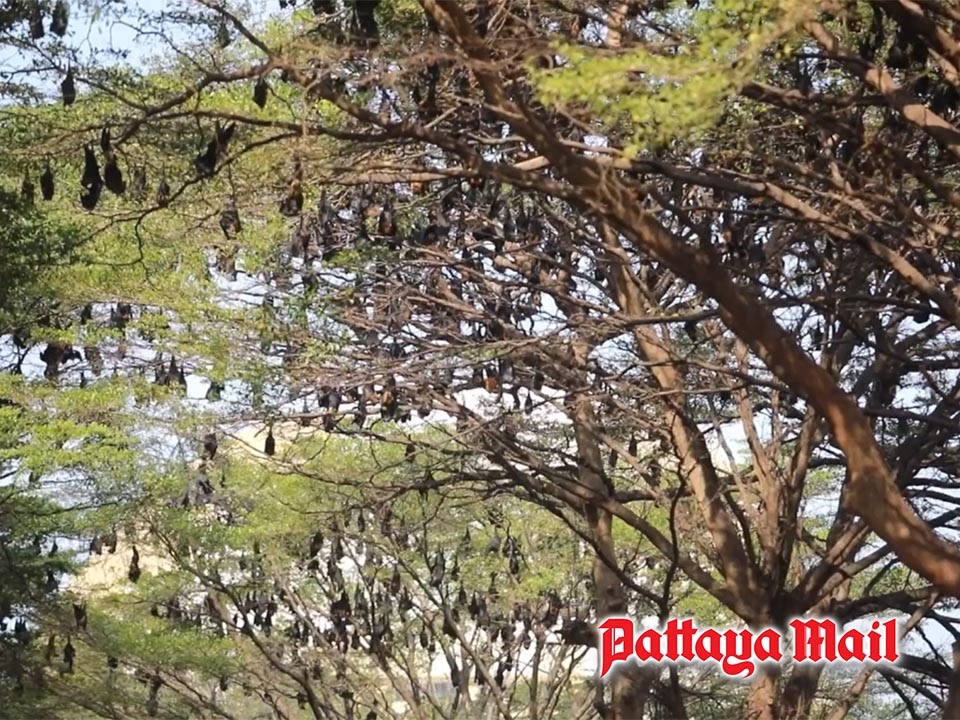
PATTAYA, Thailand – Residents in Pattaya have urged relevant authorities to step in amid growing concerns that large colonies of fruit bats, locally known as “khangkhao mae kai”, could pose a public health risk following reports of a Nipah virus outbreak in India, Jan 25.
Thousands of fruit bats have been roosting for years in large roadside trees along Pattaya–Naklua Road in Banglamung district. The situation has caused increasing anxiety among nearby residents, especially after recent reports confirmed five Nipah virus infections in West Bengal, India, with more than 180 close contacts placed under monitoring and quarantine. Health officials have warned that the virus is highly dangerous, with a fatality rate higher than COVID-19.
Nipah virus is a zoonotic disease that can spread from animals to humans. Fruit bats are the primary carriers, while domestic animals such as pigs, horses, cats, goats, and sheep may become infected after exposure. Human-to-human transmission can also occur through direct contact with bodily fluids such as blood or saliva from an infected person.
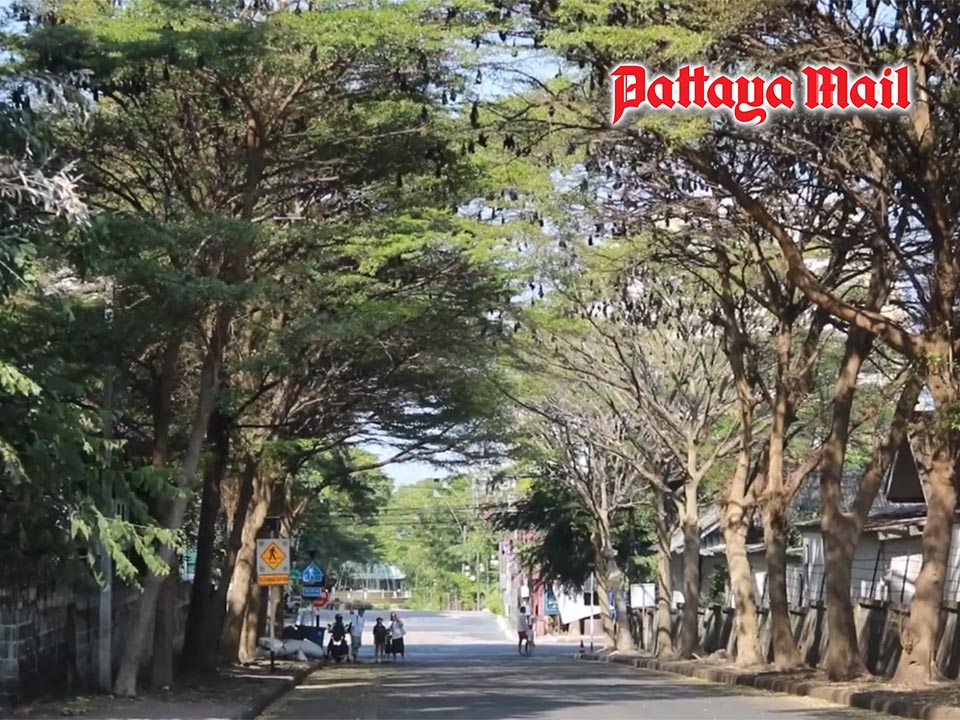
Ms. Prasong, a local resident, said thousands of bats gather in the trees, particularly in the early morning and evening, leaving large amounts of droppings on the ground below. She explained that although the landowner previously attempted to trim the trees to deter the bats, they returned once the branches regrew.
“We have lived with this for many years, but now people are truly worried,” she said. “With news of Nipah virus spreading from bats, we fear this could pose a serious health risk. We want authorities to assess the situation and manage it before it becomes dangerous.”