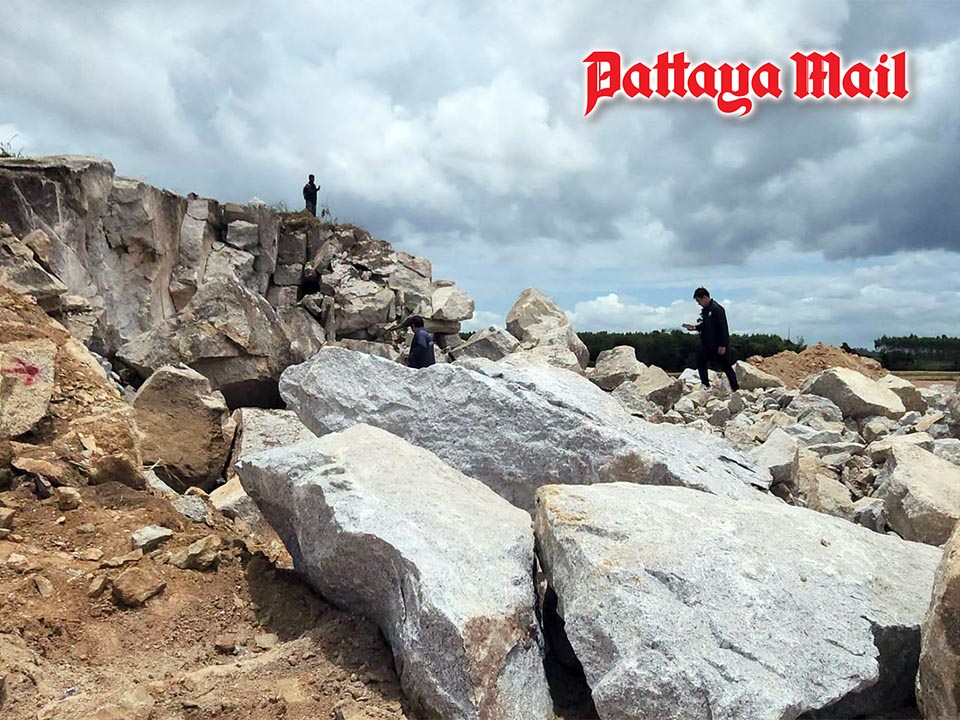
RAYONG, Thailand — The mystery behind a powerful explosion that startled residents across Rayong on August 13 has been traced to rock blasting at the WHA Industrial Estate in Ban Khai district, where authorities found clear evidence of explosives being used during land preparation. The blast occurred at around 4:20 p.m. on August 13, with a powerful boom and ground vibration reported across several parts of Rayong, including Mueang Rayong, Ban Khai, Nikhom Phatthana and Wang Chan districts. Residents and monks were reportedly alarmed and initially had no clear explanation for the source.
The incident became a source of concern after local reports and CCTV footage appeared to indicate that an explosion had occurred, despite initial uncertainty from authorities about whether explosives had actually been used. On August 17, Rayong MP Krit Silpachai, deputy chairman of the House Committee on Industry, fellow Rayong MP Watcharapong Sirirak, Ban Khai District Chief Wichit Phaplongam, Industrial Estate Authority of Thailand (IEAT) Deputy Governor Thirawut Charoensuk and provincial industry officials inspected an area beside a hillside inside the WHA industrial zone in Nong Lalok subdistrict. The inspection uncovered evidence that settled the question.
Officials found drilled holes used for placing explosives, blasting wires, bags containing rock-blasting material and broken rock scattered around the site. The findings confirmed that rock blasting had taken place in the area. Thirawut said the evidence indicated that explosives had been used to break rock during land preparation. He ordered all work in the area to be suspended and prohibited further activity until an investigation is completed. Authorities also plan to file a complaint against the contractor responsible for the land preparation work.
The discovery followed reports from local residents that rock had allegedly been blasted in the area for several years, with large quantities of excavated stone reportedly being stockpiled nearby.
Earlier reports said residents had heard smaller blasts in the area before, but none had produced the same level of noise and vibration as the August 13 incident. One account cited 27 drilled blast holes that were detonated together, although authorities have not publicly confirmed every detail of the blasting sequence.
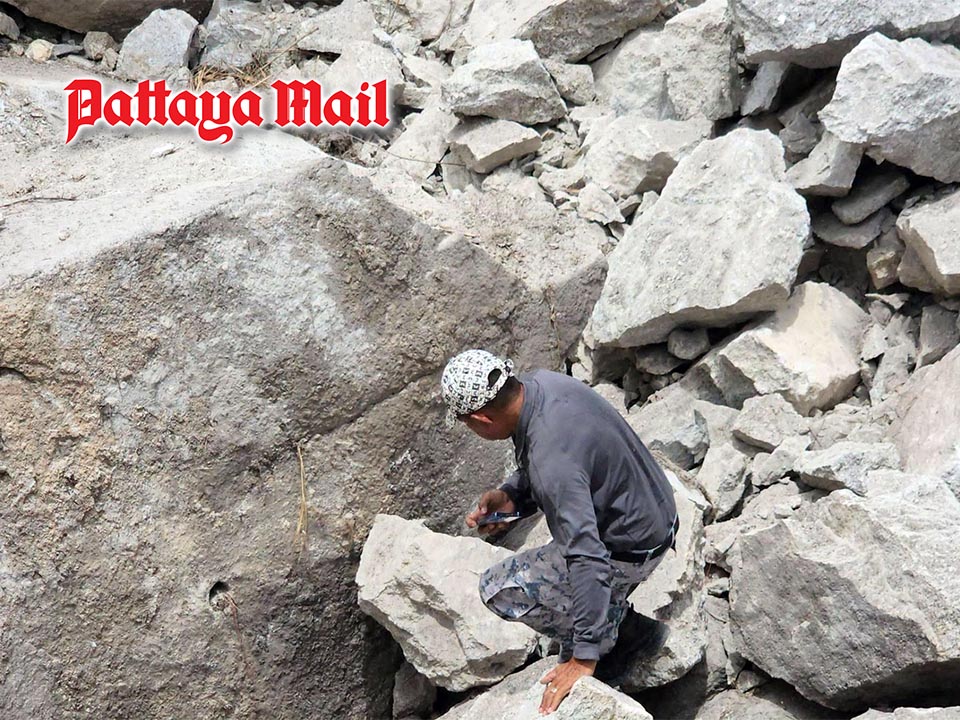
The unusually powerful sound prompted widespread concern because it was heard over a broad area of Rayong. Residents described the vibration as resembling an earthquake, while animals were also reportedly startled by the blast. Ban Khai District Chief Wichit said officials had now obtained concrete evidence that a contractor working within the industrial project had used explosives.
He instructed WHA industrial estate management to ensure that any future work involving blasting is conducted strictly in accordance with legal requirements and that all necessary permissions are obtained beforehand.
The case now moves into an investigation phase, with authorities expected to determine who carried out the blasting, whether the work had the required permits and whether procedures were followed correctly. For residents who spent several days wondering what had caused the explosion, the discovery at the WHA industrial estate provides the clearest answer yet. Authorities have now halted the work while the investigation and legal proceedings move forward.