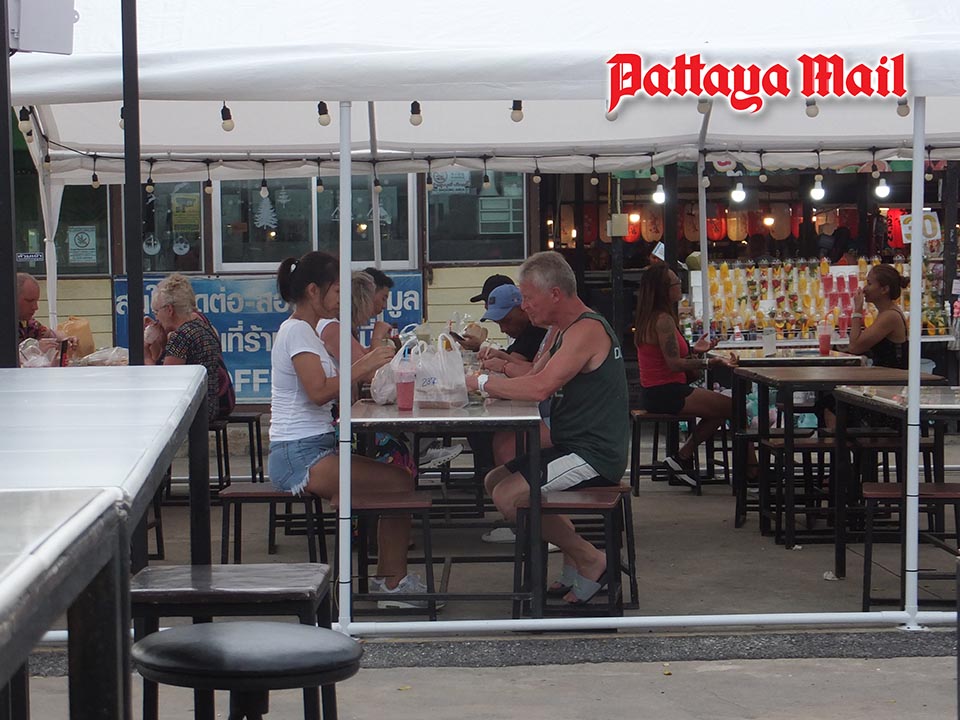
PATTAYA, Thailand – Pattaya continues to attract long-stay foreign residents who see the city as an affordable place to live, but many say rising global costs have changed the way they spend, with tighter budgets replacing previous habits of frequent dining and shopping. A survey at Jomtien Beach on July 16 found that foreign long-stay visitors, particularly retired Europeans with Thai families, are still enjoying life in Pattaya. Many continue walking along the beach, meeting friends, and maintaining their daily routines despite a quieter tourism atmosphere. However, while visitors remain visible, local businesses say spending has slowed. Restaurants, shops, and beachside service providers have reported weaker sales compared with the high season, leaving money circulation in the area below expectations.
Klaus, a 68-year-old German who has lived in Pattaya for more than 10 years and is married to a Thai woman, said long-stay foreigners still appreciate the city’s lifestyle and value for money. “Pattaya is still a good place to live because the cost of living and quality of life remain attractive,” he said. “But everyone is more careful with spending now. Many people I know are reducing expenses because costs in Europe have increased and the global economy remains uncertain.” He said he still regularly visits restaurants and the beach but plans his spending more carefully than before.
Local business operators said the biggest change is not the disappearance of foreign visitors, but a change in spending patterns. Many tourists and long-stay residents are choosing essential purchases, cooking more often, and spending more time relaxing at beaches rather than spending heavily at restaurants, bars, and entertainment venues. The impact is particularly noticeable during the low season, when both international and domestic purchasing power has weakened. Meanwhile, tourism businesses are watching a planned government stimulus measure aimed at encouraging domestic travel. The “Thai Travel Plus” co-payment scheme, approved by the tourism sector committee, would see the government cover 50% of accommodation costs, up to 3,000 baht per entitlement. The scheme would provide up to five benefits per person, with 500,000 available entitlements. Participants would also receive a 500-baht digital voucher for spending on restaurants, transport, car rentals, tours, and shopping.
Tourism and Sports Minister Surasak Phancharoenworakul said the measure aims to reduce reliance on foreign tourist markets during a period of global economic uncertainty, energy price pressures, and international tensions. The government expects the program to use around 1.75 billion baht in funding through the “Pao Tang” application, generating more than 32 billion baht in economic circulation and additional tax revenue. Pattaya tourism operators hope the scheme can help strengthen domestic tourism during the second half of the year and partly offset weaker spending from some foreign markets. For Pattaya’s long-stay community, however, the message remains clear: the city remains attractive, but even those who call it home are watching their wallets more closely.