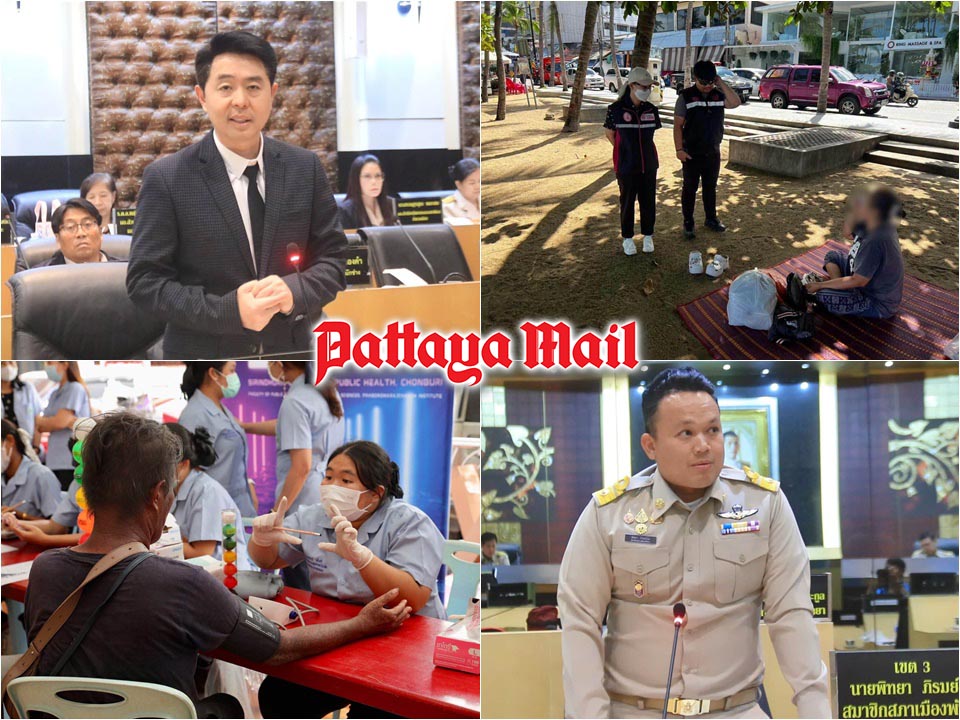
PATTAYA, Thailand – Pattaya can offer shelter, healthcare and other support to homeless people, but cannot force them into welfare centers if they refuse, Mayor Poramet Ngampichet told the city council. The issue was raised by Councilor Piya Pirom-on, representing Constituency 3, who questioned the city’s authority and practical limitations in addressing homelessness in Pattaya and Koh Larn. He also asked about outreach operations, assistance provided and follow-up for people referred to the Ministry of Social Development and Human Security.
Poramet explained that assistance is governed by the Protection of Destitute Persons Act B.E. 2557 (2014), which focuses on protection and support rather than compulsory placement in welfare facilities. Under Section 22, a person must consent before being taken to a Protection Centre for the Destitute. Some homeless people prefer to live independently and do not wish to follow the rules of residential centers. If they refuse assistance, officials can offer advice and warnings but cannot use force to remove them from public areas.
Police may intervene when a person commits an offence, such as damaging property or becoming involved with illegal drugs. The mayor said officials must also respect constitutional protections covering equality, personal liberty and physical safety.
24 outreach operations and 62 people identified
During the 2025 fiscal year, Pattaya worked with the Chonburi Provincial Protection and Quality of Life Centre to conduct outreach patrols along beaches and in public areas. The teams carried out 24 operations and identified 62 homeless or destitute people.
Assistance included arranging return journeys to hometowns for five people, medical treatment for 15 and placement in protection centers for 36. A further 25 were referred to workplaces for employment opportunities, while 53 received assistance with national identification cards. Five children and young people were also assisted in coordination with the Chonburi Children and Family Shelter.
The mayor also highlighted the “Pattaya Model”, developed in cooperation with Chulalongkorn University’s Faculty of Political Science and the Thai Health Promotion Foundation (ThaiHealth), to address inequality and improve the quality of life of homeless people and other vulnerable groups.
A working group was established in September 2019, followed by the opening of a Drop-in Point at Wat Chaimongkol on September 24 that year. The service provides a central point for information, physical and mental health screening, counseling and referrals. The network now has four service points and has assisted more than 100 vulnerable people and members of the public.
Individual support plans under Pattaya Model
Poramet said the city would continue proactive outreach, building individual records to assess each person’s circumstances and coordinate suitable assistance with healthcare, housing, welfare and medical referrals. The work will continue under the city’s “Pattaya 2.9: Breaking Barriers to Equality” policy, which aims to ensure that people from all groups can access public services and social protection without being left behind.