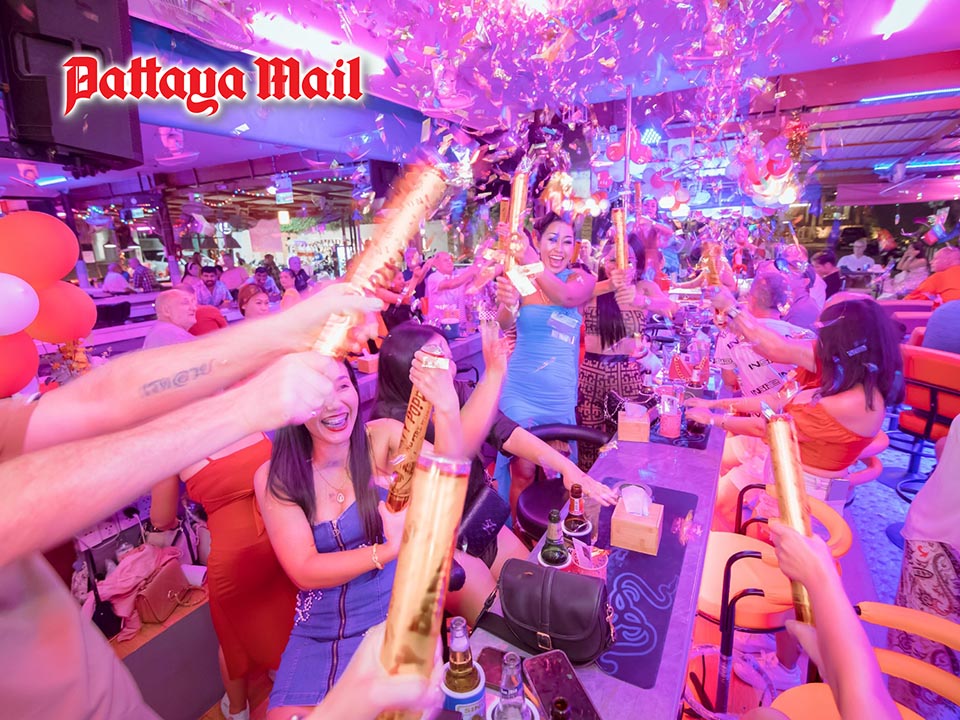
PATTAYA, Thailand – Pattaya continues to attract large numbers of foreign tourists, with busy streets, late-opening restaurants, active nightlife venues and hotels continuing to accommodate visitors. However, activity on the streets does not necessarily reflect how much tourists are spending or how much income is reaching people who depend directly on tourism. People working in Pattaya’s nightlife sector say the number of customers remains relatively strong, but spending patterns have changed. Some visitors are becoming more selective about where and how they spend their money, with shorter nights out, fewer drinks and less discretionary spending becoming increasingly noticeable.
One nightlife worker said customers were still coming into venues, but those willing to spend heavily were less common than in previous years. According to her, some visitors now have one or two drinks, spend a limited amount of time in a venue and leave, while others take longer to decide whether to spend additional money.
For workers who depend on daily customer spending, the difference can be significant. A few hundred baht may represent a relatively small expense for a tourist but can be an important part of a worker’s daily income. Some workers report spending several hours waiting for customers without earning significant amounts, even when large numbers of tourists are moving through the area.
The situation highlights a distinction between tourist arrivals and tourist expenditure. A destination can remain crowded while individual businesses and workers experience weaker spending.
Tourists arriving in Pattaya have limited budgets that must be divided among accommodation, food, transportation, shopping, attractions, drinks and entertainment. As the cost of travel and everyday expenses increases, visitors may have less money available for discretionary spending.
This can create a visible contrast across the city. Tourist numbers may remain high, but the economic benefits are not necessarily distributed evenly. Hotels, restaurants, transport operators, shopping businesses, entertainment venues and nightlife workers all compete for a share of the same tourist spending.
The issue is particularly important for Pattaya because the city’s tourism economy relies heavily on visitor expenditure rather than simply visitor numbers. A tourist walking through a busy entertainment area contributes little to the local economy unless that visitor also spends money on food, drinks, accommodation, transport, shopping or other services.
Several factors may influence current spending patterns, including exchange rates, higher travel and accommodation costs, rising food prices, changing tourist markets and greater uncertainty about personal finances. The strength of the Thai baht can also affect how much spending power foreign visitors feel they have once they arrive.
This means that headline tourism figures alone may not provide a complete picture of the health of Pattaya’s tourism economy. Visitor arrivals can remain strong while businesses that depend on discretionary spending experience pressure. The more useful indicators may therefore include average tourist expenditure, length of stay, spending per trip and the categories where visitors are choosing to spend their money.
For Pattaya, the key question is no longer simply whether tourists are coming. It is whether they are spending at the same level as before, what they are spending their money on and which parts of the local economy are benefiting from that expenditure. The city may still look busy, but a busy destination and a destination where tourism income is widely distributed are not necessarily the same thing.
Pattaya’s tourism sector therefore faces a question that cannot be answered simply by counting people on the streets: Are tourists still spending enough to sustain the businesses and workers who depend on them?