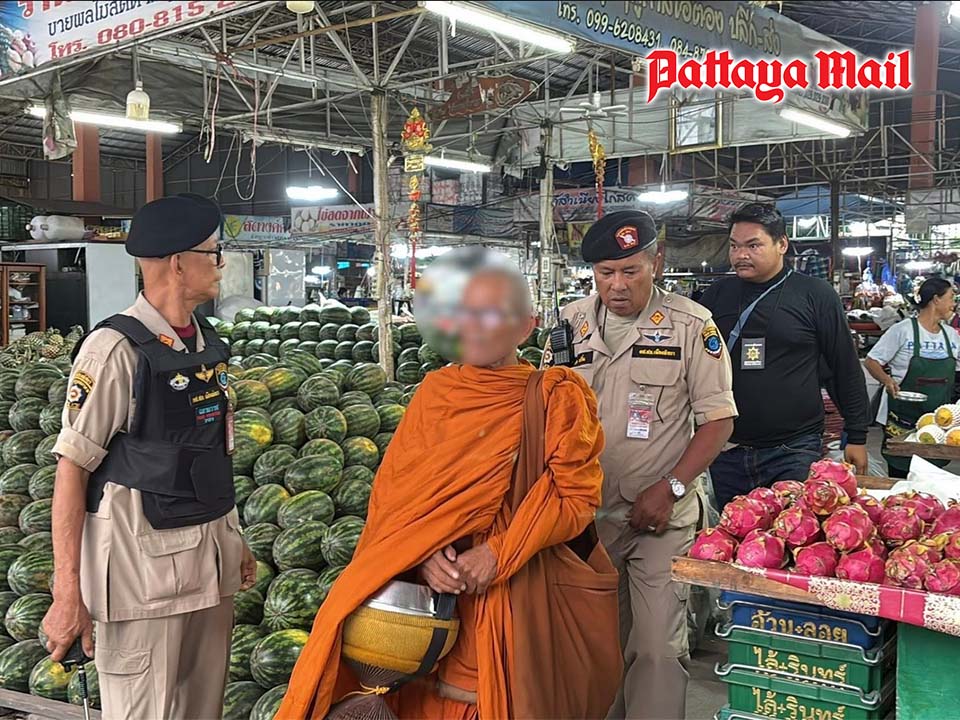
PATTAYA, Thailand – Local authorities, including the Banglamung District Chief Officer, sub-district head monks, and relevant agencies, recently conducted inspections at several Pattaya markets after complaints surfaced about monks allegedly sitting and waiting to receive alms rather than walking during their traditional alms rounds.
Officials found multiple monks standing in front of food stalls, prompting verbal warnings and instructions to strictly follow the monastic code. Authorities stressed that repeat violations would be addressed under the formal procedures of the Sangha to protect the reputation of Buddhism.
Despite official intervention, many Pattaya residents expressed little surprise at the practice. Reports and social media comments suggest that this behavior occurs frequently across the city’s markets. At Rai Vanasin Market, monks have been seen waiting in front of 7-Elevens instead of walking, while at the new Naklua Market, some stand at entrances and others sit at the rear. In Chaiyaphruek Market, locals claim monks loop around until the food goes bad, and even the beach sees early-morning monks at 4 AM, not asking for food but collecting money directly into their alms bowls.
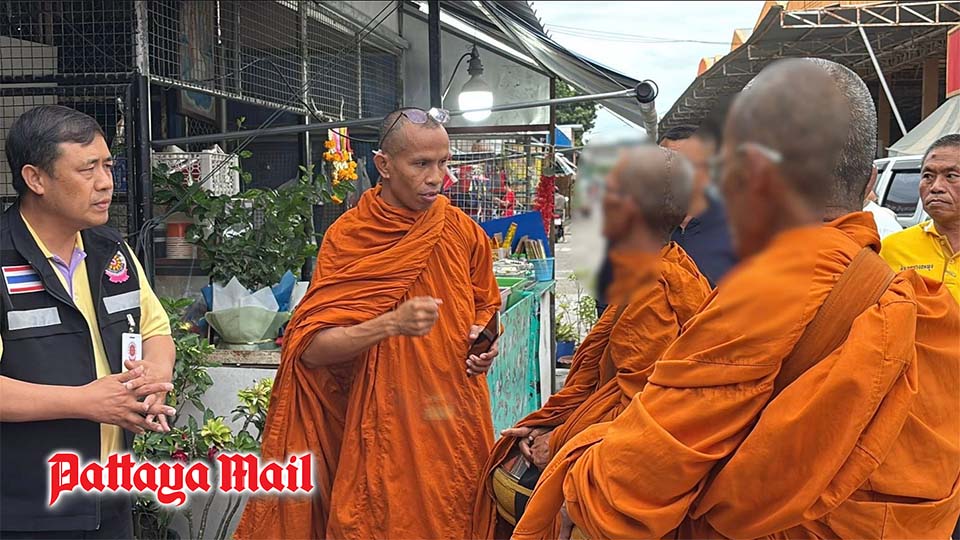
Many residents argue that the responsibility is shared, pointing out that vendors benefit from having someone ready to receive offerings, and without them, sales might drop. Still, critics emphasize that walking for alms, or pindapata, is a sacred practice intended to cultivate humility and maintain a spiritual connection with the community. Standing still or waiting for offerings blurs the line between religious devotion and solicitation, potentially undermining public respect for Buddhism.
Authorities have said that enforcement will continue, with inspections scheduled across Pattaya’s major markets to monitor both monks and vendors, who may be complicit in encouraging such practices. For many residents, however, the practice is far from surprising. As one local noted, “In Pattaya, this has become a common sight. You almost expect it now.”
The incident raises broader questions about how traditional monastic practices adapt—or fail to adapt—to the realities of bustling urban markets, and whether stricter oversight or community education is required to maintain the integrity of Buddhist ritual in public spaces.