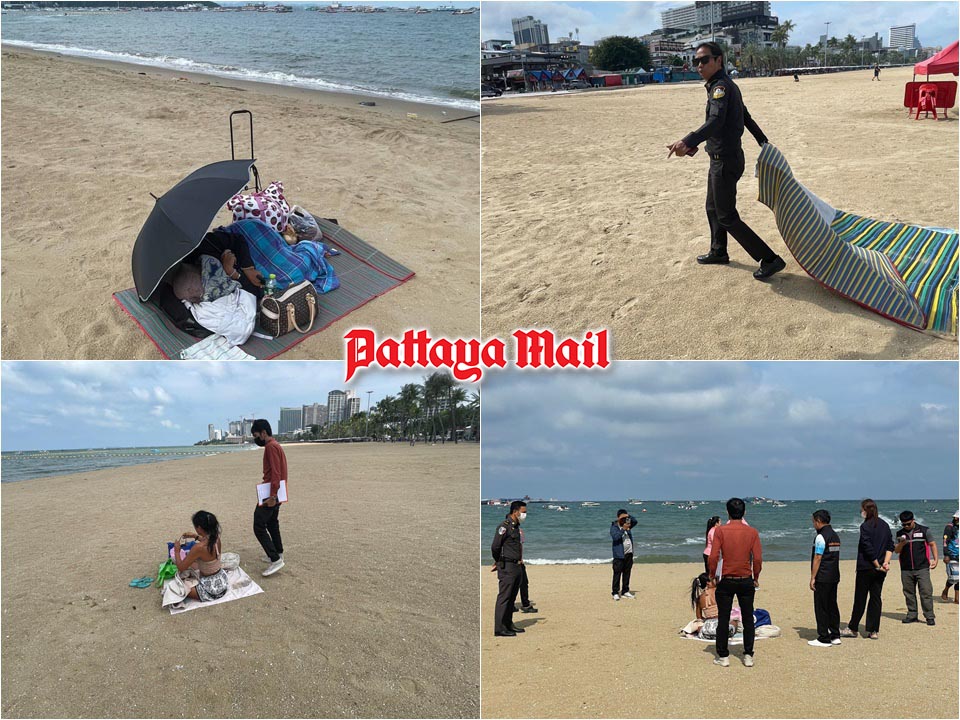
PATTAYA, Thailand – Pattaya officials recently launched another round of beach cleanups and outreach — a campaign they call “continuing the work on homelessness.” Municipal enforcement teams, the city’s social development office, the department for children and youth, and the environmental office have been moving through South Pattaya Beach, Bali Hai and Pattaya Second Road to clear people sleeping and begging in public areas. The stated aim: order, safety and a more welcoming city for residents and tourists.
But the local response shows how tangled this issue really is. Residents’ comments — frank, exhausted, angry and sometimes compassionate — paint a complicated picture.
Some demand a hard line. “There are so many — clear them all,” wrote more than one person, pointing out hotspots from Jomtien Soi 5 to Jomtien Second Road and the stretch opposite a popular beachfront restaurant. Several urged authorities to “be serious” and “arrest all those sleeping on the streets.” A homeowner complained they no longer dare sit on the beach because the area feels like a homeless camp. Another singled out the convenience store in Pattaya Second Road: “Please check in front of 7-Eleven Pattaya Second Road.”
Others support the cleanups but want transparency. “What happens to them? Where are they taken?” asked many, wondering whether people are sent to the Chonburi Social Welfare Center or simply moved down the road. “There should be public information: how many were helped, how, and what are the long-term plans,” one resident said.
Practical proposals also surfaced. Several people who have tried to help say those efforts were ignored or exploited: “I’ve tried to help many times and no one accepts — they use pity to make a living.” That view is balanced by others urging a more humane approach: “Find them real jobs and housing instead of just moving them along.” A parent asked for safer, family-friendly beach areas: “Where can I spread a mat for my kids during school holidays?”
Some comments highlight the social causes and collateral harm: increased drug addiction, a higher number of women than men among those sleeping rough, foul urine smells near shrine areas, migrant night vendors crowding the streets, and even worries about children — a resident reported a woman sitting with a young mixed-heritage boy who smokes all day, pleading for someone to check on the child’s wellbeing. Others said people come to Pattaya hoping to marry foreign partners as an escape route, tying the homelessness problem to the city’s larger economy of hope and survival.
There is sympathy for front-line workers: “We feel for the officers — high season will only make this worse,” one resident wrote. But fatigue is clear: “You move them from here and they appear somewhere else. Fix the root cause, not the symptom.” That plea — to prioritize addiction treatment, mental health care, employment and proper housing — is the recurring theme in comments that also call for public relations clarity and ongoing support services.
The moral and practical choice facing Pattaya is stark. If the city treats homelessness as a visibility problem to be hidden ahead of peak tourism, the people at the center of this crisis will simply be shuffled from shore to bridge to alley. If, instead, the city commits resources to transparent, long-term solutions — rehab, shelter, job programs and child protection — it may begin to resolve the root causes rather than the symptoms.
For residents who want to report a homeless person in need, request help for someone on the street, or ask about the city’s program, Pattaya City Hall’s 24-hour hotline is 1337. But true progress will require more than calls and clearups: it will take the political will to treat the homeless as part of Pattaya’s community, not merely an inconvenience.