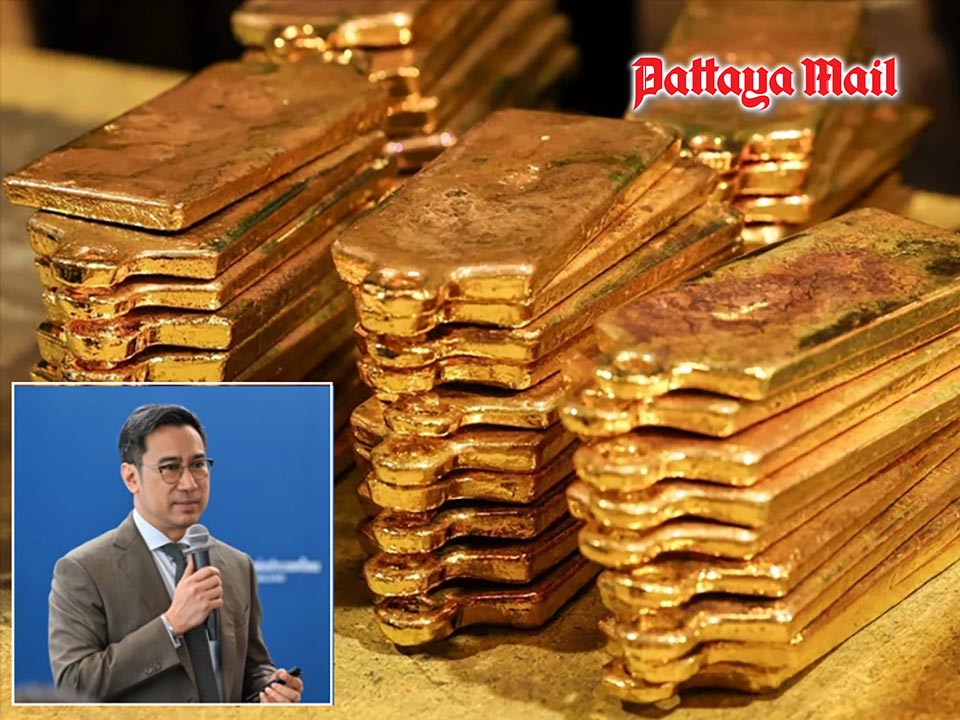
PATTAYA, Thailand – The Governor of the Bank of Thailand (BOT), Sethaput Suthiwartnarueput, acknowledged that the Thai baht’s recent strengthening is not aligned with the country’s economic fundamentals, amid ongoing discussions with the gold trade sector on potential measures to reduce currency impact.
During a meeting on September 15 with the Gold Traders Association, BOT and stakeholders explored options including a tax on gold bar transactions and conducting gold trades in U.S. dollars, aimed at moderating pressure on the baht. However, Governor Sethaput emphasized that no decisions have been made yet, as any measures would require careful consultation across multiple sectors involved in the gold market.
“Gold trading affects many people and industries, so any measures need to be coordinated with all relevant agencies,” he said. “Taxation is one of the topics discussed, but the final approach will be determined after thorough consultation to ensure it is the most appropriate solution. This will take some time as the issue has persisted for many years.”
The BOT governor also addressed concerns over large gold exports abroad, which some in the private sector fear may contribute to the baht’s strength and could be linked to the gray market. He said the Customs Department’s data reflects the reported exports, but any connection to illicit business cannot be confirmed. BOT has coordinated with the Anti-Money Laundering Office (AMLO) to examine the sources of these transactions.
Since the beginning of the year, the baht has appreciated by 7%, a level Governor Sethaput described as inconsistent with Thailand’s economic fundamentals. He noted that the baht’s stronger performance compared to regional currencies is partly due to the weaker U.S. dollar and the rising price of gold, which has a stronger correlation with the baht than other currencies.
“When gold prices rise, Thai people tend to sell gold, bringing in dollars that are then exchanged into baht, pushing the currency higher. We’ve experienced a double impact recently: a weaker dollar driven by expectations of a U.S. rate cut, plus rising gold prices,” he explained. “We are monitoring the situation closely and taking appropriate policy measures as needed.”