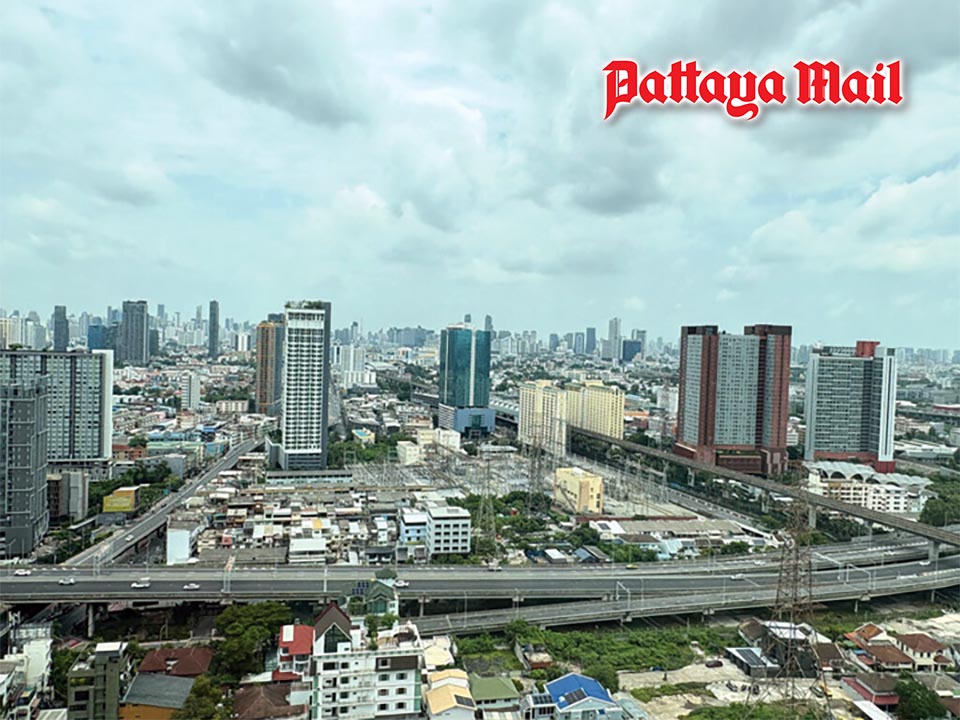
BANGKOK, Thailand – Bangkok’s once-booming land market is undergoing a sharp correction as the prolonged property slowdown forces many landowners to slash asking prices, with some plots reportedly selling for up to 50% below their original asking prices. For years, prime land in Bangkok was driven by fierce competition among property developers eager to build condominium projects, pushing land values steadily higher. However, that cycle ended during the COVID-19 pandemic, and prices have yet to recover to their previous peaks.
Developers are now facing weaker consumer demand, high household debt, tighter mortgage approvals and broader economic uncertainty, leaving many unwilling or unable to pay the premium prices that landowners once expected. The shift is especially visible along major BTS routes between Bang Chak and Udom Suk stations, where landowners have reportedly sought between 900,000 and 1 million baht per square wah, while buyers have countered with offers below 600,000 baht per square wah—a discount of around 40%.
Across Bangkok, many land plots have remained unsold for years despite repeated listings, with some owners cutting prices by more than 30% in an effort to attract buyers. Even prime central business district (CBD) locations have seen values soften compared with pre-pandemic highs.
Before COVID-19, some Sathorn land transactions exceeded 2 million baht per square wah, while many deals were completed in the 1.3–1.4 million baht range. More recent transactions have closed closer to 1.2 million baht per square wah, reflecting the weaker market. Market participants say Bangkok land values are now generally 15–20% below previous market levels, while some owners have been forced to reduce asking prices by as much as 50% after initially listing properties well above realistic market values.
The slowdown has been attributed not only to weaker demand following the COVID-19 pandemic but also to the full implementation of Thailand’s land and building tax, which has increased the cost of holding undeveloped land and prompted more landowners to sell. Rather than accepting steep discounts, some owners are choosing to lease their land on long-term agreements of 10 to 30 years. The strategy allows them to generate steady rental income while retaining ownership and reducing land and building tax liabilities. Long-term leases are attracting interest from hotel, retail and mixed-use developers, particularly as Thailand’s tourism industry continues to recover, creating opportunities for commercial projects despite the softer residential property market. While Bangkok’s urban land market remains under pressure, industrial land continues to tell a different story.
Demand for land in industrial estates has continued to outpace supply, supported by investment from both Thai and foreign companies. New industrial land scheduled for completion over the next two years is expected to remain in high demand. Average industrial estate land prices nationwide have risen about 7% over the past year to around 8.4 million baht per rai, with the highest average prices recorded in Chachoengsao, Chonburi and Samut Prakan at approximately 10.28 million baht per rai.
The market has also shifted decisively in favour of buyers. Industry observers say only a handful of major developers remain actively purchasing land, compared with more than a dozen in previous years. As a result, buyers now hold overwhelming negotiating power, allowing them to secure significantly lower prices than during the market’s peak. Despite the current downturn, analysts believe prime CBD locations and industrial land linked to investment and manufacturing continue to offer long-term potential. However, a broad recovery in Bangkok land prices is expected to depend largely on a rebound in condominium sales and overall confidence in the property market.