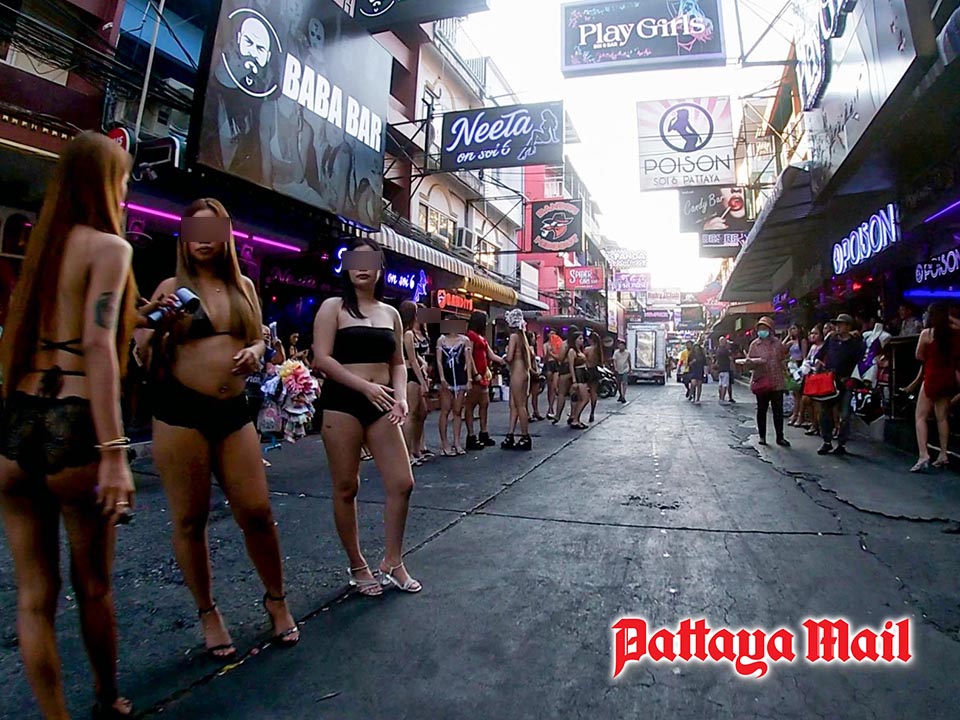
PATTAYA, Thailand – As the low season sets in, the once-vibrant nightlife of Pattaya has noticeably slowed, with fewer foreign tourists leading to quieter streets and struggling businesses. Popular nightlife areas such as Walking Street, Soi Buakhao, and Soi 6 are seeing a sharp decline in activity, directly impacting workers who depend on nightly income.
In place of the usual music, laughter, and crowded bars, a different atmosphere has emerged—quieter, slower, and more uncertain. Conversations that once competed with loud music are now reduced to soft whispers between customers and workers, subtle reminders of a nightlife economy that is no longer in full swing.
Bar workers are among the hardest hit. Many report waiting until the early hours of the morning without finding customers, with some nights yielding little to no income. Despite declining earnings, living costs—including rent, food, and daily expenses—remain unchanged, placing increasing financial pressure on those working in the city’s nightlife sector.
The situation highlights the vulnerability of Pattaya’s tourism-driven economy, particularly its reliance on foreign visitors. As tourist numbers drop, many workers are being forced to adapt quickly—lowering prices, changing strategies, and increasingly targeting Thai customers instead of their usual international clientele. Some entertainment venues have also introduced budget-friendly promotions in an attempt to attract more visitors during the downturn.
The impact extends beyond nightlife workers. Small business operators, including street food vendors, massage shops, and other related services, are also feeling the strain. While there is still some late-night foot traffic, it is not enough to recreate the energy and spending levels typically seen during the high season.
A 27-year-old bar worker, identified as “May,” shared her experience:
“It’s really quiet right now. Before, I could still find customers most nights, but now some days I sit until almost morning without any work. My income has dropped a lot, but my expenses are the same—rent, food, everything. Sometimes I have to lower my price or talk more to Thai customers because there are fewer foreigners. People think this job is easy money, but it’s not—especially when the economy is like this. We’re all just trying to survive and support our families.”
The current slowdown underscores broader economic pressures affecting Thailand’s tourism sector. With reduced purchasing power among visitors and shifting travel patterns, those working in Pattaya’s nightlife industry are being forced to rethink their approach—adjusting pricing, reshaping their image, and diversifying their customer base to stay afloat during a season where the city’s famous lights are no longer shining as brightly.