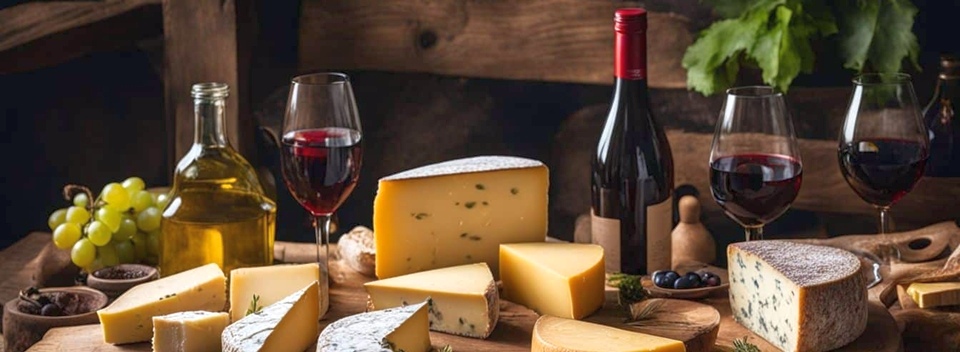
Many years ago, when I knew precious little about wine, I asked the manager of my favourite pizza place why they didn’t stock good-quality Burgundy or Bordeaux wines for customers who wanted something a bit special from time to time. He reminded me that pizza began its life as street food in Naples several hundred years ago. The best wine for pizza, he told me, is inexpensive Italian wine: cheap but reliable everyday stuff that enhances the flavours of the pizza without competing with them. He was adamant that pizza – even a simple one – is so rich in flavours and textures that a sumptuous wine would be hopelessly out of place. “With simple food”, he told me, “Drink simple wine”. Of course, he was right. Both the French and the Italians – residents of the two largest wine-producing countries in the world – know this well.
For the French, vin ordinaire is the daily beverage to accompany most meals except breakfast, though many a country workman begins the day with a glass of red. Vin ordinaire is made everywhere in the country, but the region traditionally associated with this wine is Languedoc-Roussillon, in the south-east. During the first half of the 20th century, the region produced little else and supplied the cheap wines to quench the thirst of the French army. However, the last thirty years have seen a dramatic upturn in the quality of many Southern wines.
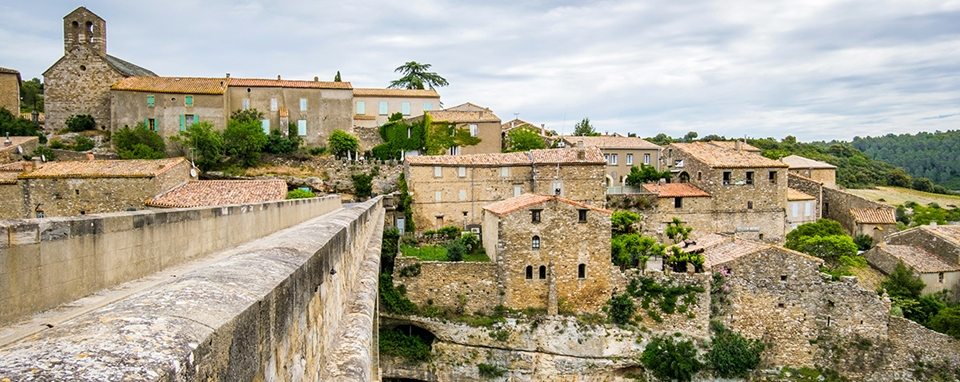
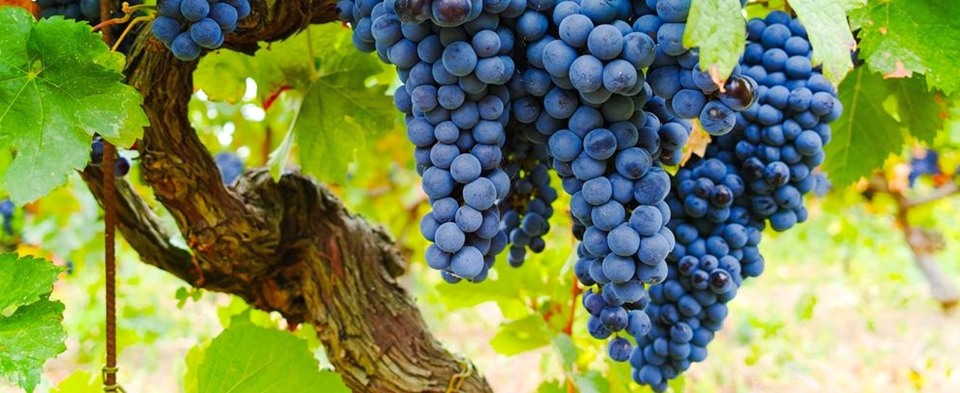
The Languedoc-Roussillon region is one of France’s oldest wine-producing regions, dating back to at least 6000 BC. Later, the Romans cultivated the vineyards, and during the Middle Ages, doctors prescribed wines from the area to treat various ailments. Apart from Merlot and Cabernet Sauvignon, the most important red grapes are Grenache, Syrah, and Mourvèdre. They’re known (for obvious reasons) as GSM wines, a blend that originates in the Côtes du Rhône region but became popular with winegrowers across Southern France. Incidentally, if the name Syrah is unfamiliar, it’s the same grape as Shiraz. Most wineries in Languedoc-Roussillon choose to produce blends rather than single-varietal wines. GSM wines are invariably in the vin ordinaire class, though many top-quality GSM wines are available, mostly produced in other countries.
Incidentally, almost every wine you see on the supermarket shelves is blended. Even classic red Bordeaux is a blend of at least three grapes. Wine made from a single grape variety is called a varietal and usually (but not always) has the grape’s name on the label, though relatively few wines are made entirely from a single grape variety. It’s worth remembering that most wine in the world is made to be consumed within a couple of years. After that, it’ll lose much of its freshness; the taste will start to fade, and the wine will sadly become a shadow of its former self. Contrary to popular belief, most wines deteriorate with age. The exceptions are the small percentage of wines made to age, such as top-quality wines from Bordeaux and Burgundy.

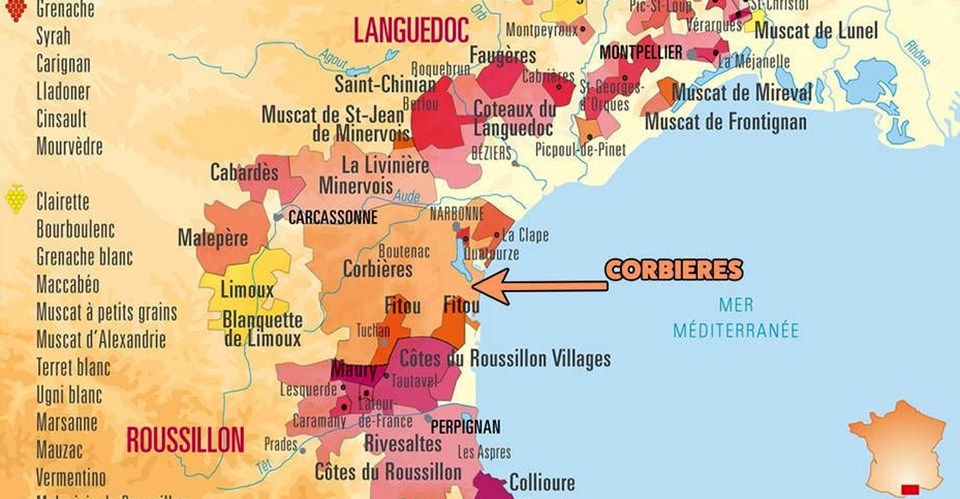
The Corbières vineyard region is located in Languedoc and stretches from hillsides to valleys, from the foothills of the Pyrenees to those of the Montagne Noire. It reaches down to the shores of the Mediterranean. Sometimes described as “a country of villages”, the villages embody the soul of Corbières. Due to its size and geography, Corbières encompasses an enormous variety of soil types and microclimates. The region’s wines tend to be as varied as its terroir. The northern boundary follows the road between the ancient hilltop town of Carcassonne and the city of Narbonne, and to the east, Corbières vineyards border the Mediterranean. The somewhat sleepy town of Narbonne is one of the southern terminals for the splendid French Motorail trains.
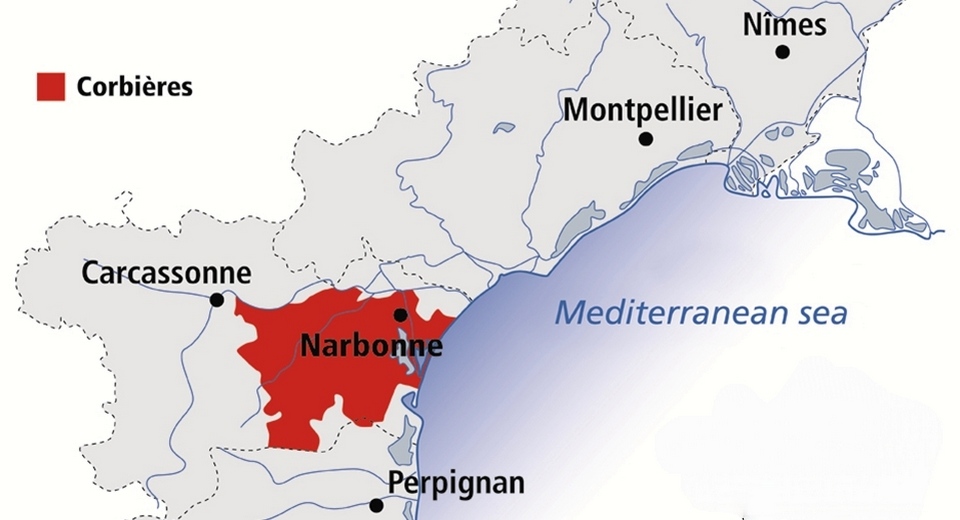
Corbières is the largest appellation (designated wine production area) in Languedoc. In this wine-growing landscape, interspersed with garrigue scrubland nestled among high limestone hills, the vines benefit from a climate where the Mediterranean’s mild, humid influence meets the dry harshness of the foothills. Red wine dominates production in Corbières at almost 95 per cent, with 3.5 per cent rosé wine and a mere 2 per cent white wine making up the balance. Carignan is the most common red grape variety.
Corbières 2023, AOC Corbières, France (red). ฿ 499 @ Big C.
Finding this unassuming bottle at our local Big C felt like a momentary trip down Memory Lane because for years, Corbières was my automatic choice when I wanted a light, inexpensive table wine to go with ordinary food. The label proclaims that this wine hails from the grandly named La Cave d’Augustin Florent. It’s not a “cave” in the English sense. Here, the French word means “a cellar”. I was a bit surprised to find a cork closure because wines like this are better suited to an easy-to-open aluminium screw cap, known in the wine trade as a Stelvin closure. At one time, almost all wine bottles were sealed with cork, but today screw caps have become so reliable that most everyday wines use them. Most Australian and New Zealand wines use screw caps, regardless of quality, and many European wine producers prefer them too. Only a comparatively tiny percentage of wine intended for long-term ageing benefits from a cork closure. But the French tend to be a bit conservative on these matters, and maybe they thought the cork adds a bit of class.
This is a GSM wine with the addition of Cinsault, a grape which is often added to soften the aroma. The wine is a dark, purplish colour, but if you are looking forward to a fat, full aroma of rich fruit, you’re likely to be disappointed, because this isn’t that kind of wine. It has a mild aroma of herbs and brambles, with a hint of ripe red fruit. The aroma also has a pleasant “earthy” quality, and three years of maturation has rounded out the wine, making it a light, easy drinker that pairs well with everyday food. At 13% ABV, it is made in a relatively simple style: smooth on the palate, with dry, light fruit, a pleasing tang of acidity, and barely noticeable tannins.
In many ways, it’s a typical southern French vin ordinaire and a delightfully easy-glugger that pairs well with light food. It reminds me very much of the everyday wines I used to enjoy in France, served at unpretentious village restaurants everywhere. Although I like to drink Italian wine with Italian food, I sometimes wonder whether this is merely psychological, because this Corbières was excellent with pasta and pizza, and could even add a new dimension to simple fare such as burgers or vegetable or cooked meat dishes. It proved to be a sympathetic partner for some excellent French Brie.
In France, at various Carrefour branches, you can buy this wine for the equivalent of 123 baht a bottle and a three-litre container for about 400 baht. If I had chosen to live in France, this pleasing everyday wine might well have become one of my daily reds.