
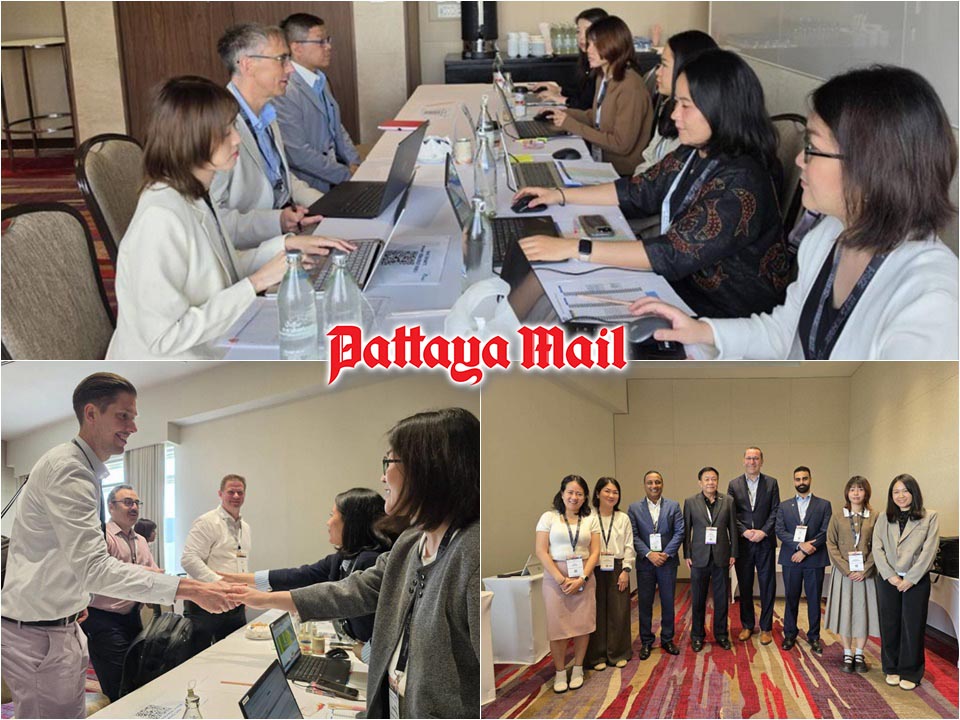
PATTAYA, Thailand – Thailand’s aviation industry received a major vote of confidence this week as 87 international airlines sought additional flight slots, increased frequencies, and new routes to the Kingdom during the 158th IATA Slot Conference (SC158), held in Bangkok from June 9-11. The conference, organized by the International Air Transport Association (IATA), is one of the aviation industry’s most important planning events, bringing together airlines and airport slot coordinators from around the world to negotiate schedules and secure airport access for upcoming seasons.
According to the Civil Aviation Authority of Thailand (CAAT), which participated as the slot coordinator for Thailand’s major airports, 87 of the 146 airlines attending the conference requested meetings to discuss operations in Thailand for the Winter 2026/27 schedule. CAAT is responsible for coordinating slot allocations at Thailand’s busiest Level 3 airports—Suvarnabhumi, Don Mueang, Phuket, Chiang Mai, and Samui—as well as U-Tapao Airport, a Level 2 airport that plays an increasingly important role in the development of the Eastern Economic Corridor (EEC). The strong interest from airlines reflects growing confidence in Thailand’s tourism sector, expanding air travel demand, and the country’s long-term strategy to establish itself as a leading aviation hub in Southeast Asia.
Airlines participating in discussions covered virtually every major aviation market worldwide.
European carriers included Air France, KLM, Finnair, SWISS, SAS, Condor, LOT Polish Airlines, Turkish Airlines, Virgin Atlantic, TUI Airways, Neos, Aerologic, Cargolux, and World2Fly. Major Middle Eastern airlines included Emirates, Etihad Airways, Qatar Airways, Air Arabia, flydubai, Oman Air, Kuwait Airways, Royal Jordanian, Saudi Arabian Airlines, and Riyadh Air.
From Asia-Pacific, discussions involved Thai Airways, Bangkok Airways, Thai AirAsia, Thai AirAsia X, Thai VietJet Air, Cathay Pacific, Hong Kong Airlines, Air Macau, China Eastern Airlines, Shenzhen Airlines, Xiamen Airlines, Juneyao Airlines, China Airlines, EVA Air, Starlux Airlines, All Nippon Airways (ANA), Japan Airlines, Korean Air, Asiana Airlines, Air India, IndiGo, Singapore Airlines, Vietnam Airlines, Cebu Pacific, and numerous other regional operators. The conference also attracted carriers from North America, including Air Canada, FedEx, and UPS, as well as airlines from Russia and the CIS region such as Aeroflot, S7 Airlines, and Turkmenistan Airlines.
One of the most notable outcomes was the allocation of slots to several new airlines planning services to Thailand. These include Riyadh Air from Saudi Arabia, Virgin Atlantic from the United Kingdom, SkyUp Nistru from Moldova, and AirBorneo from Malaysia, giving travelers more options and strengthening Thailand’s global connectivity.
The Winter 2026/27 schedule is also expected to support several new and expanded international routes, including:
Helsinki – Bangkok – Melbourne (Fifth Freedom service)
Taichung – Bangkok
Minsk – Bangkok
Kuching – Bangkok
London Gatwick – Phuket
London Heathrow – Phuket
Copenhagen – Phuket
Chisinau – Phuket – Sharjah
Cebu – Phuket
Hangzhou – Chiang Mai
Shanghai – Chiang Mai
Officials say these routes will help boost tourism, trade, and investment while improving links between Thailand and major cities across Europe, Asia, and the Middle East. For tourism destinations such as Phuket, Chiang Mai, Pattaya, and the Eastern Economic Corridor, the increase in international connectivity is expected to support continued growth in visitor arrivals and business travel.
CAAT said efficient slot management remains critical to maximizing airport capacity and ensuring that Thailand can accommodate rising demand while maintaining international standards. On the sidelines of the conference, CAAT also participated in the 31st Asia/Pacific Coordinators Association (APACA) meeting, where aviation authorities exchanged information and best practices on slot coordination and airport capacity management. Officials believe the strong airline interest seen at SC158 further reinforces Thailand’s position as one of Asia’s most important aviation and tourism markets and supports the country’s goal of becoming a leading regional aviation hub in the years ahead.