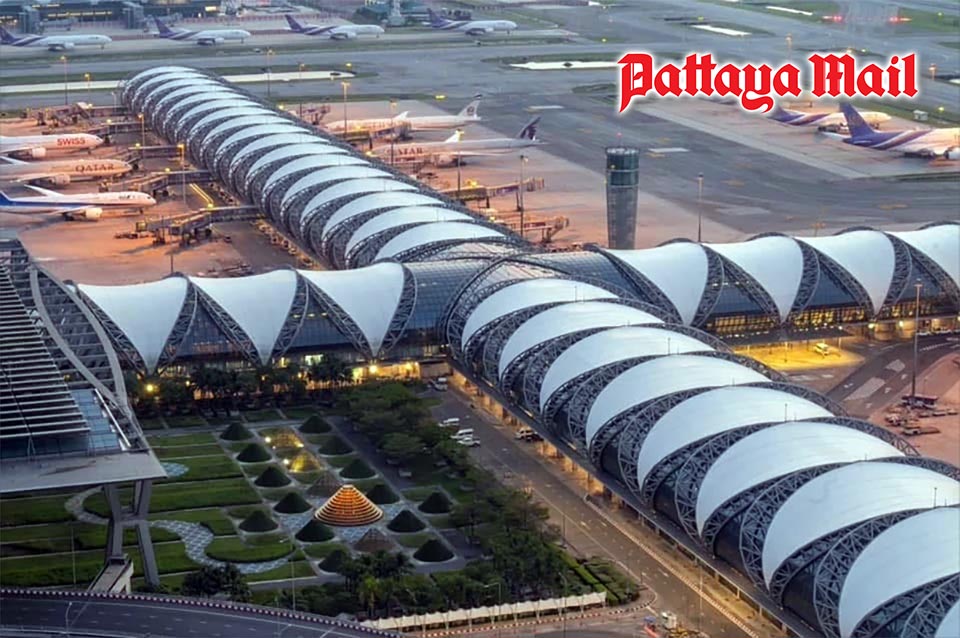
PATTAYA, Thailand – The Thai Cabinet has acknowledged recommendations from the National Anti-Corruption Commission (NACC) aimed at strengthening transparency in the long-term development of Suvarnabhumi Airport, while reaffirming that future expansion must not undermine the roles of Don Mueang Airport or U-Tapao International Airport. Deputy Government Spokesperson Ploytalay Laksameesaengchan said the Cabinet, at its June 30 meeting, considered the Transport Ministry’s response to the NACC’s anti-corruption recommendations concerning the Suvarnabhumi Airport Development Project.
One of the key recommendations calls for Airports of Thailand Plc (AOT) to submit any new or substantially revised Suvarnabhumi Airport Master Plan to the Cabinet for approval. The NACC said the additional oversight would help ensure the airport’s expansion aligns with national aviation policy while reducing the risk of decisions that could unfairly benefit individual private companies.
The government said Suvarnabhumi’s master plan is prepared in accordance with international standards established by the International Civil Aviation Organization (ICAO) and the International Air Transport Association (IATA), both of which require airports to review their master plans every five years or when significant changes occur in aviation, economic, or financial conditions. AOT said it has consistently followed these international guidelines and, for the fifth edition of the Suvarnabhumi Master Plan completed in 2025, engaged Netherlands Airport Consultants (NACO), a globally recognized airport planning firm with experience developing master plans for major international airports including London Heathrow, Singapore Changi, and Kuala Lumpur International Airport.
According to the government, the updated 2025 master plan reflects current aviation trends, projected passenger demand, developments in Thailand’s and the global aviation industry, and future infrastructure requirements. The completed plan has already been submitted to relevant agencies and is currently under review by the Office of Transport and Traffic Policy and Planning before proceeding through the remaining approval process. The Cabinet also acknowledged the NACC’s recommendation that Thailand establish a clear national strategy for Suvarnabhumi’s development to ensure its continued role as the country’s primary international gateway without disrupting development at Don Mueang Airport, Bangkok-area airports, or the U-Tapao Airport and Eastern Aviation City Project in the Eastern Economic Corridor (EEC).
The government reaffirmed that Suvarnabhumi will remain Thailand’s principal international airport, with a planned maximum capacity of 120 million passengers annually, while stressing that its expansion will complement rather than compete with Don Mueang and U-Tapao. Officials also confirmed that future reviews of Suvarnabhumi’s master plan will continue to follow Civil Aviation Authority of Thailand (CAAT) and ICAO standards, with clearly defined review timelines and participation from relevant government agencies to ensure transparency, sound planning, and alignment with evolving aviation, technology, and environmental conditions.