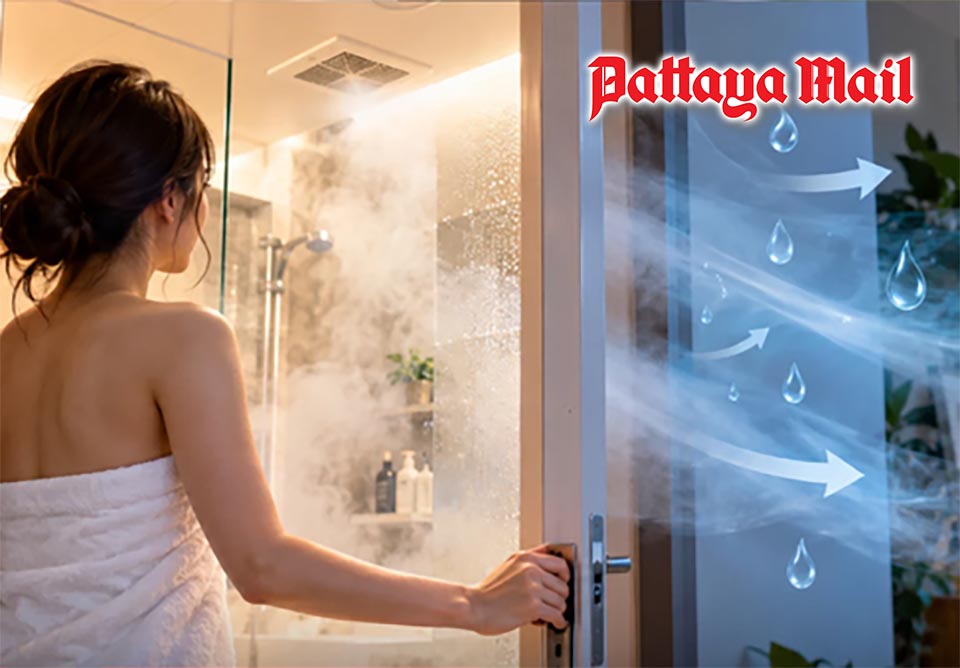
BANGKOK, Thailand – Opening the bathroom door immediately after showering may seem like an easy way to help the room dry faster, but it could allow moisture to spread into other parts of the home. Japanese household experts recommend paying attention to ventilation and using bathroom exhaust fans effectively to help control humidity.
Steam produced during a hot shower can leave moisture on floors, walls and other surfaces. If the bathroom door is left open, humid air may move into bedrooms, living rooms and areas containing furniture or electrical appliances, potentially contributing to dampness and musty smells.
Why keeping the bathroom door closed can help
The key to drying a bathroom is removing humid air efficiently. If the room has an exhaust fan, keeping the door closed while the fan runs can help direct moisture towards the ventilation system instead of allowing it to spread throughout the home.
Opening the door or several windows at once can also change airflow patterns. Depending on the bathroom’s design, this may reduce the effectiveness of the exhaust fan.
However, every ventilation system is different. A bathroom needs a sufficient supply of replacement air for the exhaust fan to work properly. If the room is tightly sealed and has no suitable air inlet, following the manufacturer’s guidance on ventilation is important.
How to help your bathroom dry faster
A few simple habits can help reduce lingering moisture after a shower.
- Run the exhaust fan: Keep it operating after showering for the time recommended by the manufacturer, or until excess humidity has cleared.
- Keep the door closed when appropriate: If the bathroom has an effective exhaust system and enough replacement airflow, closing the door can help contain moisture.
- Wipe away excess water: Use a squeegee or cloth to remove water from floors and walls, reducing the amount that needs to evaporate.
- Check ventilation openings: Make sure exhaust vents and air inlets are not blocked, and clean the fan when necessary.
How moisture can affect the rest of your home
Opening the bathroom door does not eliminate moisture; it may simply move it elsewhere. If indoor humidity remains high for long periods, dampness can encourage mould growth, cause musty odours and damage certain materials.
Wooden furniture, fabrics and other moisture-absorbing materials may be particularly vulnerable in persistently damp conditions. Electrical appliances should also be kept away from direct water exposure and excessive moisture.
Controlling humidity is therefore about more than drying the bathroom floor. It also helps maintain a healthier and more comfortable indoor environment.
The bottom line
Opening the bathroom door after a shower is not always wrong. The best approach depends on the room’s design, the location of the exhaust fan and the availability of replacement air. Where the ventilation system is designed to operate with the door closed, running the exhaust fan while keeping the door shut and wiping away excess water may help reduce moisture spreading through the home.
For bathrooms without adequate ventilation, the airflow arrangements may need to be adjusted. Follow the manufacturer’s instructions and, if dampness persists, consider having the ventilation system checked.