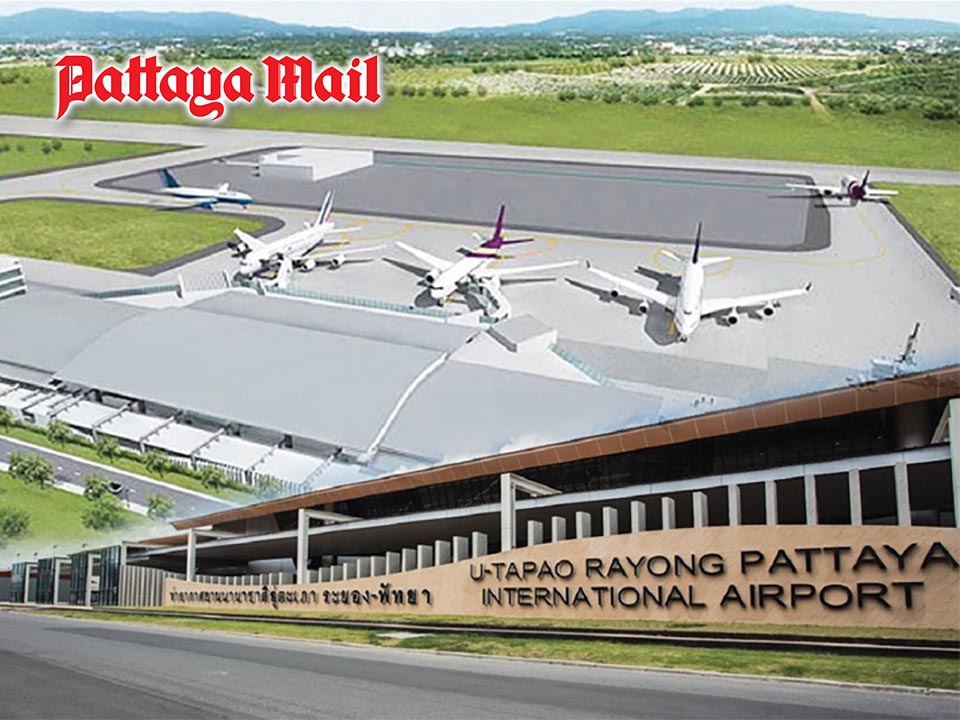
BANGKOK, Thailand – The Thai government is accelerating tax, investment and business-facilitation measures to help move forward the development of U-Tapao Airport and the Eastern Aviation City, with the aim of putting the measures into effect by September 30. Deputy Government Spokesperson Lalida Pherdwiwattana said the Cabinet had acknowledged urgent support measures approved by the Eastern Economic Corridor (EEC) Policy Committee to create a more attractive investment environment and accelerate economic activity around the project.
The U-Tapao Airport and Eastern Aviation City development is a major infrastructure project under the EEC. The EEC Office and U-Tapao International Aviation Co., Ltd. (UTA) signed the public-private investment agreement on June 19, 2020. The project is intended to transform U-Tapao into a regional aviation hub and stimulate investment across the Eastern region. The latest measures cover taxation, investment incentives, facilities for businesses and foreign workers, infrastructure development and new economic activities.
One of the key measures allows businesses to deduct twice the amount of eligible capital expenditure (CAPEX) and operating expenditure (OPEX) when calculating corporate income tax.
Additional incentives may also be considered for businesses that employ highly skilled workers, use advanced technology or clean energy, transfer knowledge and technology, or make high-value investments in specially targeted industries. The government is also introducing measures to facilitate foreign nationals working or operating businesses in the Eastern Aviation City special economic promotion zone, including the special EECa Visa.
Other measures include reducing corporate income tax for international air transport operators, specifically those providing international air transportation services. These tax measures will initially apply for five-year periods, with their effectiveness and value to be assessed before any extension.
The government also plans to reduce registration fees for property leases and transfers and study the development of supporting facilities, including cruise ports, yacht marinas and feeder transport systems.
These facilities are intended to strengthen links between U-Tapao Airport, tourism, transportation and surrounding investment projects. The EEC Policy Committee has also approved adjustments to several measures to align them with existing laws and practical operating requirements. These include tax and duty exemptions for consumption and business activities within the project’s Free Trade Zone.
Authorities will also study rules covering the import, repair, maintenance and storage of racing cars, classic cars and privately owned collector vehicles in the area. The EEC Office and relevant agencies have been instructed to accelerate the necessary legislation and procedures so that the approved measures can take effect by September 30.
The Eastern Aviation City is planned as much more than an airport expansion. The EEC describes the project as a flagship development designed to establish a world-class international airport and strengthen Thailand’s position as a regional aviation and logistics hub. The project has a long-term target of handling up to 60 million passengers annually.
The project also includes a Free Trade Zone and special investment privileges intended to attract businesses, visitors and skilled workers. UTA’s current investment information highlights customs and duty exemptions, foreign-worker facilitation and other incentives within the project area. According to Lalida, the EEC estimates that the measures could help generate approximately 1.3 trillion baht in private-sector investment over the lifetime of the project and create more than 63,700 jobs.
The government also expects the development to attract about 400,000 additional foreign visitors annually and generate around 20 billion baht in local spending once the project begins operations.
It estimates that the project could add more than 37 billion baht to Thailand’s GDP in its first year of operation, with economic benefits expected to increase over time.
The government said its goal is for U-Tapao and the Eastern Aviation City to become an economic engine connecting aviation, tourism, technology, logistics and high-value services with the wider EEC. The project is already moving into a new development phase. The EEC says construction of the second runway and taxiway began under a government contract in 2025, while the wider airport and Eastern Aviation City project continues under its 50-year public-private partnership with UTA.