RAYONG, Thailand – BYD is positioning its Rayong factory as a major production and export hub, with around 40% of vehicles produced in Thailand during the first half of 2026 shipped to more than 10 overseas markets as the domestic automotive market remains under pressure. BYD Auto (Thailand) entered the Thai market in 2022 in partnership with official distributor Rever Automotive, while announcing plans to make Thailand a production base for right-hand-drive vehicles serving the domestic market, ASEAN and other right-hand-drive markets.
The company opened its Rayong plant in July 2024 following an investment of about 35 billion baht. The factory took only around 16 months to build, with construction beginning in March 2023.
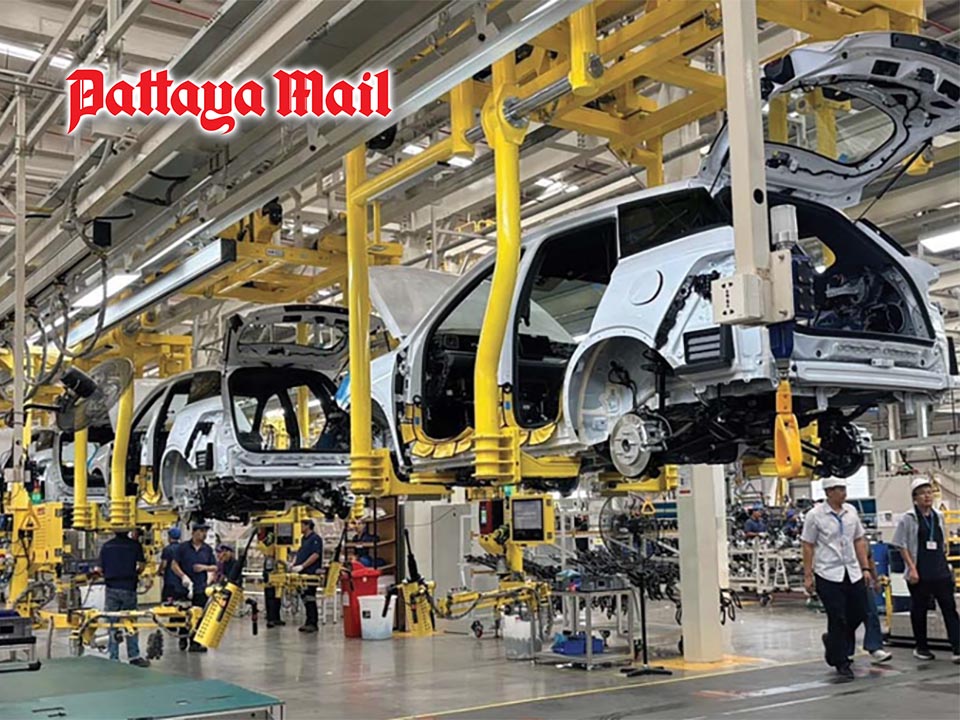
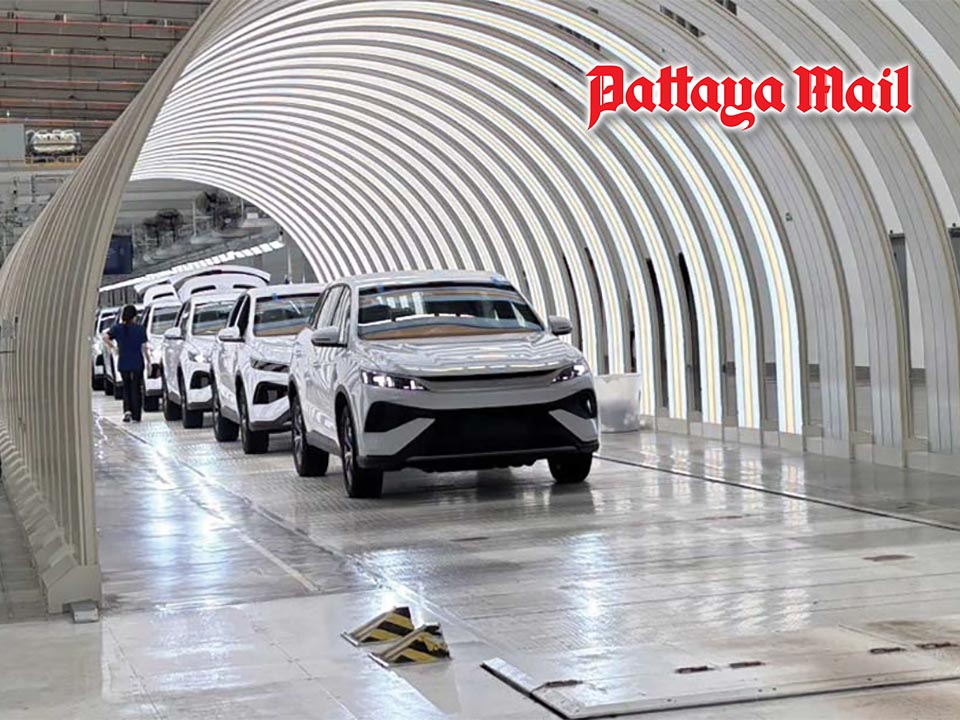
The facility has since developed into an integrated manufacturing operation covering stamping, welding, painting, body production and vehicle assembly. It currently produces five models, including the fully electric BYD Dolphin, BYD Atto 3, BYD Seal 5 and BYD Seal 6, as well as the BYD Sealion 6 plug-in hybrid.
BYD executives told Pattaya Mail during an exclusive visit to the Rayong facility that the Thai automotive market has slowed to around 600,000 vehicles a year, compared with about 1 million a decade ago. At the same time, competition has intensified as eight Chinese automakers have invested in Thailand. Rather than relying solely on domestic demand, BYD is increasingly using Thailand as a base for exports.
About 40% of vehicles produced at the Rayong plant during the first half of 2026 were exported to more than 10 countries and regions, including Vietnam, Malaysia, Brunei, India, Australia, Pakistan, the Middle East and parts of Europe. The company said exports provide additional markets for vehicles manufactured in Thailand while allowing the factory to manage production capacity more effectively amid slower domestic demand.
The Rayong plant currently has production capacity of around 5,000–6,000 vehicles per month on a single shift and employs more than 5,500 people, about 94% of whom are Thai. BYD plans to increase production capacity to two shifts when demand allows and could eventually expand its workforce to more than 9,000 employees. The company is also working to increase the proportion of Thai employees in middle-management and management positions. More than 200 Thai employees are already working as supervisors and more than 300 are Thai engineers.
Chinese employees currently account for around 10% of the workforce, down from more than 1,000 during the plant’s early operations. BYD said its long-term goal is to reduce the proportion to about 3%, with Chinese employees focusing increasingly on technology transfer, training and knowledge sharing. Thai employees have also been sent to China for training, while BYD works with universities in Thailand to develop automotive talent.
Beyond vehicle assembly, the Rayong facility manufactures or assembles key components including battery packs, electric motors, seats, air-conditioning systems and body structures. The plant also relies heavily on automation. More than 500 ABB robots are used in welding, where more than 70% of the production process is automated. The paint shop uses more than 60 ABB robots and operates with 100% automation. The factory is also the first production line in Thailand to use Waterborne Spraying technology in its painting process.
BYD said increasing production at Rayong is important because the automotive industry depends heavily on economies of scale. Higher production volumes can lower unit costs and improve the potential for profitability. The company is therefore placing greater emphasis on exports while continuing to regard Thailand as a long-term investment base.
BYD is also expanding its use of Thai suppliers. The Rayong operation currently has 266 suppliers on its pool list, including 125 automotive parts manufacturers. Around 40 suppliers are involved in testing and certification under the Thai Industrial Standards Institute (TISI), covering more than 1,090 certified standards. Parts counted toward local content must meet the relevant TISI requirements, while BYD said it continues to provide technology transfers and training for Thai suppliers and workers. The company is also calling for government automotive policies to recognize differences in investment scale and economic contribution, saying fully integrated manufacturing plants should receive different incentives from smaller assembly operations with lower investment levels.
Its three main proposals are greater support for companies with long-term investment and development plans, incentives for companies that employ large numbers of Thai workers and maintain high export levels, and support for plug-in hybrid electric vehicles. BYD executives said Thailand’s location, strong automotive supply chain, skilled workforce and more than five decades of close economic ties with China remain important advantages. With the Rayong factory increasingly serving markets beyond Thailand, BYD is seeking to build on those advantages by turning the plant into a larger-scale manufacturing and export base for right-hand-drive vehicles.