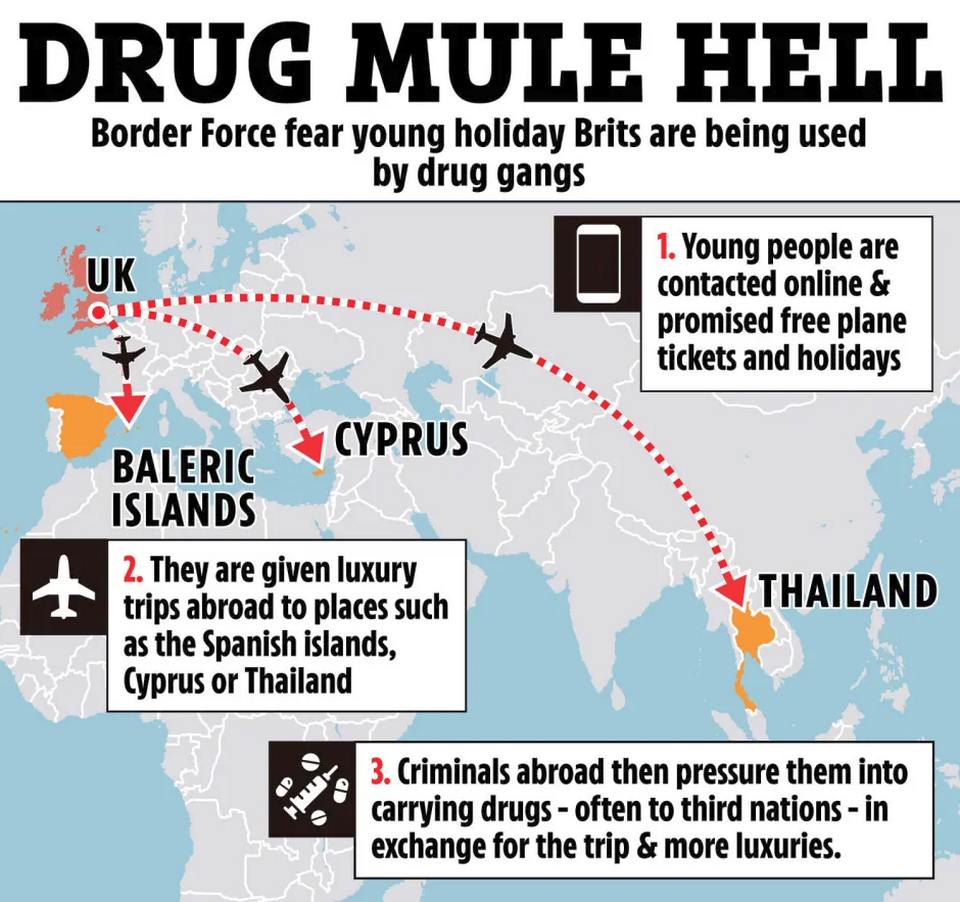
The UK Border Agency is expanding Operation Karetu beyond the Mediterranean where numerous British youngsters have been exploited economically by criminal gangs. Now police want to campaign more effectively about Thailand, a tempting destination for young people seeking free vacations or cash rewards for becoming illegal drug mules.
The Sun, a popular British daily newspaper, wrote that “baby-faced” Brits departing on their first foreign holiday abroad were being advised to be ultra-careful by Border Agency officers on duty at principal British airports. Around 1,000 Brits have been arrested for drugs offences in the past year, mostly for trying to sneak back cannabis. Most were exposed on their return at a British airport. But Prisoners Abroad estimates worldwide there are at least 1,800 Brits in jail abroad, mostly on drugs charges.
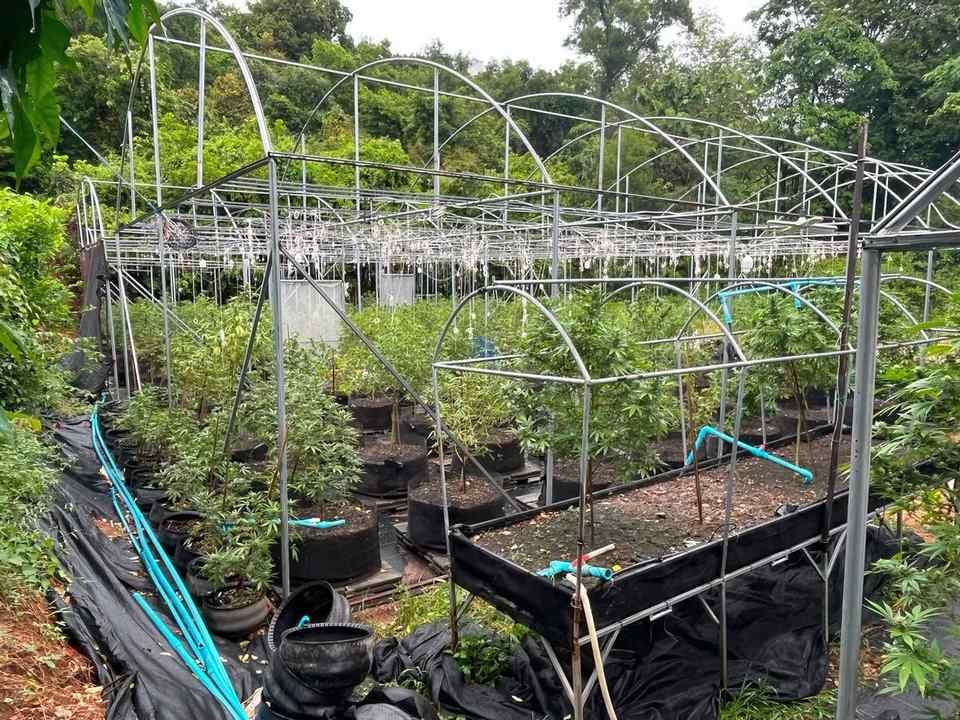
Thai immigration deputy commissioner police major general Nattakorn Praphayon said there were five principal sources for the arrest of drug transporters. Some Thai provinces, such as the island of Koh Samui with its ideal climate, had sprawling farms rich in high-grade cannabis. Several dozen smugglers, including a large group of Brits, had been arrested before they could board a plane.
Bangkok’s international airports are a second hotspot for attempted cannabis exports. The Thai Narcotics Control Board points out that possession of cannabis is not currently an offence as a long-promised revisionary law has not yet been passed by the Thai parliament. However, it is an offence to export without a company business licence vetted by several government departments and Thai customs. Some drugs mules have only been fined for export bureaucracy failure and their illegal goods confiscated before being allowed to board a flight, though not necessarily the one they had booked.
A third group are those who do not return directly to UK but make a transit stop in a third country. These cases are the most publicized and include Bella Culley and Charlotte May Lee, in Georgia and Sri Lanka respectively, who are both caught up in lengthy pre-trial investigations without bail. The penalties in these stopover countries can lead to years of prison time or even the threat of the death penalty.
The fourth miscellany are those smugglers who make it back to UK but are arrested at airports there: the largest single group. Depending on how big the haul is in suitcases, a two-year jail sentence is to be routinely expected. A fifth way, now much less popular because of improved cooperation between Thai and British authorities is parcel post without a mule. Many believe that enhanced parcel inspection is the main reason for the rise in the use of mules.
Senior Border Force officer Louise Deakin said, “In Thailand especially, naïve young travellers are at high risk of being approached by gangs who offer rewards in return for carrying a couple of suitcases back to UK.” She added that many mules were actually recruited whilst still in UK, via Instagram, Tik Tok or other social media apps. But Thai police point to many cases, such as Culley and May, where Bangkok-based gangs preyed upon Brits in person, assuring them that there was no danger of being caught. The huge profits to be enjoyed by the cartels, at least 3,000 percent based on street pricing, mean that muling won’t be going away any time soon.