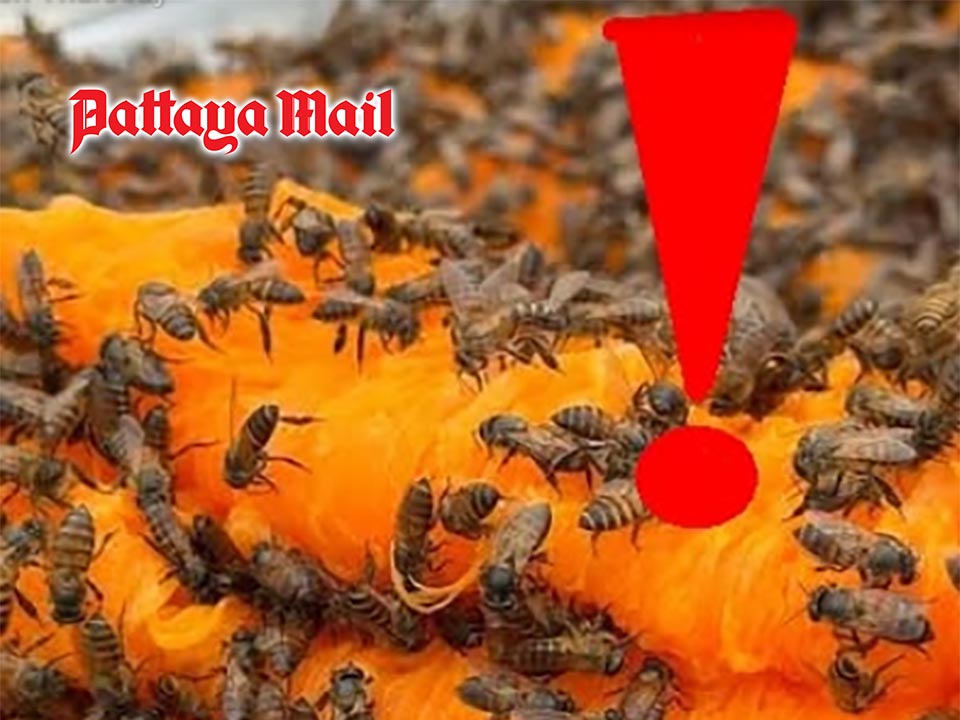
BANGKOK, Thailand – A viral video showing insects swarming over Thai sweets has reignited debate over a common belief that food visited by bees is clean, safe and free from harmful chemicals or germs. However, scientific information cited by Professor Dr Jessada Denduangboripant, a biology lecturer at Chulalongkorn University, challenges the assumption that bees are harmless when they land on food.
According to information shared on his Facebook page bees do more than collect nectar from flowers. They may also land on stagnant water, muddy areas, drains, urine and animal waste to obtain minerals and other nutrients. These activities can expose bees to bacteria and dirt that cling to their legs, body hairs and mouthparts. Research has detected potentially harmful bacteria on bees, including Escherichia coli (E. coli), Salmonella species, Staphylococcus aureus and Bacillus cereus. Such bacteria can contaminate food when insects land on it.
Although bees differ from flies in their feeding behavior, this does not make them incapable of transferring germs. The risk of contamination varies according to the insect species, where it has been and the conditions in which the food is handled.
Some stingless bees, also known as meliponine bees, may visit rubbish, animal remains and leftover cooked food, further challenging the idea that all bees only visit flowers and clean food sources.
There are also other potential concerns. People with allergies to insect-related substances may face a risk of an allergic reaction, while accidentally swallowing a bee hidden in food could be particularly dangerous if it stings inside the mouth or throat.
The claim that food visited by bees is automatically clean, safe and free from germs is therefore misleading. Even if the risk differs from that associated with flies, bees can still contribute to bacterial contamination.
Food vendors are advised to keep sweets and other ready-to-eat items covered and protected from insects. Consumers should not judge food safety by the type of insect landing on it, but by proper food handling, storage and hygiene.