You might recall the short, poignant narrative poem, The Road Not Taken by the American poet Robert Frost. It was first published in the August 1915 issue of the Atlantic Monthly, when Frost was already known for his realistic depictions of rural life in New England in the early 20th century. The main theme of the poem is – as the title implies – the divergence of paths, both literally and figuratively. I was always drawn to this poem, partly because of an instinctive attraction to the byways – rather than the major highways – of musical history.
As a high school music student, the music master criticised me for being more interested in obscure composers than the mainstream ones, whose biographies filled our music history books. “Get to know your Beethoven and Brahms symphonies,” he used to say. It always struck me as curious that he referred to them as “your” symphonies. I did get to “know” the Beethoven symphonies, having bought the miniature scores of all nine. I struggled through all four of the Brahms symphonies too, though to be honest, for the average teenager, this is rarely an enchanting experience.
As a child, my parents would often take us for a Sunday drive in the country. Invariably my father would say, “I wonder where that little road goes?” and unhesitatingly turn the car into it. We lived on a very small island (compared to Greenland), so we never risked getting lost. The island lanes were usually single-track roads with high walls or hedges on either side, and we invariably ended up in a farmyard. Other times we’d find ourselves on a cold, deserted rocky beach, miles from anywhere. But it was all good fun, and on the journey home we’d sing folksongs, led by my father’s stentorian baritone voice. I don’t suppose many families do that these days.

Here in Thailand, when driving aimlessly in the countryside, I often feel compelled to do much the same thing. My ageing car has no GPS, so it’s always something of an adventure. The lesser roads of music seem more interesting than the main highways, perhaps because fewer people have ventured along them. It’s fascinating to discover how many musical works have, over the years, fallen into oblivion. As a student, it was more exciting to buy a record not because the composer’s name was familiar, but because it wasn’t. It is surprising how many musical delights there are, written by composers whose names have almost become unknown and are still waiting to be rediscovered.
These days we have a staggering repertoire of classical music available at the click of a mouse. The amount of classical music on YouTube exceeds that of any traditional music library. A couple of days ago, I came across an unfamiliar work by Bohuslav Martinů, whose music I first discovered in my teenage years. And in case you’re wondering, the little circle above the letter “u” (it’s called a kroužkem) indicates a long sound, as in the English word “moon”.
I vividly recall hearing his Third Cello Sonata (1952) on the radio, and it excited me so much that I ordered the sheet music from our local music shop. Something about his music appealed to me; perhaps it was the rhythmic brilliance, the engaging melodies, or the sense of humanity. Sadly, the composer’s name is rarely seen these days, especially in this neck of the woods.
Bohuslav Martinů (1890-1959): Serenade for Two Clarinets & Strings. Omega Ensemble. (Duration: 21:17; Video: 720p)
By any standards, Martinů was an obsessively prolific composer. He produced six symphonies, 15 operas, 14 ballet scores and countless orchestral, chamber, vocal and instrumental works. He began his professional life as a violinist in the Czech Philharmonic Orchestra, and briefly studied under renowned Czech composer and violinist Josef Suk. From the 1920s onward, he focused more on composing, moved to Paris, and began experimenting with styles that were becoming popular at the time, notably using various jazz idioms and writing in the neo-classical style. Stravinsky influenced him, though his personal musical style is instantly recognisable.
This charming work is typical of Martinů and contains several examples of his unmistakable “musical signature” that appears frequently in his work. Scored for two clarinets, violin, viola and cello, it was composed in 1951 during the composer’s time in America and, in some ways, reflects a desire to reconnect with his Czech roots. The work incorporates jazz and folk influences and features some brilliant interplay between the clarinets and the stringed instruments.
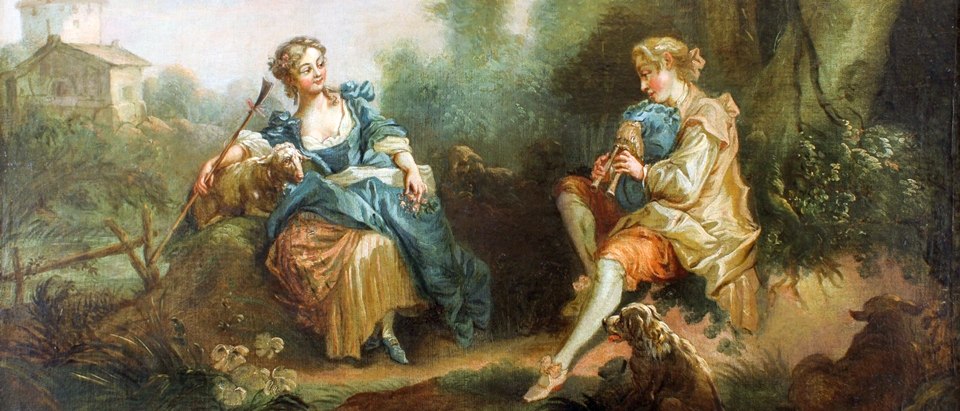
The musical form known as a “serenade” is invariably a light-hearted composition, and the word originally comes from the Italian word serenata, which means “evening song”. The history of the serenade goes back to medieval times, and you can probably conjure up a mental image of a young man with his lute, singing to his beloved on the bedroom balcony above. The instrumental serenade became tremendously popular in the eighteenth century as a light-hearted, multi-movement work, often including music derived from popular dances of the time. Mozart’s Eine Kleine Nachtmusik is a classic example and, interestingly, is almost a textbook example of the classical symphony. Martinů wrote several serenades for different instrumental combinations. This one is delightful: at times sunny and joyful, yet with occasional moments of longing.
Leoš Janáček (1854-1928): Idyll: Suite for String Orchestra. New England Conservatory String Ensemble. (Duration: 26:39; Video: 1080p HD)
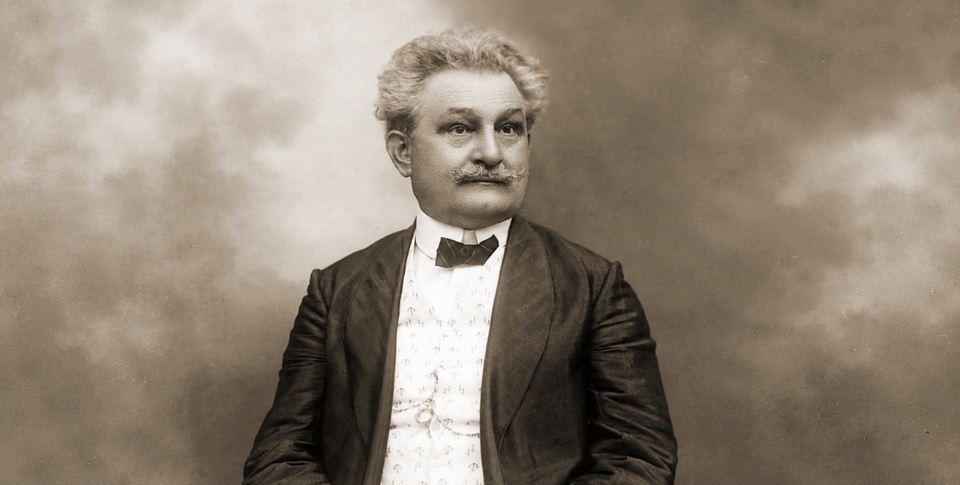
Janáček worked tirelessly at music composition and teaching throughout his life. He held several prestigious musical appointments and taught at the Teachers’ Institute and the grammar school in Brno. He was fascinated by Eastern European music and folk songs and transcribed them into musical notation. But he was not always popular because his strong opinions often led to conflict. As a student, he often criticised his teachers, who considered him defiant and anti-authoritarian. Ironically, as an adult, his own composition students found him strict and uncompromising.
He drew inspiration from Moravian and other Slavonic music, especially Eastern European folk music. Like Martinů, he created a highly personal and original modern style. His Idyll: Suite for String Orchestra (also known as Idyll for Strings is an early work that owes much to the musical style of his friend Antonín Dvořák. Janáček composed the work in 1878, nearing the end of his studies at music college. The work was originally in five movements, but the composer later added two more. The music is light and attractive, far removed from the powerful style the composer developed in his later years. It was first performed in Janáček’s home town of Brno. Antonín Dvořák was among the audience.
The music’s Bohemian character emerges in the opening bars: a compelling, flowing melody full of movement and contrast. The second movement (03:34) has a lilting, almost dance-like quality, in contrast to the third movement, which is more sombre and threatening. The fourth movement (10:23) is dramatic and gives a foretaste of the composer’s later musical style. The fifth movement (13:38) is quiet and thoughtful, with a flowing melody and lovely harmonies showing Janacek at his most lyrical. The sixth movement is labelled Tempo di scherzo, which implies a scurrying style of music, yet this is quite restrained, almost like a classical minuet in style, with an attractive tune and some catchy rhythms. The final movement (22:43) again evokes a musical style from another age. Somehow, it doesn’t quite fit in mood with the preceding movements, but at the time the young Janacek was perhaps searching for his musical voice. He did, of course, in stunning works such as the Sinfonietta, Taras Bulba, his nine operas and dozens of works for orchestra and chamber ensemble.
Leoš Janáček: Sinfonietta op. 60. WDR Symphony Orchestra cond. Semyon Bychkov. (Duration: 23:58; Video: 1080p HD)
This work is the last and most popular of Janáček’s orchestral works: the majestic and powerful Sinfonietta, originally inspired by the brass fanfares Janáček heard played outdoors by a military band in southern Bohemia. Janáček intended the Sinfonietta as a tribute not only to the Czech military, but also to his adopted home city of Brno, in Moravia. Freed in 1918 from centuries of foreign domination, Brno was Janáček’s home for most of his life.
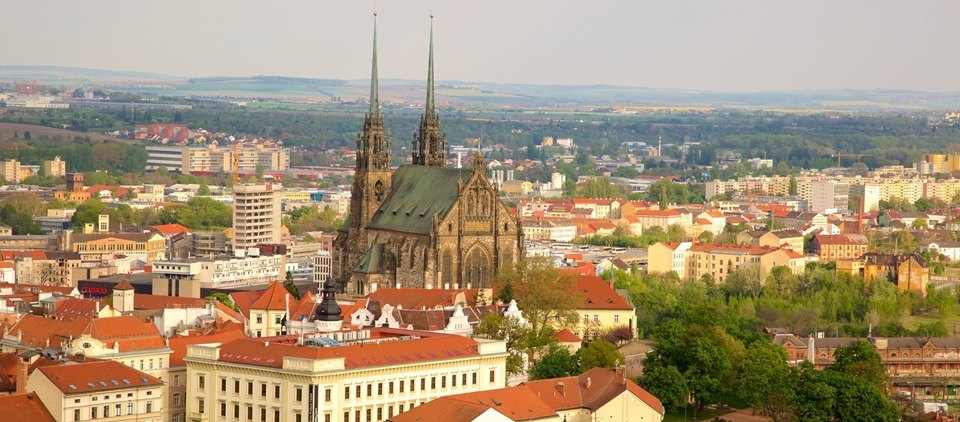
The work was composed in 1926 for a large orchestra, which includes 25 brass instruments. As Hugh Macdonald writes, “Few composers have revealed such prodigious invention so late in their career and so abundantly as Janáček did in the 1920s. As he approached his seventieth year, his productivity and his energy, far from slowing down, redoubled. His career had developed slowly but surely under the banner of the great Czech national revival spearheaded by Smetana and Dvořák, but he was nearly 50 before he enjoyed any wide success in his homeland. It was not until 1916, when he was over 60, that his music catapulted him to international fame. For the remaining twelve years of his life, he composed music at an astonishing rate, having perfected a remarkably individual style and a powerful dramatic sense.”
The work has five movements, each with a descriptive title: (1) Fanfare, (2) The Castle, Brno, (3) The Queen’s Monastery, Brno, (4) The Street Leading to the Castle and (5) The Town Hall, Brno. The titles seem a bit mundane, but the music certainly isn’t, and it includes many of Janáček’s personal harmonic hallmarks. It’s full of life with enormous melodic and rhythmic variety. The most famous movement is the heroic, joyous fanfare that returns toward the end of the work. The historians Nigel Simeone and Jiří Zahrádka have written an entire book about the work, so it’s impossible to do it justice in a few short paragraphs. If you can set aside half an hour, cast away the troubles of the day, and let Janáček speak to you directly through his music.