One of my favourite journeys of yesteryear was driving from the South of France into Northern Spain. The old road, now largely replaced by the A9 autoroute, passed through the lovely historical town of Montpellier, with its 14th-century Gothic Cathédrale Saint-Pierre. Later, it would pass Béziers, which lies on the tranquil River Orb and is one of the oldest cities in France. I liked to spend the night in the medieval town of Perpignan, which, during the 13th century, was the capital of the Kingdom of Majorca, an ancient island realm that included all of today’s Balearic Islands. After Perpignan, I would return to the autoroute and into the high hills that separate France and Spain. Before the mid-1990s, when the European Single Market was formed, you had to stop here at the Spanish frontier, get your passport stamped, and change a wallet full of French francs into Spanish pesetas. All this added to the novelty of the journey, the only downside being that there were often hundreds of other people doing much the same thing.
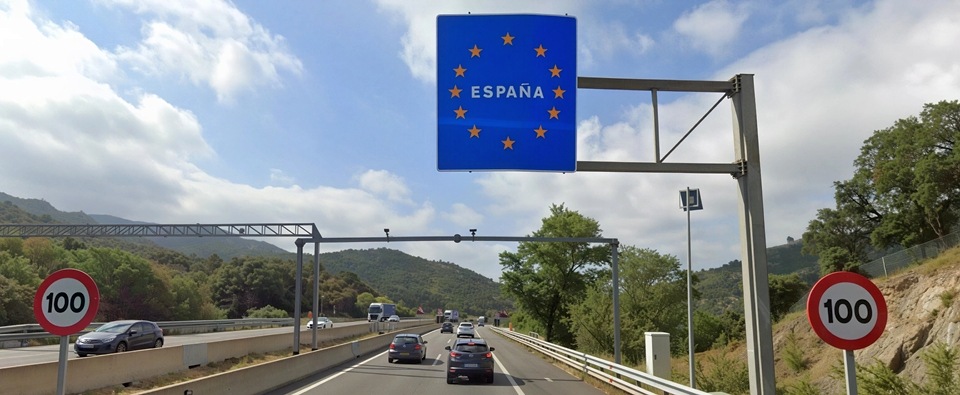
Today, the old, bleak customs and immigration buildings, the money-changing offices and the inevitable selection of restaurants and coffee bars have all gone. At the border, in the open hilly countryside, there is simply an enormous blue sign announcing “España”. But there’s still a frisson of excitement as one drives beneath it.
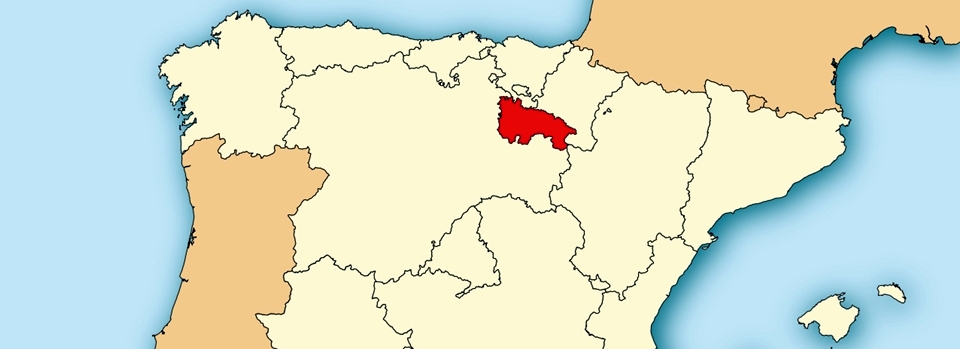
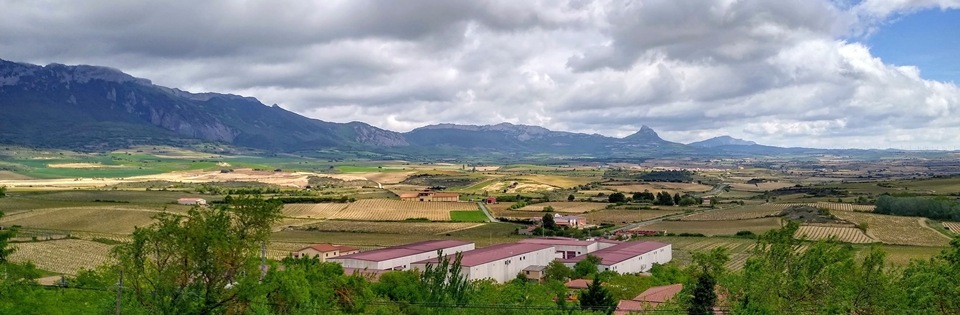
It was always thrilling to be in Spain again and head down the motorway to the thriving, cosmopolitan city of Barcelona. If I’d then turned right and gone north-west for a few hours, I could have arrived in Spain’s Rioja region. It lies in several fertile valleys along the 500-mile-long Ebro River, just south of the Basque city of Bilbao. The valleys are protected from the Atlantic breeze by a jagged mountain range known as the Sierra de Cantabria. In his book Sherry and the Wines of Spain, George Rainbird describes the region as “one of the most beautiful wine-growing areas in the world.”
Incidentally, the name Rioja is always pronounced “ree-OCH-ah,” and not “ree-o-jah”. The “och” sounds a bit like that in the Scottish word “loch”. However, it is pronounced much more gently and lightly. A similar (but not identical) sound also appears frequently in Welsh, German, Dutch, Russian and Arabic. Linguists call it a voiceless velar fricative, and it’s estimated that this unlovely, guttural sound is used in many hundreds of the world’s languages.
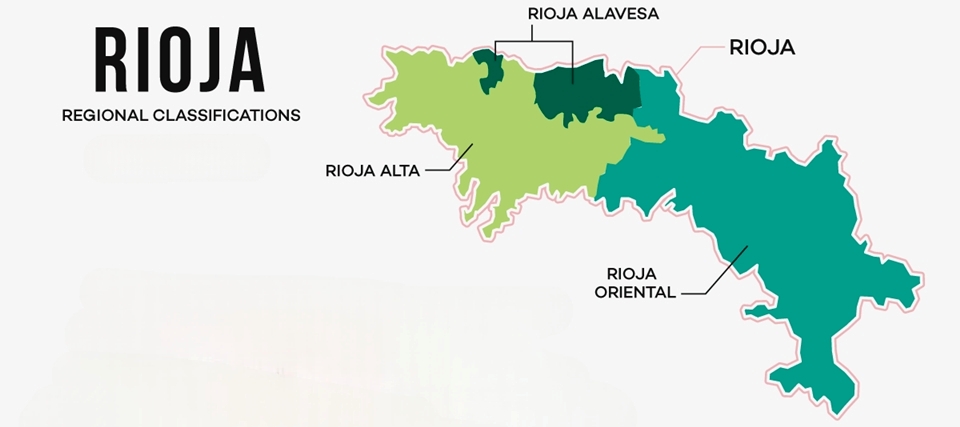
The earliest written evidence of winemaking in Rioja dates to 873, and although white and rosé wines are made, 90% of production is red. Lying on both sides of the Ebro River, Rioja is subdivided into three regions: Rioja Alta (“High Rioja”), Rioja Alavesa and Rioja Oriental (“Eastern Rioja”). I mention this because each region produces wines with different characteristics. Rioja Alta, with its higher elevations, produces well-balanced wines with vibrant acidity and smooth tannins, making them ideal for long-term ageing. Wines from Rioja Alavesa tend to be more full-bodied with a mineral quality, and those from Rioja Oriental (formerly known as Rioja Baja) are often fruit-forward wines with low acidity. Historically, Rioja wineries blended grapes from all three zones to create wines of complexity, but there is an increasing interest in wines from a single area.
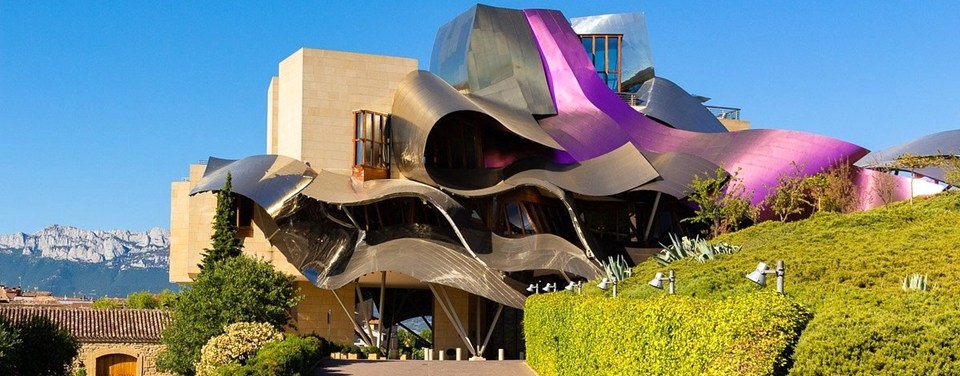
I first tasted Rioja in London a good many years ago. The wine was a superb red Marqués de Riscal Gran Reserva, and the bottle was covered with the company’s iconic gold netting (it’s actually brass). This was the first Spanish winery to use wire mesh, a practice introduced in the late 19th century. Although partly decorative, the concept was taken up by other wineries to prevent dishonest merchants from refilling used bottles with cheap plonk. For economic reasons, Marqués de Riscal eventually discarded the netting in 2019. For some years, Rioja was one of my favourite wines. I enjoyed the rich fruitiness and the slightly heavy, oaky feel. The wine brought a “sense of place”. It reminded me of ornate, dark furniture crafted from Spanish walnut, small shaded courtyards and what the poet John Masefield described as “solemn beauty like slow old tunes of Spain”.
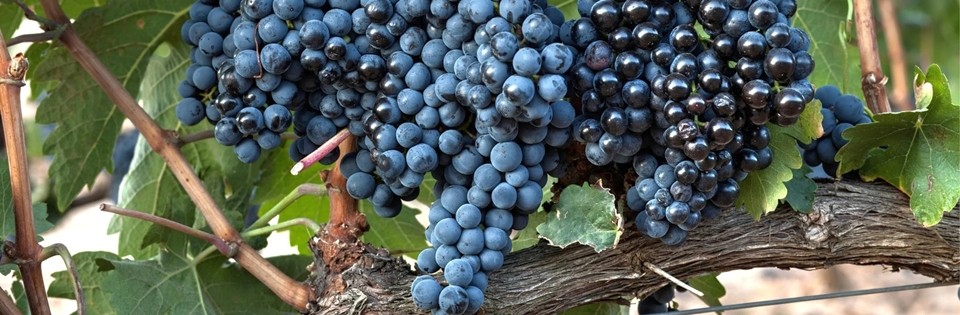
Rioja reds are predominantly made from the Tempranillo grape, which takes its name from the Spanish word temprano (“early”) on account of its early ripening. It’s one of the national grapes of Spain, just as Cabernet Sauvignon is to France. It’s also the third most planted in the world. This low-acidity grape invariably brings herbal, brambly and earthy characters to the wine, along with reminders of raspberry or cherry. Tempranillo (tem-prah-NEE-yoh) is usually blended with small quantities of other grapes and responds well to oak ageing, a practice that imparts a range of fascinating secondary aromas to the wine.
Wine enthusiasts will tell you there are three types of Rioja wine. There are actually four, but I’ll come to that a bit later. Rioja Crianza (kree-AN-tha) is aged up to a year in the barrel and a few months in the bottle. Rioja Reserva is a more serious and rewarding wine, and it’s aged for at least 3 years, with at least 1 year in barrel. The oldest wines are known as Rioja Gran Reserva, aged for a minimum of five years and usually made in exceptional years using the best-quality grapes. But, as Tiffany Vernon writes, “these ageing requirements are a minimum; often exceeded by the wine makers. They believe in giving the wine as much ageing as it needs, so a Gran Reserva might be 10 years old before reaching your wine merchant.”
Winemakers sometimes age for much longer than the legal requirement, producing a wine that amplifies the Rioja characteristics, with a more defined structure and richer, more complex aromas and flavours. All three types are fairly easy to find at specialist wine shops in Thailand, including Vines to Vino, which is halfway along Pattaya’s Thepprasit Road.
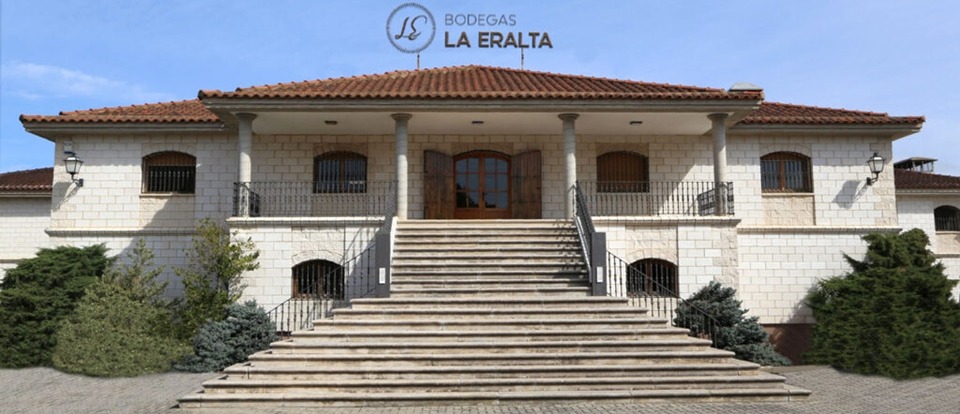
Bodegas la Eralta was founded in 1990 and is a relative newcomer to the Rioja wine scene, compared to venerable wineries like Marqués de Murrieta, which was established in 1852. The family-run company has a massive, modern winery surrounded by vineyards just outside the village of Agoncillo, less than 10 miles southeast of the bustling, lively city of Logroño, the historical capital of Spain’s La Rioja region. The winery has more than 10,000 French and American oak barrels for ageing the wines. If you happen to be in the area, you can take a guided tour of the winery and even participate in an educational wine tasting.
Hacienda El Olmo Rioja Crianza 2021 (red), Spain (฿499 + VAT @ Vines to Vino, Pattaya)
Hacienda El Olmo (“Estate of the Elm Tree”) is a brand produced by Bodegas La Eralta. Made from 100% Tempranillo grapes, the wine spent three weeks of temperature-controlled maceration before ageing for fourteen months in mainly French oak barrels. It’s a dark red wine with pronounced “legs” forming on the inside of the glass. There are characteristic Tempranillo aromas of earthy red fruit, red currant, cherry, along with a touch of dill, dried herbs and lemon. There’s also a hint of oak in the aroma. At 13.5% ABV, the wine proves to be smooth, light and silky on the palate with a refreshing – if somewhat surprising – dash of acidity. It’s a dry, pleasant light-to-medium-bodied wine with attractive grainy tannins and a fairly long finish. The wine benefits from plenty of air contact. I left the bottle open for about 12 hours and found that the taste profile had softened considerably. The air contact had certainly brought out the best in the wine, and the taste and aromas had become more harmonious, balanced and integrated. To me, this seems like a typical Crianza, an easy-drinker that brings some of the character of the Tempranillo. It would make an excellent partner for beef or rich mushroom dishes.
Young, light reds are usually served at a lower temperature than richer, full-bodied older wines, but in the tropical climate of my tasting laboratory (known to everyone else as the kitchen), the wine tasted excellent at just a couple of degrees under room temperature. Open the bottle well before you need it, and ideally pour the wine into a wine jug or decanter to give it a good airing. Believe me, it’s worth taking the trouble.
Hacienda El Olmo Rioja Reserva 2019 (red), Spain (฿599 + VAT @ Vines to Vino, Pattaya)
This wine is a bright ruby red and, not surprisingly, a shade or two lighter in colour than the Crianza. This is because as red wines mature, their chemical composition changes slightly, making them look more transparent. The aroma has also developed, with rich cherry and blackberry notes, hints of dried herbs, and a pleasing touch of oak. It’s full and well-balanced with that attractive earthiness typical of Tempranillo. On the palate, the wine is full and rounded, with barely a trace of acidity and very soft, satisfying tannins. There’s a long, attractive finish, too. Like the Crianza, the wine is completely dry and has a long, dry and persistent finish. Really, it’s quite an elegant, characterful wine that I guess would age well, assuming you have somewhere suitable to store it. The wine would make an excellent partner for most roasted meat and game.
You may ask whether the Reserva is a better wine than the Crianza. It costs a hundred baht more, which reflects higher production costs. It’s important to remember that a Reserva is not necessarily better than a Crianza. At the risk of oversimplification, they represent different styles of what is essentially the same wine. A Reserva may have a wider aromatic spectrum and a more complex layering of flavours than a Crianza, but that doesn’t necessarily make it “better”. It just makes it different. So if your taste runs to richer, heavier and smoother wines, go for a Reserva or even a Gran Reserva. If you prefer something light to accompany a snack, a Crianza would be a better choice. But you know, sometimes even a simple Crianza might feel a bit too weighty for a ham sandwich or a simple omelette. And this brings me to the fourth type of Rioja.
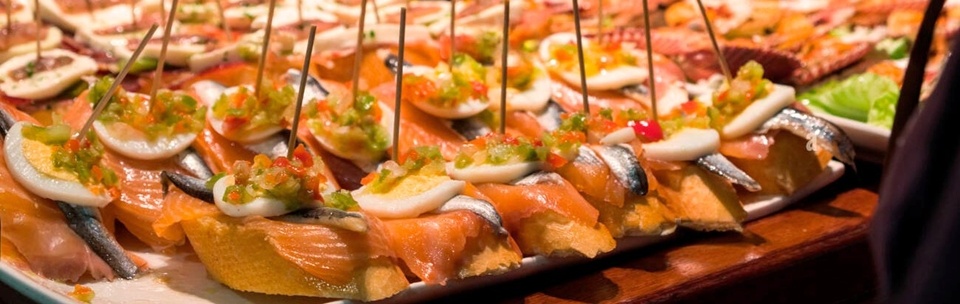
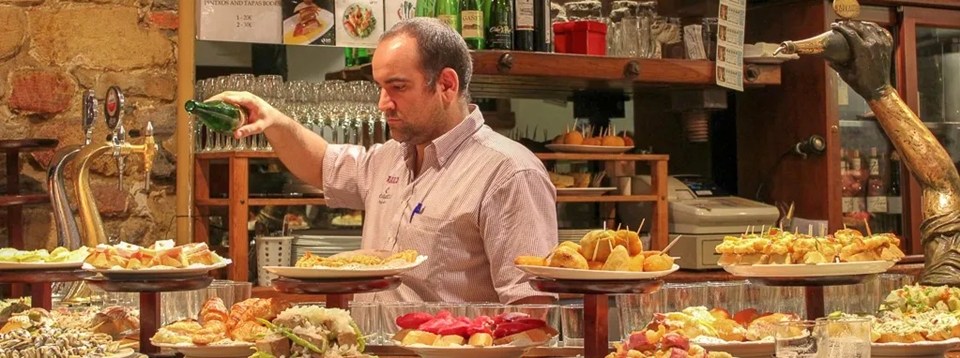
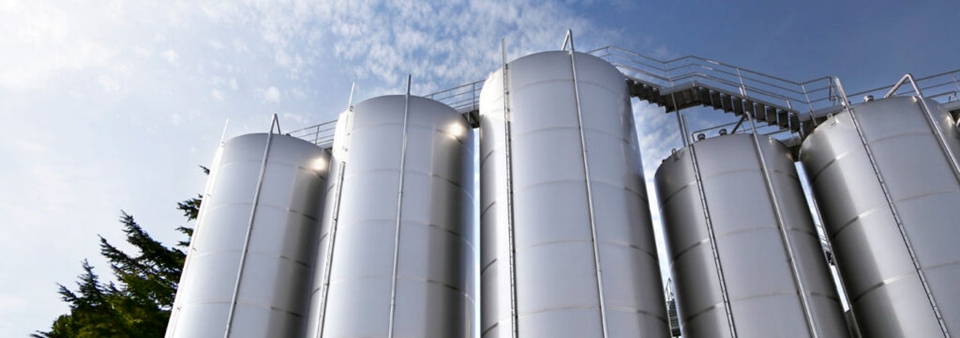
It’s a fresh, young wine known as either Rioja Joven or Rioja Cosechero, made in the same way as French Beaujolais, using the age-old process of carbonic maceration. This involves dumping whole bunches of red grapes into a sealed, carbon dioxide-rich container and letting them ferment naturally. It is sometimes aged for less than a year in oak and sometimes not at all. Stainless steel tanks are often used to preserve its freshness. Tempranillo grapes are blended with about 40% Garnacha, perhaps better known by its French name, Grenache. This enhances the fruit flavours and adds hints of liquorice and minerals as well as a dash of light acidity. The wine goes superbly with almost any food and it’s always served slightly chilled in the countless pintxo and tapas bars in the Rioja region.
The disappointing news for wine enthusiasts in Thailand is that Rioja Cosechero is impossible to find in Asia. It doesn’t always travel well, so it’s rarely exported. You might find some in specialist wine shops in Europe or the USA, especially those that specialise in Spanish wines. The best place, of course, is in the Rioja region itself, where every bar, wine shop and restaurant offers a selection of these fruity young wines. The nearest large city with an airport is Bilbao, but unfortunately, there are no direct flights from Bangkok. If you decide to go there, I am afraid that it’s going to be rather a long haul.