

BANGKOK, Thailand – Thailand’s decision to raise excise tax on imported electric vehicles to 35% from January 1, 2027, is drawing attention to industrial estate operators and domestic auto-parts manufacturers that could benefit if automakers expand local production.
The Cabinet approved raising the excise tax on imported battery electric vehicles (BEVs) from 10% to 35%, and range-extended electric vehicles (REEVs) from 15% to 35%. The measure aims to encourage automakers to establish production facilities in Thailand and use more locally manufactured components.
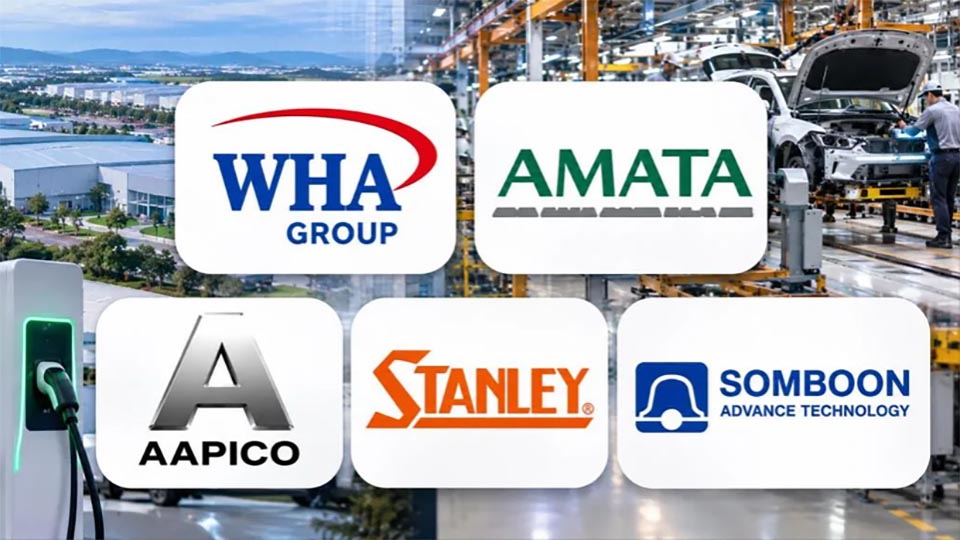
An analysis by InnovestX dated November 3 identified WHA Corporation (WHA) and Amata Corporation (AMATA) among the industrial estate operators with potential to benefit. Increased investment by foreign EV manufacturers could generate demand for factory land, utilities and industrial estate services. In the auto-parts sector, InnovestX highlighted AAPICO Hitech (AH), Thai Stanley Electric (STANLY) and Somboon Advance Technology (SAT).
AH manufactures automotive components for electric vehicles and has business links with EV makers BYD and CHANGAN. However, EV-related components currently account for around 5% of its revenue, leaving room for potential growth if orders increase.
STANLY, which produces automotive lighting equipment, and SAT, a manufacturer of automotive parts, could also gain if automakers increase their use of locally sourced components. The extent of any benefit will depend on the types of parts required for EV production and suppliers’ ability to meet manufacturers’ orders. However, the tax increase does not guarantee immediate gains for all domestic parts manufacturers. Automakers may continue importing components for assembly in Thailand, meaning the benefits will vary across suppliers.
Investors will also be watching the detailed tax provisions, conditions for manufacturers investing in local EV production and whether automakers follow through with new investment commitments. These factors will determine the actual impact on industrial estate demand and domestic parts orders. The higher tax could also put pressure on businesses involved in selling and financing imported vehicles if increased costs push up retail prices and dampen consumer demand.