

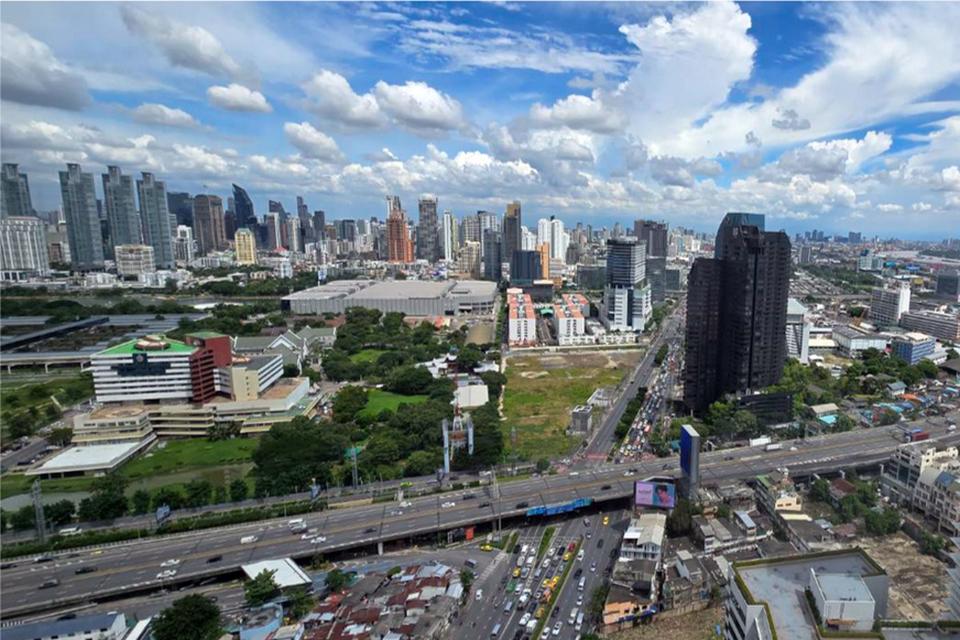
BANGKOK, Thailand – Thai property developers are diversifying into rental condominiums, warehouses, hotels, international schools and other businesses as weak purchasing power and stricter mortgage approvals continue to weigh on the housing market, with industry leaders expecting a prolonged recovery.
Mortgage rejection rates reached 44% in the first half of 2026 and could rise to 50% by year-end, according to Sunthorn Saphathorn, president of the Housing Business Association. The Real Estate Information Center (REIC) forecasts that residential transfers will decline by 4–5% for the full year.
Pornnarit Chuanchaichaisit, president of the Thai Real Estate Association, said developers were adjusting to a market in which buyers lacked purchasing power and banks remained reluctant to approve home loans. The sector could need at least two years to recover, prompting companies to delay new projects, reduce development sizes and seek recurring income from rental properties, hotels and sports facilities.
Developers shift from sales to rental income
Nirat Yoopakkadee, chief executive of Regent Green Power Co., the developer behind the Regent Home condominium brand, said the market remained challenging because existing supply was high while demand had weakened. The company is shifting from building condominiums for sale towards rental properties, particularly for younger people and those struggling to qualify for mortgages. It is considering projects in Lak Si and Pak Kret, where rental demand could provide a more stable income stream.
A planned Regent Chaeng Watthana project in Bangkok will occupy more than six rai near Wat Phra Sri Mahathat station, where the Pink and Green electric rail lines connect. The development is planned to comprise two 15-storey towers with 1,150 units, with construction scheduled for 2027–2029. Another proposed project near Pak Kret intersection on the Pink Line could cover 10 rai and accommodate more than 3,000 units.
Nirat said the company was also considering buying a hotel to operate as part of its diversification strategy. Regent Green Power has approximately 2 billion baht in cash and no debt, allowing it to manage the downturn while exploring new income sources.
Sena links condominium sales with tenants
Sena Development is expanding its housing solutions business, offering options ranging from renting and preparing to buy to property ownership and investment. Managing director Ketsara Thanyalakpark said the company’s RentNex Invest model allows investors to purchase condominium units that already have tenants. Some units offer rental yields of up to 7%, with rental services and a three-year rental guarantee. The model generated early interest, with 20–30 units sold during its first month, according to the company.
Sena said the approach helps convert existing unsold inventory into cash while giving investors access to rental income. The company’s financing costs are around 4.5–5%, while the mortgage minimum retail rate is approximately 6.5%, making rental returns an important consideration for prospective investors.
Ornsirin expands into resale homes and education
Ornsirin Holding is moving into the second-hand housing market as another source of investment returns. Deputy chief executive Akkadet Udomsiritamrong said the company plans to acquire 10–15 additional properties worth a combined 200 million baht in 2027. Its current portfolio comprises 13 properties valued at 106.65 million baht.
The company is also investing 1 billion baht in Mill Hill International School Thailand and plans to open its second phase in 2029.
Supalai develops 100,000-square-metre warehouse
Supalai is diversifying into industrial property through a partnership with AU Group to develop a rental warehouse facility in Phanat Nikhom district, Chonburi. The 1.6-billion-baht project will offer approximately 100,000 square metres of leasable space. Construction is more than 90% complete, with operations expected to begin in 2027.
Managing director Traithep Tangmatitham said the entire facility had been leased to a partner, with the rental terms agreed from the outset. The project is expected to generate annual revenue in the region of 100 million baht.
Sansiri, Origin and SC expand beyond housing
Major developers are also building businesses that can provide recurring income beyond residential sales. Sansiri has established the Sansiri Capital Trophy Fund and completed a deal to acquire The Lake Como EDITION hotel in Italy. It also plans to open the S Quarter sports complex within its Krungthep Kreetha community in Bangkok by 2027.
Origin Property is expanding its hotel, office and commercial property businesses through Origin Hotel, targeting assets worth 24.5 billion baht by 2030.
SC Asset Corporation is promoting its GenSCription rental-to-ownership and flexible rental models for younger customers, while expanding its recurring-income portfolio to include hotels, warehouses, offices and rental apartments in the United States. The company is also exploring solar energy for data centres, after-sales services, digital platforms and healthcare.
Pruksa Real Estate is expanding its rental portfolio through OMEGA Smart Warehouse in Bang Na, covering 217,000 square metres, and its iPlern apartment brand. The company plans to develop 60 buildings with a total of 4,300 rental rooms, with monthly rents ranging from 3,000 to 10,000 baht.
Property associations seek further government support
Three industry associations are preparing to discuss additional measures with Finance Minister and Deputy Prime Minister Ekniti Nitithanprapas to support the housing market.
The Thai Real Estate Association, Housing Business Association and Thai Condominium Association will participate in the 50th House and Condo Expo, scheduled for October 29 to November 1.
Proposals under consideration include doubling the personal income tax deduction for home purchases from 100,000 baht to 200,000 baht, and applying the residential land and building tax rate of 0.03% to qualifying unsold residential properties instead of the 0.3% commercial rate.
Existing measures include reduced property transfer and mortgage registration fees of 0.01%, relaxed loan-to-value rules extended through June 30, 2027, and the Government Housing Bank’s 50-billion-baht Khon La Lang Plus housing loan programme. The latter offers loans of up to 3 million baht per borrower, repayment terms of up to 40 years and interest rates of 2.6–2.8%.
Sunthorn said the new loan programme would not guarantee approval for every applicant, as banks would continue to assess individual creditworthiness.
Developers offer steep discounts to attract buyers
The House and Condo Expo will feature promotions intended to encourage purchases despite the difficult lending environment. L.P.N. Development is offering discounts of up to 50% on completed properties, additional benefits of up to 150,000 baht and selected free transfer fees, furniture and electrical appliances.
AP Thailand is offering discounts of up to 10 million baht, with bookings starting at 999 baht and selected instalment promotions. Sansiri is advertising discounts of up to 10 million baht, selected low monthly payments and common-area fee waivers of up to 10 years.
SC Asset is promoting furnished homes with solar panels and selected zero-interest offers, while Origin Property is offering selected interest rates starting at 1.25% annually.
Despite these incentives, developers face the challenge of converting buyer interest into completed transactions while banks maintain strict lending standards. The industry’s shift towards rental housing, industrial facilities and other recurring-income businesses reflects an effort to maintain cash flow until the residential market recovers.
(Story, Photo: Prachachat Business)