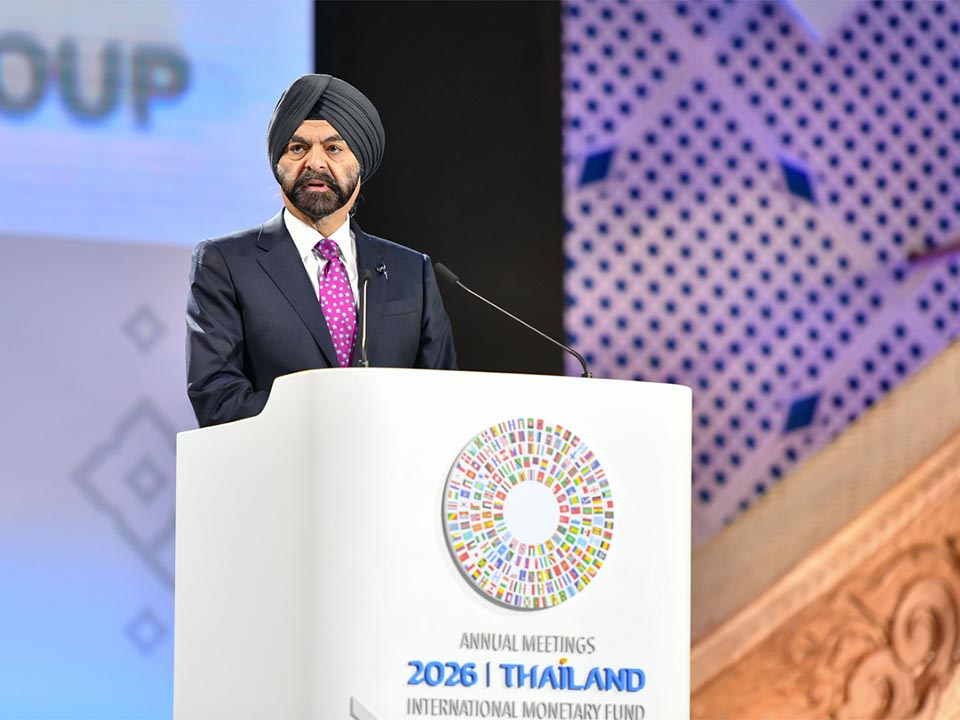
BANGKOK, Thailand – World Bank Group President Ajay Banga has called for greater efforts to create jobs and use limited financial resources more effectively amid mounting global economic pressures. Addressing the plenary session of the 2026 IMF–World Bank Group Annual Meetings in Bangkok, he warned that geopolitical conflicts, rising debt, tighter government budgets, high energy and fertilizer costs, and supply chain uncertainty continue to burden developing economies.
Banga identified youth employment as a major global challenge, with approximately 1.2 billion young people expected to enter the workforce in developing countries over the next 10 to 15 years, compared with an estimated 400 million jobs becoming available. He warned that this gap could have lasting economic and social consequences, making employment opportunities and the effective use of scarce capital essential to future development.
The World Bank chief explained that while the previous three annual meetings centered on institutional reforms and organizational goals, this year’s discussions addressed progress achieved and the path ahead. He stressed the importance of combining public financing, private investment, philanthropic support, and technology to drive sustainable economic growth according to each country’s development needs.
Banga also cited the progress of 35 countries that have transitioned from the International Development Association (IDA) to the International Bank for Reconstruction and Development (IBRD), with 23 subsequently becoming IDA donors themselves. He presented these achievements as examples of how development support can help countries advance economically, reaffirming that country-led transformation and the efficient allocation of resources will remain central to the World Bank Group’s strategy. (NNT)