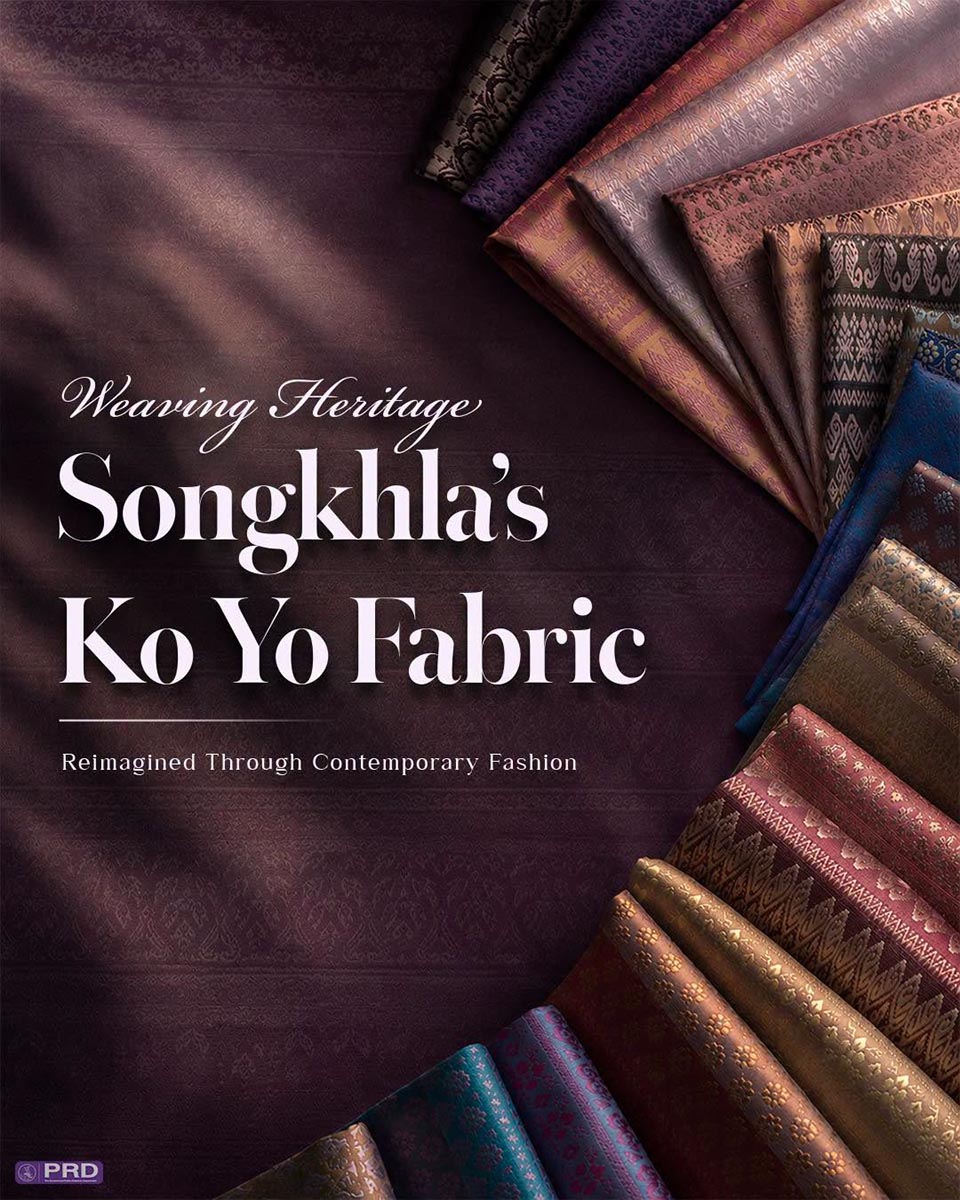
BANGKOK, Thailand – Prior to the Cabinet retreat in Songkhla Province, the Government organized a press tour to the Ko Yo Woven Fabric Learning Center at Wat Khok Bieo on 30 August. The visit allowed media members to observe the traditional wisdom of fly-shuttle weaving – a vital cultural heritage and identity of the local community – to explore how Ko Yo woven fabric has been developed within the creative economy by leveraging cultural capital to generate higher economic value.
Ko Yo Subdistrict in Mueang Songkhla District is a small island located in Songkhla Lake, about six kilometers from downtown Songkhla. This local community is renowned for its traditional handicrafts, particularly hand-woven textiles. A prominent feature of Ko Yo woven fabric is its raised, finely detailed, and beautiful patterns that are both durable and easy to maintain. It often features subtle, overlapping grid patterns woven with two-color threads, such as white and red, sometimes accented with black or yellow borders.
Ko Yo fabric showcases a variety of floral motifs, notably Lai Kan Yaeng (a branch-spreading pattern), regarded as the most exquisite design. This pattern was later renamed Lai Ratchawat – meaning “routine” or “action” – a name bestowed by King Prajadhipok (Rama VII) during his royal visit to Songkhla in 1932, after Ko Yo artisans presented their finest textiles to the monarch.
Today, Ko Yo woven fabric is integrated into modern fashion, transformed into streetwear, contemporary workwear, and practical everyday accessories. Key motifs such as Ratchawat and Phikun (bullet wood flower) are tailored into modern-cut shirts, blazers, and overcoats, making them versatile for both professional settings and casual outings. (PRD)