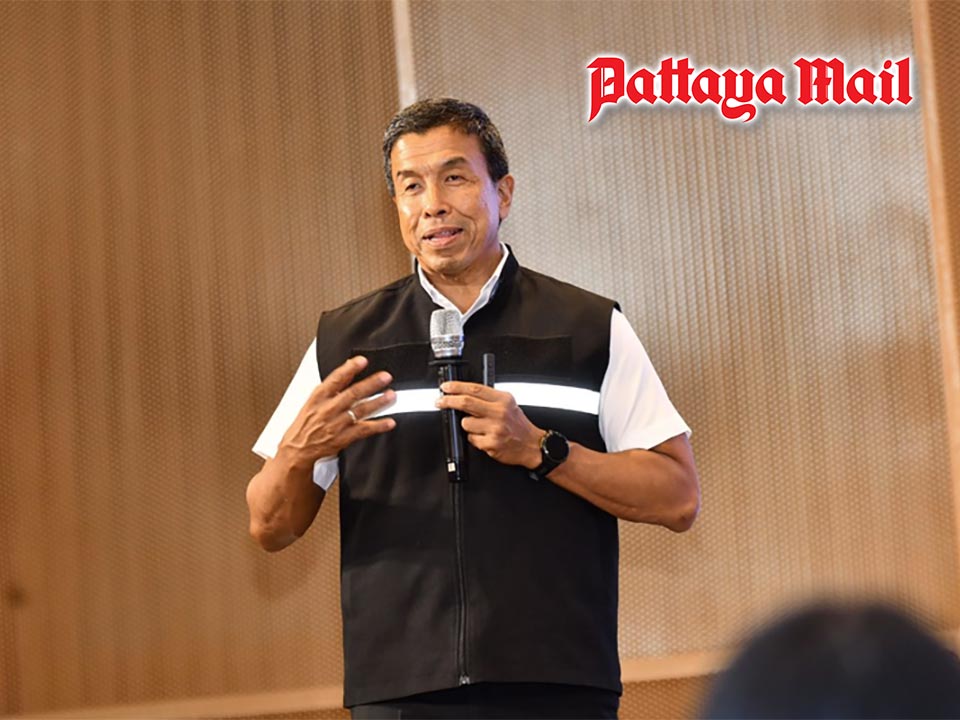
BANGKOK, Thailand – Bangkok is looking to bicycles and bike sharing to close the gaps between homes, workplaces and the city’s main public transport networks, with Governor Chadchart Sittipunt calling for safer bicycle parking across the capital. Speaking at Bangkok Car Free 2026 on September 23, Chadchart said reducing private car use requires the government to provide convenient, affordable and practical alternatives while encouraging residents to change their travel habits. Bangkok covers only 0.3% of Thailand’s land area but accommodates 5.81 million private passenger vehicles, or 50.4% of the national total, according to figures presented at the event.
Chadchart said traffic congestion costs the city an estimated 60 million baht in lost economic opportunities each day, while the transport sector accounts for 29% of Thailand’s greenhouse gas emissions, with 97% of those emissions generated on Bangkok’s roads. He said Bangkok commuters typically use several forms of transport during a single journey, such as walking from a soi, taking a motorcycle taxi, using the rail network, continuing by boat and then walking to work. The major weakness is often the first and last part of the journey — the distance between a person’s home and a mass-transit station, or from a station to the final destination. The Bangkok Metropolitan Administration is therefore promoting bicycles and public bike-sharing services to connect road, rail and water transport.
Bangkok currently has 4,081 shared bicycles operating from 672 pick-up and drop-off locations, supporting more than 96,200 trips per month. The city aims to increase usage towards one million trips. Bike sharing has also gained popularity among students, including those from Suankularb Wittayalai School and Debsirin School. Chadchart pointed to the system’s usefulness during emergencies, noting that bicycles remained a flexible option during the earthquake when other transport systems were disrupted. The BMA also plans to transform areas beneath pedestrian bridges and around public transport interchanges into safer bicycle parking areas.
A further 850 bicycle parking racks are planned, on top of the existing 4,888 racks. The expansion is expected to provide space for more than 48,000 privately owned bicycles. “We do not want to solve only traffic congestion, because however many roads we build, it will never be enough,” Chadchart said. “We want to solve mobility by creating real travel choices.” He ended with a message aimed at changing how Bangkok residents view congestion: “You are not stuck in traffic, you are traffic.”