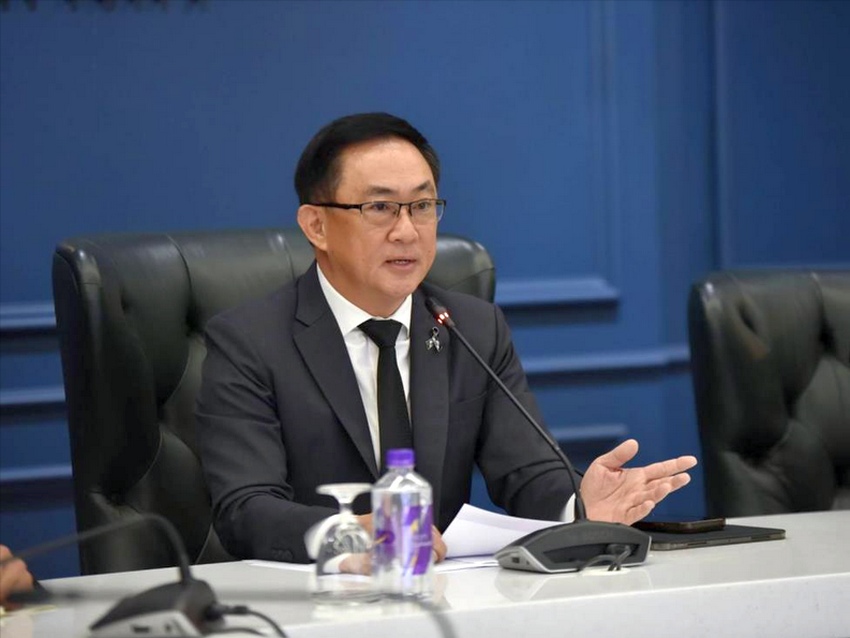
BANGKOK, Thailand – Thailand’s Department of Business Development (DBD) has defended new rules removing eight service businesses from the list of activities requiring permission for foreign operators, saying the move is intended to reduce regulatory duplication rather than open the market without safeguards.
DBD Director-General Poonpong Naiyanapakorn said the changes do not amount to allowing foreigners to freely enter businesses reserved for Thais. The eight activities remain subject to relevant laws and oversight by specialized agencies. The eight businesses fall into three broad groups. The first includes activities already regulated by specific laws and agencies, including telecommunications services, treasury center services, secured lending and certain derivatives-related services.
The second group covers services provided exclusively within corporate groups, including administrative, human resources and information technology management services between affiliated companies, as well as guarantees provided only for affiliated companies. The third covers narrowly defined services, including space rental for electronic equipment and vending machines serving company employees, and petroleum drilling services. Officials said offshore drilling requires high levels of technology and investment, with no Thai operators currently providing some of these services.
Poonpong said removing businesses from the Foreign Business Act’s restricted list was not a new policy, noting that similar changes had already been made five times following consultations with relevant regulatory agencies. He also rejected criticism that the government was easing foreign investment rules without addressing nominee businesses, saying the DBD had actually intensified measures against nominee arrangements throughout 2026.
Under new registration requirements effective August 1, companies involving foreign shareholders or foreign signing authority must provide additional information and supporting documents. The number of newly registered companies considered at risk of using Thai nominee shareholders fell sharply to 163 in August, compared with 894 in August 2025, an 81.77% decline.
Of the 163 companies, officials assessed that 100 appeared to involve genuine Thai-foreign joint investment, while 63 were considered potentially risky nominee arrangements. Directors, shareholders and applicants have been asked to provide explanations, with further legal action to follow if irregularities are found.
Poonpong said nominee businesses had been a problem for more than 20 years and that 2026 had seen the most intensive effort yet to tackle the issue, with multiple government agencies working together. He said the DBD would continue releasing information on suspected nominee activity to increase public awareness and encourage cooperation in tackling the problem.