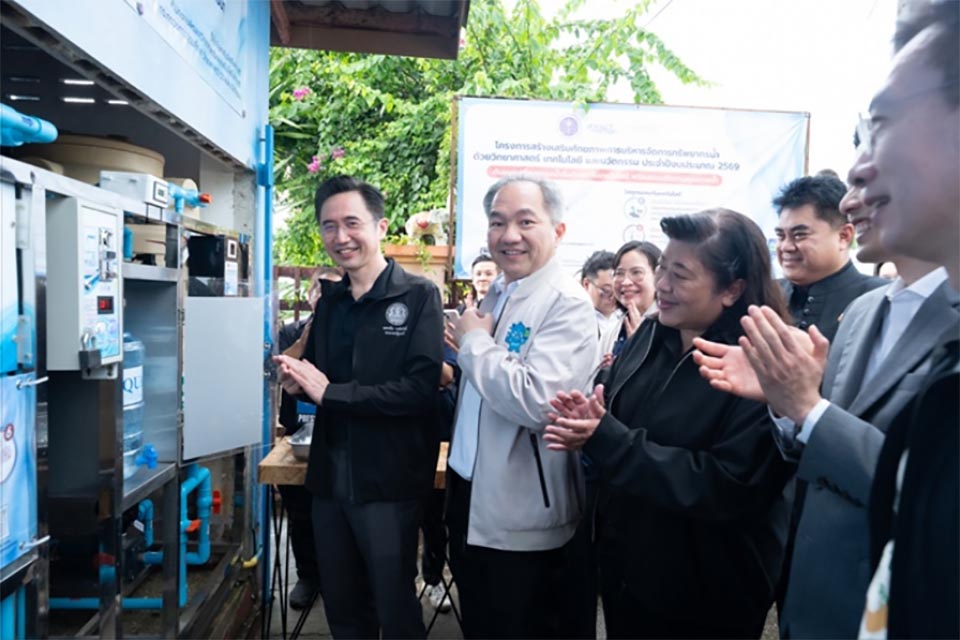
CHIANG RAI, Thailand – Communities along the Kok River in Chiang Rai are receiving a new village water treatment system designed to remove arsenic and heavy metals from water used for drinking and household purposes. Yodchanan Wongsawat, Deputy Prime Minister and Minister of Higher Education, Science, Research and Innovation, officially handed over the prototype system during a visit to Chiang Rai, with local officials and community representatives attending the ceremony.
The system was developed through cooperation between the National Science and Technology Development Agency (NSTDA), the Synchrotron Light Research Institute and research partners. It is designed to address deteriorating raw water quality in areas along the Kok River, including turbidity and contamination by arsenic and other heavy metals.
Yodchanan said the Ministry of Higher Education, Science, Research and Innovation was focused on turning scientific research into practical solutions for communities, particularly in areas facing environmental and water-resource problems. “Research must not remain on the shelf,” he said, stressing the need to turn scientific knowledge and technology into solutions that can be used in real communities.
The project is being developed under NSTDA’s A-QUALITY programme, which focuses on clean-water innovation and includes water-quality monitoring, treatment technology, prototype development and technology transfer to local agencies.
NSTDA Director Dr Chukit Limpijumnong said the village water-treatment prototype was developed by the National Nanotechnology Center to address water-quality problems in the Kok River basin.
Pilot systems have already been developed in Ban Rim Kok in Mae Yao subdistrict and Ban Muang Ngim in Rim Kok subdistrict, covering more than 700 households.
The systems combine different treatment technologies according to local water conditions, with the goal of bringing community water supplies in line with Department of Health standards. Researchers have also developed AquaNano, a nanotechnology-based water purification system capable of removing contaminants including heavy metals. The technology has subsequently been adapted into a mobile drinking-water production vehicle for disaster situations, capable of producing up to 250 litres of clean water per hour.
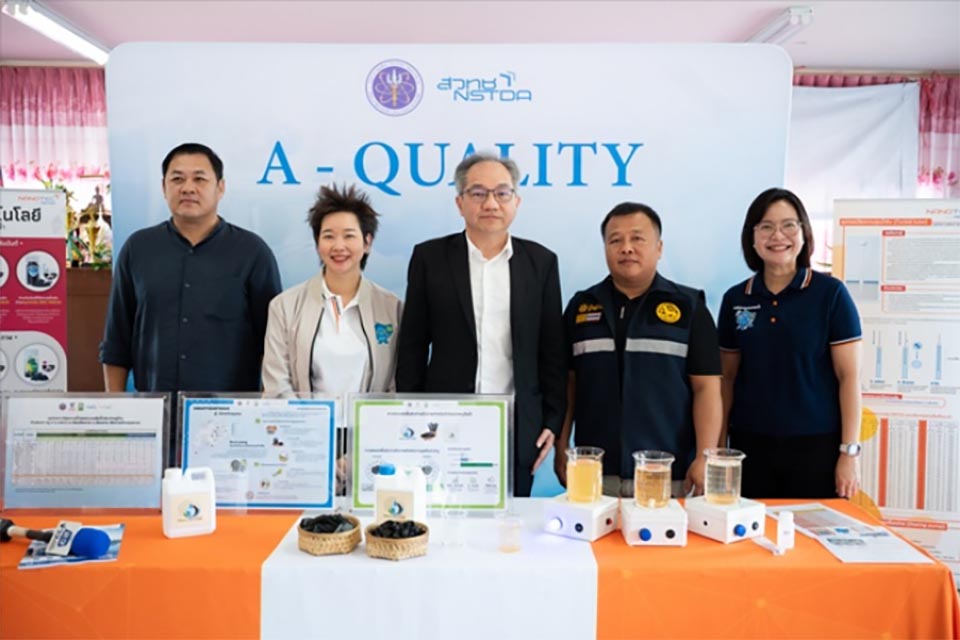
The Synchrotron Light Research Institute has contributed technology to analyse arsenic contamination, including identifying its chemical form and oxidation state. This information helps researchers assess its source, toxicity and the most appropriate treatment method. The institute, together with Khon Kaen University and other research partners, developed specialised adsorption materials designed to capture arsenic and heavy metals from contaminated water.
A treatment system has been installed at the Ban Farm Sampanthanakit community water plant in Rim Kok subdistrict to improve the existing chemical sedimentation system. A reverse-osmosis system has also been installed to produce drinking water, benefiting more than 250 households.
A similar filtration system has been installed at Ban Muang Daeng School in Mae Sai district to address arsenic contamination linked to the Sai River. The system serves more than 700 students and school personnel.
Chiang Rai Provincial Administrative Organisation permanent secretary Ramil Phatthanamongkolchet said the province was particularly concerned about water security for communities along the Kok, Sai and Ruak rivers. Changing water conditions, including increased turbidity and the presence of heavy metals, require scientific data and technology suited to local conditions, he said.
The provincial administrative organisation has worked with NSTDA’s National Nanotechnology Center to improve village water systems, beginning with the pilot communities along the Kok River.
Ramil said the project was not simply about installing new equipment but also about giving local communities the knowledge and skills needed to monitor water quality and operate their own treatment systems.
Chiang Rai plans to continue training village water-management committees in communities near the Kok, Sai and Ruak rivers and expand the experience gained from the pilot projects to other areas considered at risk.
The Ministry of Higher Education, Science, Research and Innovation said it would continue working with research agencies, local authorities and communities to bring scientific innovations into practical use, with clean and safe water among its priorities.
The ministry said the ultimate goal was not simply to produce successful research but to ensure that people could directly benefit from it through safer water, a healthier environment and improved quality of life. This version keeps the arsenic problem and tangible community solution up front, which should make it more interesting to a general news reader than leading with the ministry’s research policy.