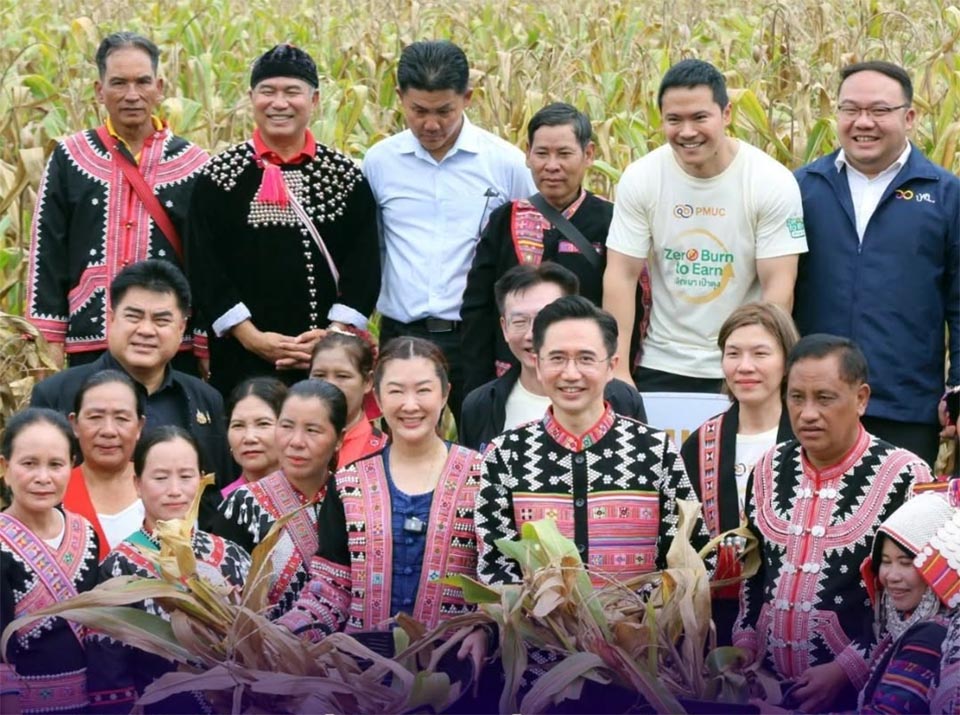
CHIANG RAI, Thailand – The Ministry of Higher Education, Science, Research and Innovation and the Ministry of Agriculture and Cooperatives have expanded the PMUC Zero Burn to Earn initiative to Chiang Rai province, securing private-sector commitments to purchase over 20 million baht’s worth of agricultural residues. Deputy Prime Minister and Minister of Higher Education, Science, Research and Innovation Yodchanan Wongsawat, along with Deputy Minister of Agriculture and Cooperatives Piyarat Tiyapairat, attended the signing at Lao Fu Chinese Language School in Mae Chan District on August 29, 2026.
The initiative establishes a market mechanism that converts agricultural waste into income for farmers and reduces farm burning, a key contributor to PM2.5 pollution. Collected residues will be processed by academic institutions, research organizations, and private companies into environmentally friendly products and renewable energy. The project was piloted in Chiang Mai in late May 2026 before expanding to Chiang Rai. Participating companies plan to continue their cooperation for the next five years, potentially generating over 3 billion baht in additional economic value from green products and clean energy.
The deputy prime minister stated that economic incentives should make it more profitable for farmers to avoid agricultural burning. The model connects farmers, researchers, businesses, and markets, and places processing partners within about 20 kilometers of residue sources to reduce transportation and logistics costs. The ministries will also use data on areas with high levels of burning to prepare measures ahead of the annual haze season. The ministries also delivered 20 repurposed solar-powered water pumps, 100 second-hand solar panels, and 2,000 liters of biodiesel to community networks. This comprehensive effort aims to eliminate agricultural burning and establish a foundation for sustainable, technology-driven economic growth in the region. (NNT)