TOKYO, Japan – Companies are turning to artificial intelligence and sensor technology to improve the efficiency of indoor farming in Japan as the country faces a growing shortage of farmers.
Oishii Farm Corp., which runs a strawberry factory in the United States, recently established a new research and development base in Hamura, a city in western Tokyo. It plans to develop efficient methods for cultivating other crops, such as tomatoes, indoors and robots capable of automatically planting and packaging produce.
The company uses AI to manage the breeding environment for bees, which are essential for pollination. The technology has raised the pollination rate for its strawberries to 95 pct. “We’re able to achieve hundreds of years’ worth of traditional outdoor breeding progress within a single year,” Hiroki Koga, co-founder and CEO of Oishii Farm, said, emphasizing the benefits of plant factories unaffected by season or weather.
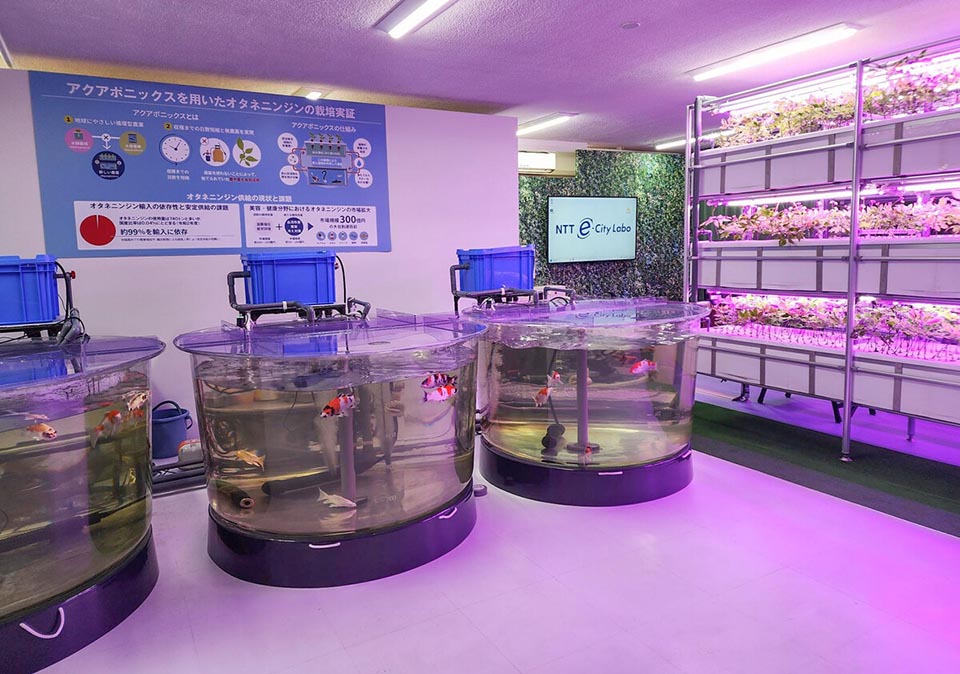
In June, NTT East Inc., a telecommunications operator, and other companies launched an aquaponics test in Tokyo that combines the cultivation of Japanese “nishikigoi” ornamental carp and ginseng. Aquaponics refers to the practice of combining aquaculture and hydroponics, a method of growing plants without soil.
By using AI and sensor technology to control lighting and temperature, the project has reduced cultivation periods before shipment from years in conventional outdoor farming to just months.
NTT East said leaves and stems containing valuable ingredients, which were previously discarded, can be utilized for business purposes by using fish feces as fertilizer instead of agricultural chemicals. The number of farmers in Japan whose primary source of income is agriculture has fallen from about 2.05 million in 2010 to about 980,000 in 2026, according to the agriculture ministry.
To maintain agricultural production, the Japanese government is encouraging participation from other industries and promoting the adoption of advanced technologies. It has set a target of 4.6 trillion yen in public and private investment in plant factories by fiscal 2040. Japan currently has about 440 plant factories, up 1.4 times from a decade ago. Nonetheless, establishing such facilities requires high initial costs, and some operators have gone bankrupt after failing to recover their costs.
“Even if we can reduce the number of workers, achieving profitability will remain difficult if capital investment and electricity costs swell,” a plant factory manager said, highlighting major challenges facing the sector in improving productivity and creating added value. (TNA)