PATTAYA, Thailand – Located at the strategic heart of Thailand’s Eastern Economic Corridor (EEC), Pluak Daeng district in Rayong is undergoing a profound structural transformation. Driven by a relentless influx of Chinese foreign direct investment (FDI), the area is expanding its manufacturing and technology base at a breakneck pace. This rapid expansion closely mirrors the historical trajectory of neighbouring Sriracha in Chonburi, long recognised as “Little Osaka.” Today, Pluak Daeng has established its own identity, earning the moniker “Little Guangzhou.”
While this influx of capital is boosting macroeconomic indicators, the microeconomic reality is more complex. Land values have skyrocketed, particularly for prime plots adjacent to major arterial roads, where prices have surpassed 40 million baht per rai. This has fundamentally disrupted local real estate dynamics and raised concerns about property ownership transparency.
Beyond the staggering rise in real estate values, local authorities and business networks, including the Rayong Chamber of Commerce, are raising concerns about a growing regulatory vacuum. Chinese investors are increasingly bypassing established industrial estates to acquire land for independent factory operations. This trend poses a serious challenge to environmental oversight and utility management.
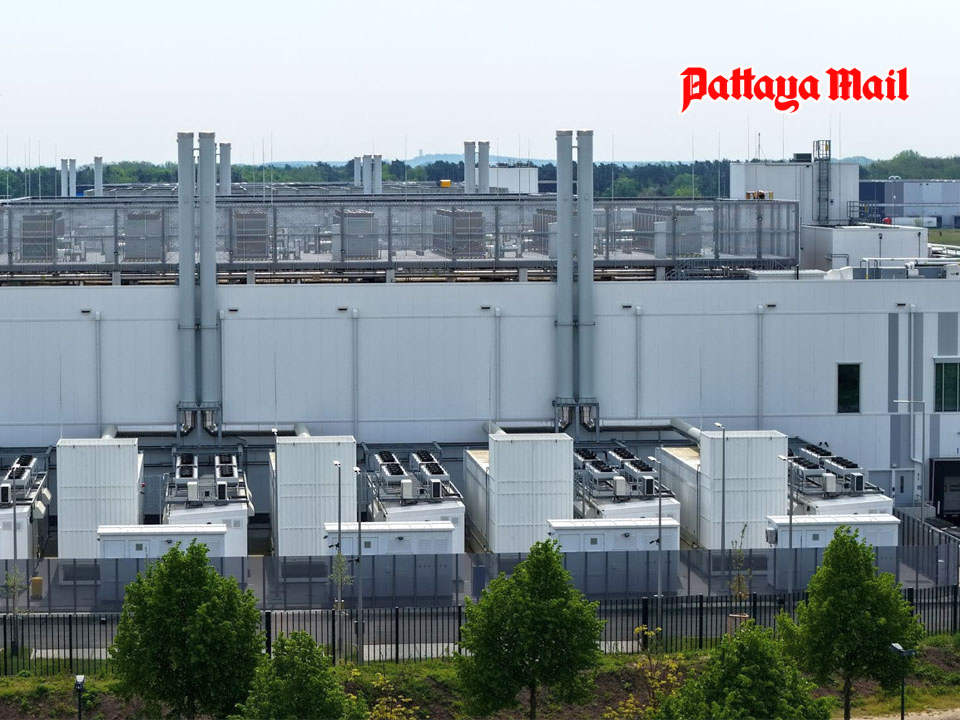
The most pressing concern stems from the sudden proliferation of more than 10 large-scale data centres in areas outside designated industrial zones. As the backbone of the artificial intelligence and digital economy era, these facilities require enormous quantities of water and electricity. By establishing operations outside designated industrial zones, these hyperscale facilities could be placed in direct competition with local municipalities and agricultural sectors for vital public utilities, potentially threatening the ecological balance and livelihoods of Thai citizens.
To comprehend the gravity of the Rayong Chamber of Commerce’s warnings, it is useful to examine the unfolding infrastructure challenges in the United States. The exponential growth of AI-driven data centres in the US has triggered concerns over localised resource consumption, providing a cautionary example. Statistical projections indicate that US data centres could consume a staggering 264 billion gallons of water by 2025, factoring in both direct cooling requirements and indirect consumption through power generation. This volume is equivalent to the annual water use of approximately 1.8 million Americans. Furthermore, a single hyperscale facility can consume between 1 million and 5 million gallons of water per day, enough to meet the needs of a mid-sized city of between 10,000 and 50,000 residents.
Compounding this issue is the geographical reality that approximately 63% of the US is experiencing varying degrees of drought, while nearly 40% of data centres are situated in highly water-stressed regions. This acute strain on public resources has provoked intense community backlash, with more than 50 US municipalities reportedly enacting emergency moratoriums on new data centre construction. In addition, local utility providers are passing some of the immense costs of electrical grid upgrades on to residential consumers, sparking widespread public concern.
Viewed through a legal and regulatory lens, the situation in the EEC highlights a critical statutory gap. The ability of foreign entities to construct hyperscale, resource-intensive facilities outside designated “purple zones” or industrial areas severely limits the government’s capacity to enforce environmental compliance.
In response, the Rayong Chamber of Commerce has proposed a significant legal remedy: officially designating “data centre operations” as the 108th category of controlled factories under the Factory Act. Currently, the law regulates 107 specific industrial activities. Expanding this statutory framework would provide authorities with a clearer legal mandate to enforce rigorous environmental impact assessments, water-use quotas and waste-management standards specifically tailored to the operational footprint of data centres.
Simultaneously, the Department of Public Works and Town & Country Planning is accelerating the drafting of the “Pluak Daeng Comprehensive Community Plan.” To prevent long-term ecological and social degradation, the zoning ordinance should impose stringent land-use conditions, clearly separating residential and commercial communities from resource-intensive industrial activities.
However, statutory planning alone is insufficient. The Rayong Chamber of Commerce also advocates establishing a “Provincial Screening Committee”, a local administrative body empowered to evaluate incoming FDI projects. The committee would conduct comprehensive impact assessments covering water and power consumption, traffic congestion and overall community well-being before operational permits are granted. Such a mechanism could provide an important layer of administrative oversight designed to protect the public interest against unchecked industrial expansion.
The emergence of “Little Guangzhou” represents both an economic triumph and a serious challenge to Rayong’s sustainable future. If Thailand fails to heed the cautionary lessons of the American data centre crisis, local communities could ultimately be forced to bear the environmental and infrastructure costs of foreign economic expansion through the depletion of their own natural resources.
True progress cannot rely solely on investment-promotion policies; it requires robust enforcement of town-planning laws and investment regulations. Only through strict legal oversight and proactive resource management can Pluak Daeng balance the immense benefits of foreign capital with the fundamental right of its citizens to a sustainable and secure future.