BANGKOK, Thailand – Bangkok is preparing to crack down on the use of “fake farming” on high-value urban land, proposing higher land taxes aimed at discouraging owners from planting token crops solely to qualify for lower agricultural tax rates. The Bangkok Metropolitan Administration (BMA) plans to exercise its authority under the Land and Buildings Tax Act to issue a local ordinance raising agricultural land tax rates by 0.02 percentage points across all tax brackets. If approved, the minimum agricultural land tax rate would increase from 0.01% to 0.03%, tripling the levy from 100 baht to 300 baht per 1 million baht of assessed land value. The proposal is part of a broader effort to encourage more productive land use, curb tax avoidance, and increase local government revenue.
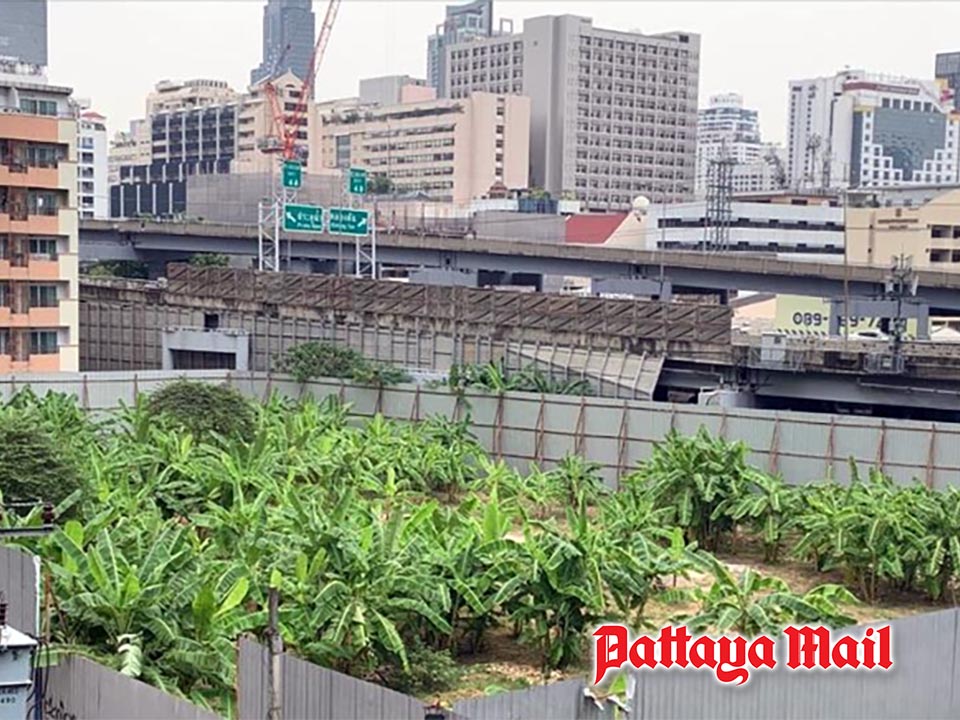
The move follows a growing trend that emerged after the land and buildings tax law came into force in 2021, when owners of prime plots in Bangkok’s central business districts planted banana trees, lime trees, coconuts, and other crops on vacant land to qualify for significantly lower agricultural tax rates instead of paying higher taxes on idle land. Many of these properties are worth billions of baht and are strategically located along major transport corridors, yet remain undeveloped while owners wait for land prices to appreciate further. For individual landowners, the first 50 million baht in agricultural land value would remain tax-exempt under current law. However, Bangkok also plans to ask the Ministry of Interior and the Ministry of Finance to amend the national legislation by reducing that exemption to 20 million baht, broadening the tax base.
Corporate landowners would continue to receive no exemption, with the new 0.03% rate applying from the first baht of assessed value up to 75 million baht. The proposed changes are expected to affect numerous undeveloped sites in Bangkok’s central business district and along existing and future mass transit routes. Among the most prominent examples is a large vacant plot opposite a shopping center on Ratchadaphisek Road near the Thailand Cultural Centre MRT Station. After part of the site was sold for the development of an office tower, approximately 19 to 20 rai remains vacant despite being valued at more than 11 billion baht, with asking prices reportedly reaching 1.5 million baht per square wah.
Other major landholdings in the same area, including plots owned by private companies and property developers, have also remained undeveloped while awaiting favorable market conditions.
Similar practices have been observed along Bangkok’s Orange and Pink MRT lines, including Ramkhamhaeng, Thepharak, and new roads parallel to the Ram Inthra Expressway, where landowners have temporarily planted crops or leased land as parking lots and temporary markets while waiting for infrastructure projects and updated city planning regulations to increase land values.
Although the tax increase appears modest, officials say it sends a clear signal that holding valuable urban land without meaningful development will become increasingly expensive. The measure is expected to encourage more landowners to develop, sell, or form joint ventures rather than continue holding prime land for speculation while benefiting from agricultural tax rates intended for genuine farming activities.