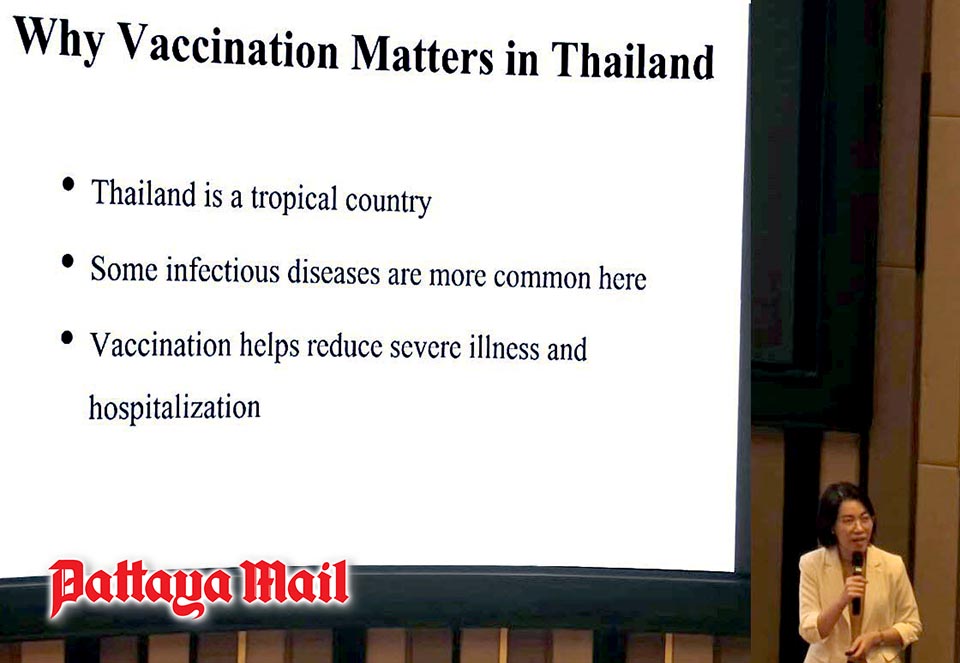
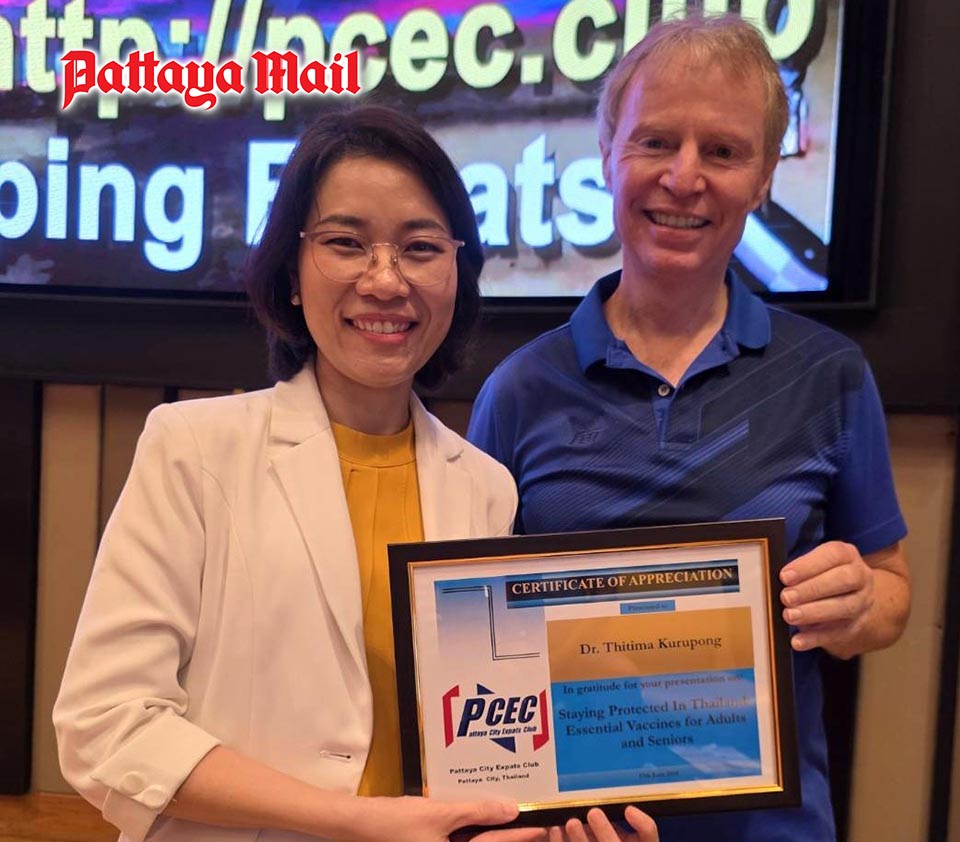
PATTAYA, Thailand – Adults and retirees living in Thailand should not assume that the vaccines they received years ago are enough to protect them from the health risks they face today, according to Dr. Thitima (Pakky) Kurupong in her June 17th talk to the Pattaya City Expats Club (PCEC) on the infectious diseases and preventive vaccines most relevant to life in Thailand.
Dr. Pakky, founder of DD Kids Clinic, told the audience that Thailand’s tropical climate, year-round heat and seasonal rain create favorable conditions for mosquitoes and other infectious threats. While her practice is rooted in pediatric care, she said the same principle applies to older adults: prevention is better than treatment, especially when illnesses can lead to hospitalization, disability or long recovery periods.
She highlighted eight vaccines that deserve particular attention from expatriates and seniors in Thailand: influenza, dengue, Japanese encephalitis, pneumococcal disease, HPV, rabies, hepatitis A and shingles. Together, she said, they address a mix of respiratory infections, mosquito-borne illnesses, food- and water-borne disease, and painful age-related complications that can become more serious later in life.
She began with influenza, describing it as a recurring seasonal threat in Thailand, especially during the rainy season and again in cooler months. Although many people recover after several days of fever, body aches and fatigue, she said flu can progress to pneumonia or worsen chronic disease, making annual vaccination particularly important for older adults. She noted that higher-dose influenza vaccines are available for people over 65 to provide stronger protection.
Dengue drew the strongest audience response. Dr. Pakky said the mosquito-borne disease remains widespread in Thailand and is dangerous partly because infection with one strain does not protect against the others. In fact, she explained, subsequent infections may become more severe. She addressed concerns about an older dengue vaccine that is no longer used in Thailand and said the newer vaccine now available, Qdenga, was developed differently, is considered safer, and is designed to protect against all four dengue strains. She also said guidance that once capped the vaccine at age 60 has since changed, removing the upper age limit.
Japanese encephalitis, another mosquito-borne disease, is less common but potentially devastating, she said. It is associated more often with rural and farming areas, but not limited to them, and severe cases can involve brain infection and permanent neurological damage. Pneumococcal vaccination, by contrast, targets a bacterium rather than a virus, but was presented as equally important for adults because it can cause pneumonia, meningitis, sinus infections and ear infections, especially after illnesses such as influenza or other viral infections. Dr. Pakky recommended it particularly for adults over 50.
She also urged adults not to overlook HPV vaccination, saying it provides an additional layer of protection against several cancers affecting both men and women, including cervical, throat and anal cancers, while screening tests such as Pap smears still remain important.
Rabies, she noted, continues to be a real concern in Thailand because of the number of stray dogs and cats, and she recommended pre-exposure vaccination for people who work with animals, live closely around them or spend a great deal of time outdoors.
Hepatitis A was presented as another practical priority for foreigners and long-term residents because it spreads through contaminated food, water and contact with infected people, and tends to be more severe in adults than in young children.
Finally, she stressed the value of shingles vaccination for people over 50, warning that it results in a painful blistering rash accompanied by intense, shooting, or burning pain. While the rash typically heals in 2 to 4 weeks, some individuals experience long-term, debilitating complications. One audience member who had experienced shingles strongly endorsed the vaccine, saying even a milder case was still deeply unpleasant and for him left a lingering after-effect of periodic episodes severe itching.
The presentation ended with a broader reminder that vaccination is only one part of healthy aging abroad, alongside regular check-ups, hygiene and exercise. But Dr. Pakky’s central message was clear: adults living in Thailand should review their vaccine history with a healthcare professional and make sure their protection matches the diseases they are likely to encounter here.
Following the presentations, MC Ren Lexander brought everyone up to date on upcoming Club events followed by the Open Forum portion of the meeting where questions are asked and comments made about Expat living in Thailand, especially Pattaya. To learn more about the PCEC, visit their website at https:/pcec.club. A video of the presentation will be uploaded to the PCEC’s YouTube Channel at https://www.youtube.com/@pcecclub6255/videos.