BANGKOK, Thailand – Bangkok’s historic gold trading district of Yaowarat was packed with buyers and sellers on Tuesday as domestic gold prices tumbled by 2,000 baht from recent record highs, triggering a wave of activity rarely seen outside periods of major market volatility. Long queues formed outside some of the capital’s best-known gold shops, with customers spilling onto sidewalks as traders, investors, and ordinary households rushed to take advantage of the dramatic price movement. The sharp decline has created two very different camps. On one side are bargain hunters who believe the correction offers a rare opportunity to accumulate gold at a discount. On the other are those choosing to cash in after months of strong gains, taking profits while prices remain historically elevated.
Many buyers interviewed in Yaowarat said they still view gold as one of the safest places to store wealth amid ongoing uncertainty in the global economy. Concerns over geopolitical tensions, inflation risks, and financial market volatility continue to make the precious metal attractive despite recent price swings. “For long-term investors, a drop like this is an opportunity rather than a warning sign,” one customer said while waiting in line. “Gold prices may fluctuate in the short term, but many people still believe the overall trend remains upward.” Others arriving at the district had a different objective. Many brought jewelry, gold bars, and other holdings to sell after benefiting from the substantial rally that pushed prices to record levels in recent months.
Several sellers said they intended to use the proceeds for business investments, debt reduction, or other financial opportunities they believe could generate stronger returns than holding gold at current levels. The contrasting strategies highlight the unique role gold plays in Thai society. Unlike many countries where gold ownership is largely viewed as an investment product, many Thai households regard gold as both a savings tool and a financial safety net that can be bought, stored, and liquidated when needed. Gold shop operators reported a significant increase in customer traffic throughout the day, with activity driven by both buying and selling. Some businesses were forced to introduce queue management systems as customer numbers continued to rise. “The market becomes particularly active when prices move sharply,” one trader explained. “People who have been waiting to buy see an opportunity, while those sitting on profits often decide it is the right time to sell.”
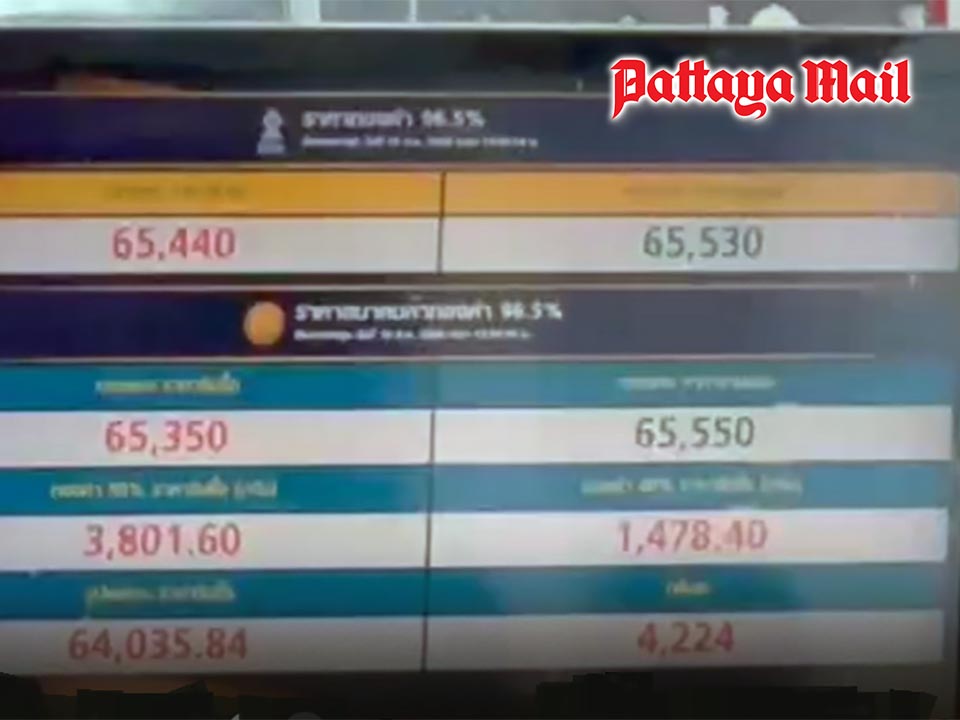
According to the latest announcement from Thailand’s Gold Traders Association, gold bars were being bought at 65,300 baht per baht-weight and sold at 65,400 baht. Gold jewelry was being purchased at 64,057.76 baht per baht-weight and sold at 66,200 baht. Despite the sudden decline, many market participants remain optimistic about gold’s long-term prospects. The crowds filling Yaowarat suggest that confidence in the precious metal remains strong, with many Thais continuing to see gold not only as a traditional store of value but also as a trusted hedge against an increasingly uncertain world. As queues stretched outside gold shops and transactions continued throughout the day, one thing became clear: Thailand’s enduring love affair with gold remains as strong as ever, even when prices move sharply in either direction. (TNA)