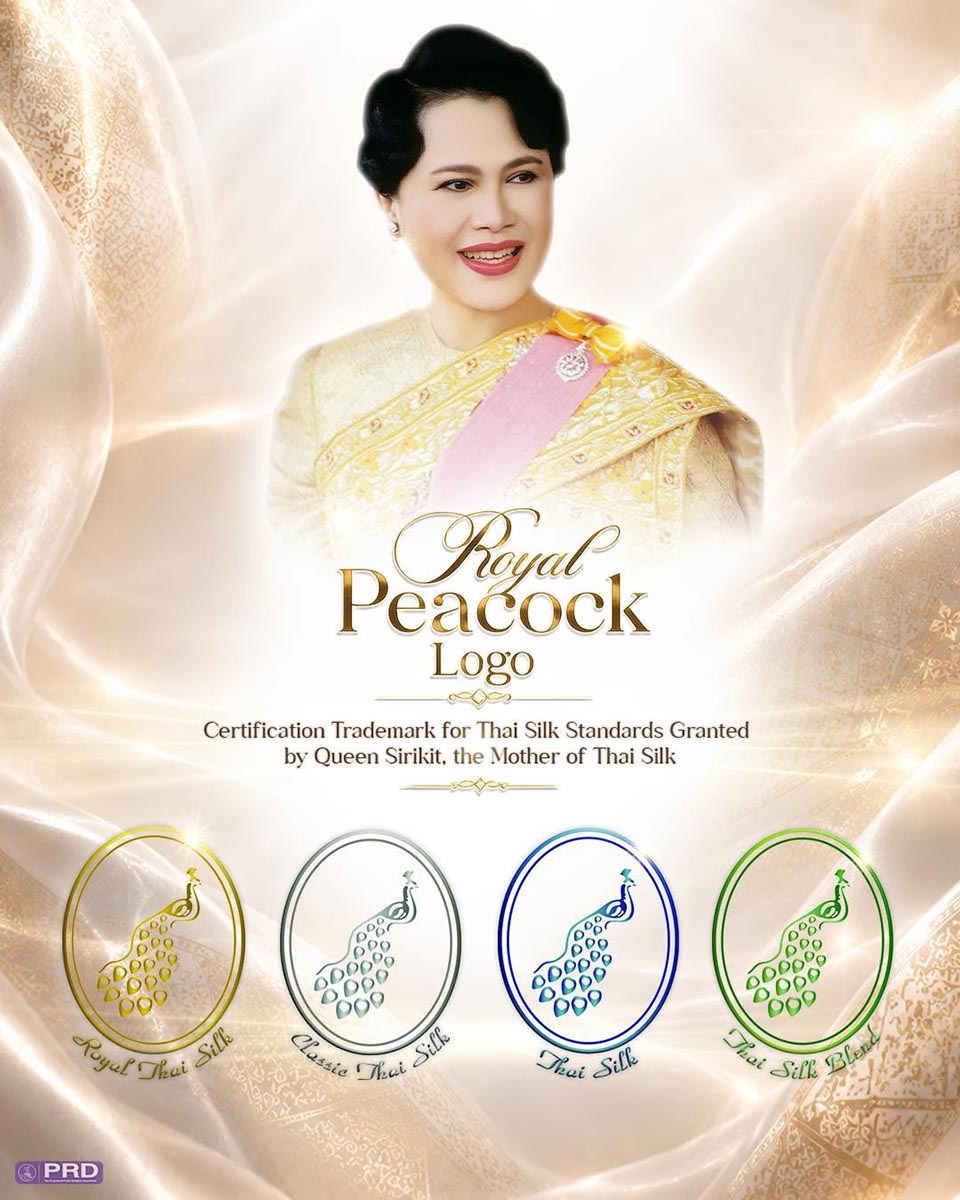
BANGKOK, Thailand – The Government is stepping efforts to develop the Thai silk industry through research, technology, and product development and to promote Thai silk actively, so that it will become more competitive in international markets. One of the guidelines to be implemented urgently is to boost recognition for the “Royal Peacock Logo.” Her Majesty the late Queen Sirikit, the Queen Mother, granted the “Royal Peacock Logo” as a certification trademark for Thai silk standards, while safeguarding the reputation of the local industry and local wisdom.
In 2002, substandard silk thread and synthetic fibers were imported to produce fabric, which was still called “Thai silk” by a number of manufacturers. This led to a decline in the quality of silk, resulting in the product being considered unreliable among both local and foreign buyers. Aware of this problem, Her Majesty Queen Sirikit asked relevant agencies to rectify the situation by establishing a strict quality control program for Thai silk. The program aimed to protect the health, safety, and well-being of silk producers, as well.
Her Majesty also granted the Royal Peacock Logo, which is divided into four types, namely (1) Gold Peacock (Royal Thai Silk): Premium quality handwoven, using traditional silk threads and processes, (2) Silver Peacock (Classic Thai Silk): Classic quality, handwoven with high-quality silk, (3) Blue Peacock (Thai Silk): Traditional handwoven silk, allowing some modern production processes, and (4) Green Peacock (Thai Silk Blend): Thai silk that uses high-quality raw materials but may use mixed chemical materials or varied weaving techniques. The four colors of the Royal Peacock Logo represent different materials and process of silk production. However, the most important condition is that Thai silk of these types must be produced in Thailand only and be environment-friendly. (PRD)