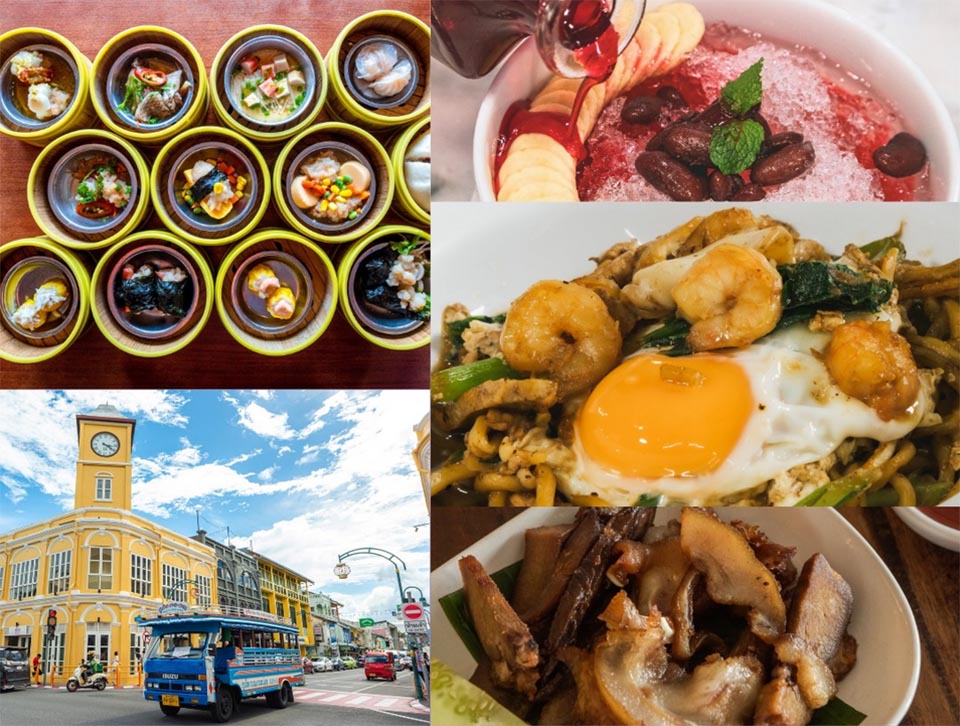
PHUKET, Thailand – Phuket is widely known for its beaches and scenery, but the island’s food culture is also one of the main reasons many travelers keep returning. Beyond seaside restaurants and resort dining, many of Phuket’s long-established local eateries, traditional breakfast spots, noodle shops, cafés inside Sino-Portuguese buildings, and street food vendors can be found throughout Phuket Old Town, where colorful historic architecture and family-run businesses continue to reflect the island’s cultural heritage and long-standing culinary traditions. In 2015, Phuket was designated a UNESCO Creative City of Gastronomy under the UNESCO Creative Cities Network (UCCN), recognizing the island’s culinary heritage shaped by Hokkien Chinese, Peranakan, Malay, and Southern Thai influences.
One of Phuket’s most recognizable dishes is Hokkien noodles, prepared using thick yellow noodles stir-fried over high heat with seafood and rich sauce. Other well-known local dishes include o-tao, a Phuket-style oyster dish made with soft batter, taro, egg, and oysters, as well as lo-ba, crispy fried pork served with spicy dipping sauce. Visitors are also on the look-out for o-aew, a traditional Phuket dessert made from jelly served with syrup, shaved ice, and local toppings. What makes Phuket’s food culture distinctive is how closely it remains connected to daily life on the island. Traditional breakfasts, local markets, family-run restaurants, and street food stalls continue operating alongside Phuket’s tourism industry, allowing visitors to experience both the island’s cultural heritage and its contemporary travel atmosphere in the same trip. (PRD)