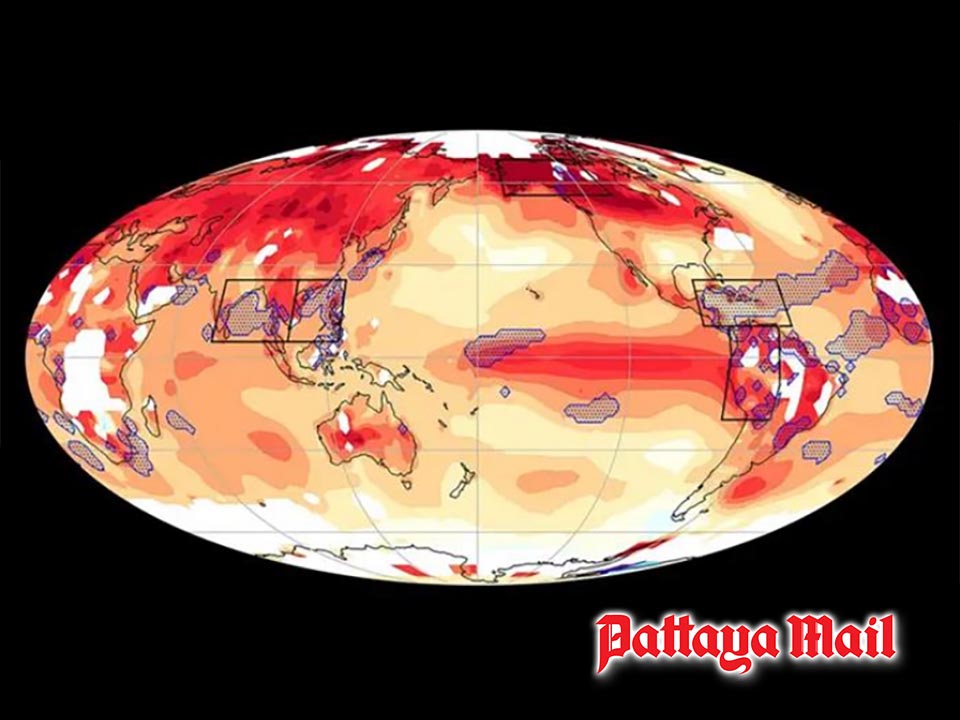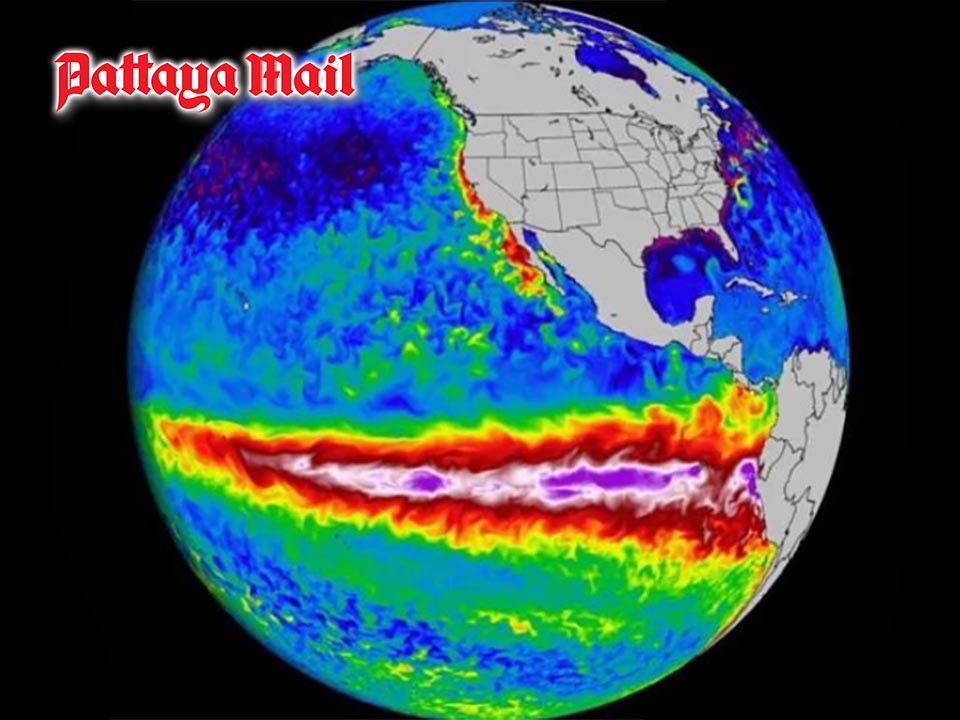
PATTAYA, Thailand – Global climate scientists are closely monitoring the possible return of a powerful El Niño event in late 2026, with new forecasts suggesting it could help drive global temperatures to record-breaking levels and potentially make 2027 the hottest year ever recorded. The warning follows updated climate outlooks from the World Meteorological Organization (WMO), the UK Met Office, and the U.S. National Oceanic and Atmospheric Administration (NOAA), which indicate increasing chances of a significant El Niño developing during the second half of 2026.
According to the WMO’s latest Global Annual-to-Decadal Climate Update, there is a 91% chance that at least one year between 2026 and 2030 will temporarily exceed 1.5 degrees Celsius above pre-industrial levels. Scientists also estimate an 86% chance that one year during the period will surpass 2024 as the hottest year on record. Dr. Leon Hermanson, lead author of the report, said an El Niño event is forecast to emerge toward the end of 2026, increasing the likelihood that 2027 could become the next record-breaking year for global temperatures. El Niño is a natural climate pattern that occurs when sea surface temperatures in the central and eastern Pacific Ocean become unusually warm. The phenomenon influences weather systems around the world and is often associated with extreme heat, drought, flooding, wildfires, and shifting rainfall patterns.
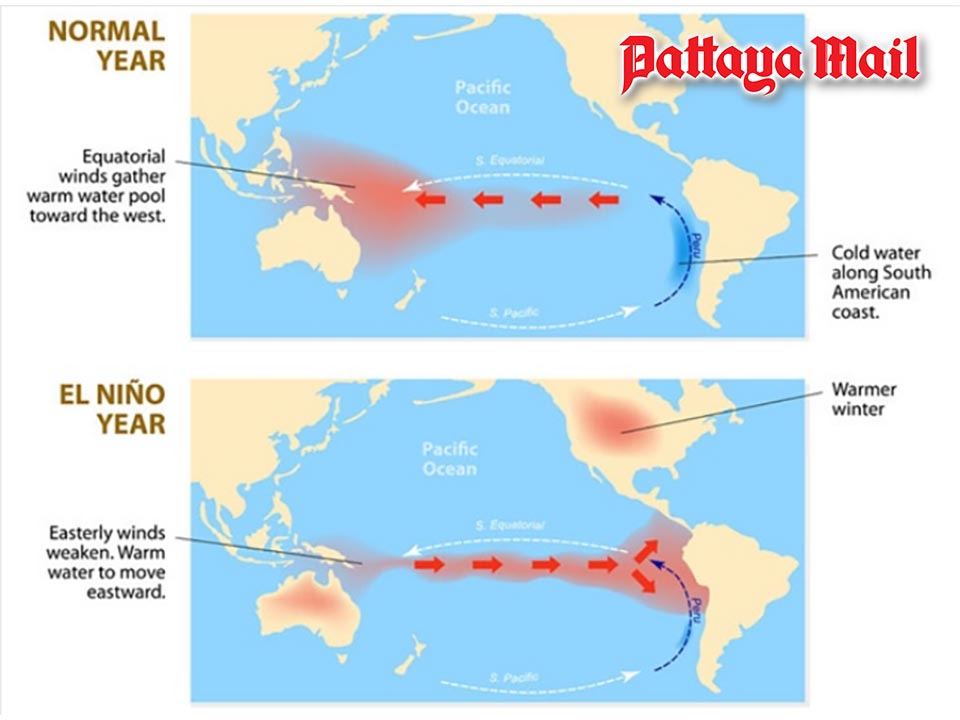
Scientists explain that El Niño events typically release large amounts of stored ocean heat into the atmosphere, causing global temperatures to rise further in the following year. Similar patterns contributed to record-breaking heat during 1998, 2016, and 2024, all of which followed major El Niño episodes. Climate researchers are particularly concerned because any future El Niño will occur on top of an already warmer planet caused by continued greenhouse gas emissions. This combination could intensify extreme weather events worldwide, including prolonged droughts, stronger heatwaves, severe flooding, and larger wildfires.
Climate experts have also warned that the increasing likelihood of record-breaking temperatures reflects the ongoing failure to reduce greenhouse gas emissions at a pace sufficient to meet international climate goals. Rising concentrations of carbon dioxide and other heat-trapping gases remain the primary driver behind long-term global warming. While a temporary breach of the 1.5-degree Celsius threshold in a single year does not automatically mean the goals of the Paris Climate Agreement have failed, climate scientists note that such exceedances are becoming more frequent as global temperatures continue to rise. The United Nations has previously warned that sustained breaches over multiple decades could become increasingly likely without significant emissions reductions. As climate models continue to evolve, scientists worldwide are closely tracking ocean temperatures and atmospheric conditions to better understand whether the developing El Niño could become one of the strongest events ever recorded and what impacts it may bring across different regions of the world.